Pentagon Threatens to Blacklist Anthropic Over AI Limits
The U.S. Department of Defense is considering designating Anthropic as a 'supply chain risk' — a label typically reserved for foreign adversaries — after the Claude AI maker refused to allow its models to be used for fully autonomous weapons or mass
An Unprecedented Threat to a U.S. Tech Company
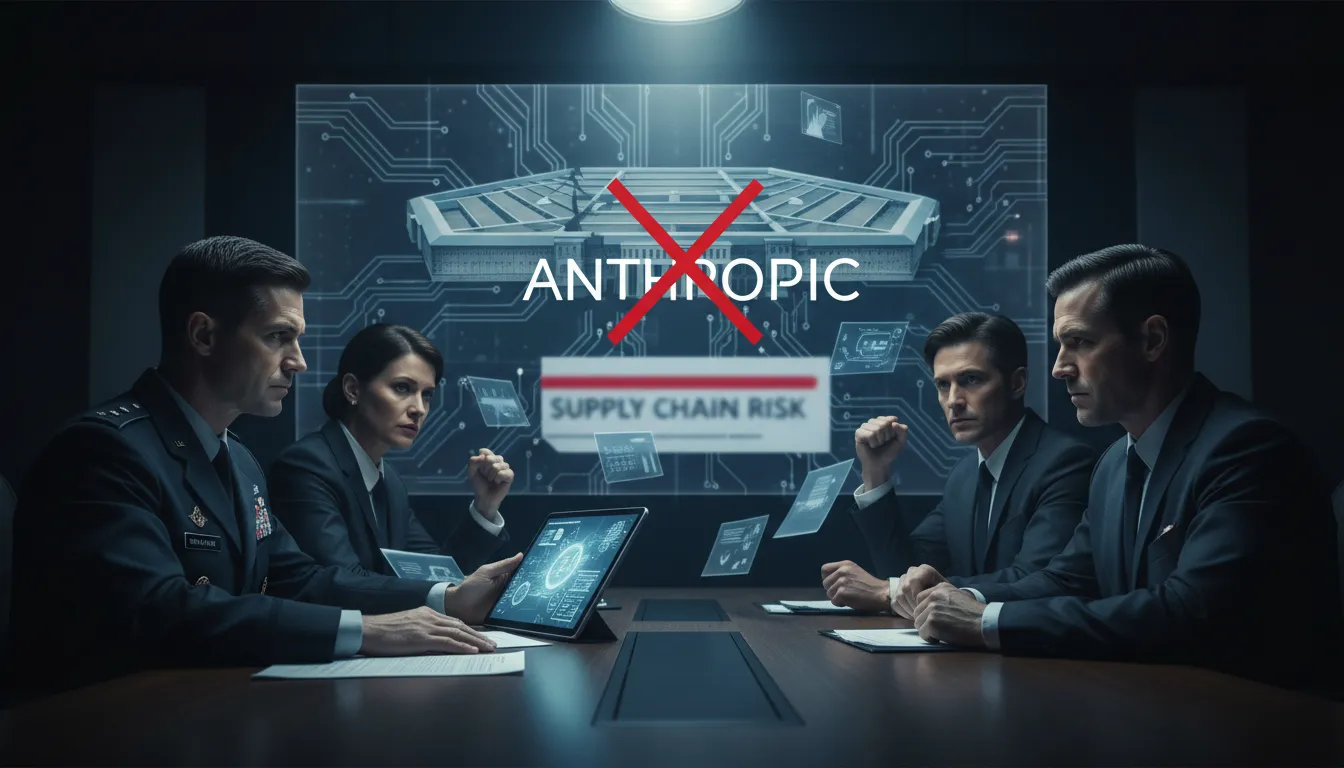
The U.S. Pentagon is weighing an extraordinary measure against one of America's leading artificial intelligence companies. Defense Secretary Pete Hegseth is reportedly close to designating Anthropic — maker of the Claude AI model — a "supply chain risk," a label almost exclusively reserved for foreign adversaries like Chinese telecommunications firms. If imposed, all Pentagon contractors would be required to cut ties with Anthropic or lose their government contracts.
The standoff, first reported by Axios, marks a dramatic escalation in what began as a contractual disagreement and has since evolved into a high-stakes battle over where AI companies draw the line on military use.
The Core of the Dispute
At the heart of the conflict is the Pentagon's demand that AI companies allow the military to use their tools for "all lawful purposes" — a broad mandate encompassing autonomous weapons systems, intelligence gathering, battlefield operations, and mass surveillance capabilities. Three of the four AI firms negotiating with the Defense Department — OpenAI, Google, and xAI — have agreed to lift the civilian guardrails on their models for Pentagon use. Anthropic has not.
Anthropic insists on two firm red lines: it will not permit Claude to be used in fully autonomous weapons that can fire without human involvement, nor will it allow the model to be used for mass surveillance of American citizens. The company has signaled willingness to loosen other restrictions, but Pentagon officials, frustrated after months of inconclusive negotiations, are reportedly inclined to sever ties entirely rather than accept piecemeal limits.
The Venezuela Operation Flashpoint
Tensions came to a head following a reported U.S. military operation tied to the capture of Venezuelan leader Nicolás Maduro, in which Claude — deployed through Anthropic's partnership with defense tech firm Palantir — was used as an operational tool. An Anthropic executive subsequently contacted Palantir to inquire whether Claude had been used in the raid, highlighting the company's concern that its technology was being deployed beyond agreed boundaries.
Anthropic had signed a contract with the Pentagon valued at up to $200 million last summer. Claude is currently the only AI model available on the military's classified networks, making the dispute particularly consequential for both sides.
A Precedent With Global Consequences
The case is being closely watched by governments, regulators, and AI developers worldwide. Applying a "supply chain risk" designation to a domestic American firm would be without modern precedent — such measures have historically targeted companies like Huawei over national security concerns tied to foreign state influence.
The outcome could set a template for how militaries around the world negotiate AI access, and whether safety-focused companies can maintain ethical guardrails when under government pressure. As SiliconAngle noted, the standoff underscores a growing tension between defense agencies seeking maximum operational freedom and AI developers attempting to balance commercial partnerships with ethical constraints.
For international observers — particularly in Europe and Asia — the dispute raises urgent questions: Can AI companies resist state pressure to militarize their models? And if one of the world's most safety-conscious AI labs capitulates, what precedent does that set for the rest of the industry?
Anthropic's Dilemma
Anthropic was founded in 2021 by former OpenAI researchers with an explicit focus on AI safety. Its "Constitutional AI" approach and published usage policies reflect a stated commitment to preventing harmful uses of its technology. Accepting the Pentagon's terms without restriction would represent a significant departure from those founding principles — yet refusing risks financial damage and potential exclusion from one of the world's largest technology procurement markets.
The company now faces a choice that may define not just its future, but the broader question of whether AI safety commitments can survive the pressure of geopolitical and military demand.