Poland Extends Border Controls with Germany and Lithuania
Poland's Interior Ministry has extended temporary border controls with Germany and Lithuania until April 4, 2026, in response to migration pressure along the Baltic route. The controls have affected over 2 million travelers since their implementation.
Controls Extended for Another Six Months
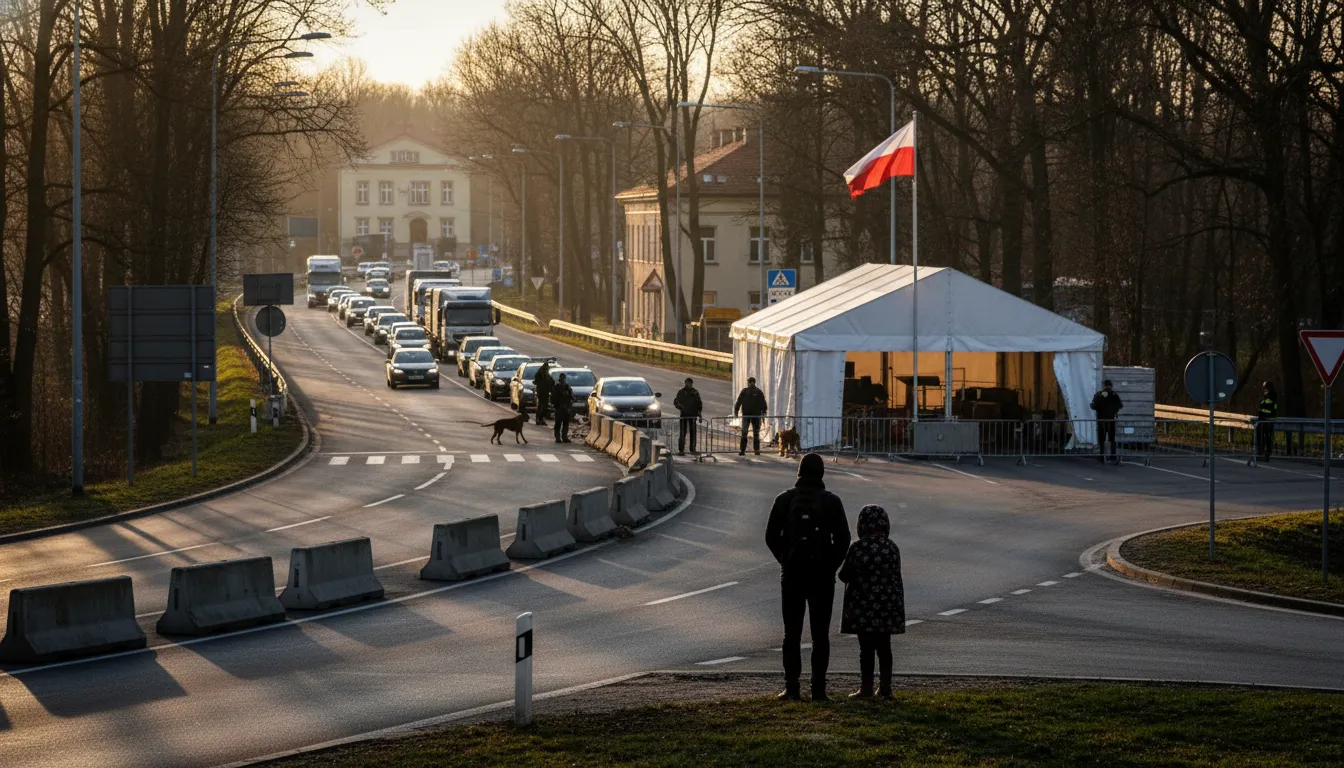
Poland has once again extended temporary controls on its internal Schengen Area borders – specifically, along the borders with Germany and Lithuania. A new regulation from the Ministry of Interior and Administration extends the controls until April 4, 2026. Originally introduced on July 7, 2025, for a period of 30 days, the controls have been repeatedly prolonged and are de facto becoming a permanent feature of Poland's security policy.
Baltic Route Under Scrutiny
The decision is a direct response to the activities of organized human smuggling networks operating along the so-called Baltic–Poland–Western Europe migration corridor. Interior Minister Marcin Kierwiński justified the decision directly:
We are extending the controls to more effectively monitor the migration route that leads from the Baltic countries, through Poland, to Western Europe.
According to Border Guard data, nearly 25,000 attempts at illegal border crossings were recorded on the Polish-Belarusian border in the first eight months of 2025. On the border with Lithuania, 478 illegal crossings were registered, and on the German section, 247 arrests were linked to the same route.
Scale of Operations
The controls are carried out at 50 points on the Polish-German border and at 13 points on the border with Lithuania, including so-called green border sections – in forests and wooded areas. Since the introduction of controls in July 2025, officers have checked over 2.1 million travelers and over one million vehicles. As a result of these actions, nearly 40 people suspected of involvement in smuggling networks have been arrested.
Border Guard officers, police officers, and soldiers authorized to stop and inspect vehicles are involved in the operations.
European Trend
Poland is not alone in its actions. According to data from March 2025, as many as 10 Schengen Area countries – including Germany, Austria, Denmark, France, Italy, and the Netherlands – have reintroduced controls on their internal borders. Moreover, Germany itself has maintained controls on its border with Poland since October 2023, refusing to accept migrants attempting to transit through Polish territory.
The legal basis for these actions is EU Regulation 2016/399 (Schengen Border Code), Article 25a of which allows member states to reintroduce controls in the event of a "serious, unforeseeable and immediate threat to public order or internal security."
Consequences for Travelers
For Polish drivers, transport companies, and travelers, this means further delays at border crossings, especially on the main transit routes connecting Poland with Germany and the Baltic countries. The ministry assures that the controls are carried out "proportionately and selectively" to minimize the impact on the freedom of movement of EU citizens – however, growing criticism from the logistics industry and civil liberties advocates indicates that the line between the temporality and permanence of these measures is becoming increasingly blurred.