Robert Duvall, Hollywood Legend, Dead at 95
Robert Duvall, the Oscar-winning actor celebrated for defining roles in The Godfather and Apocalypse Now, died peacefully at his Virginia home on February 15, 2026. He was 95.
A Giant of American Cinema Is Gone
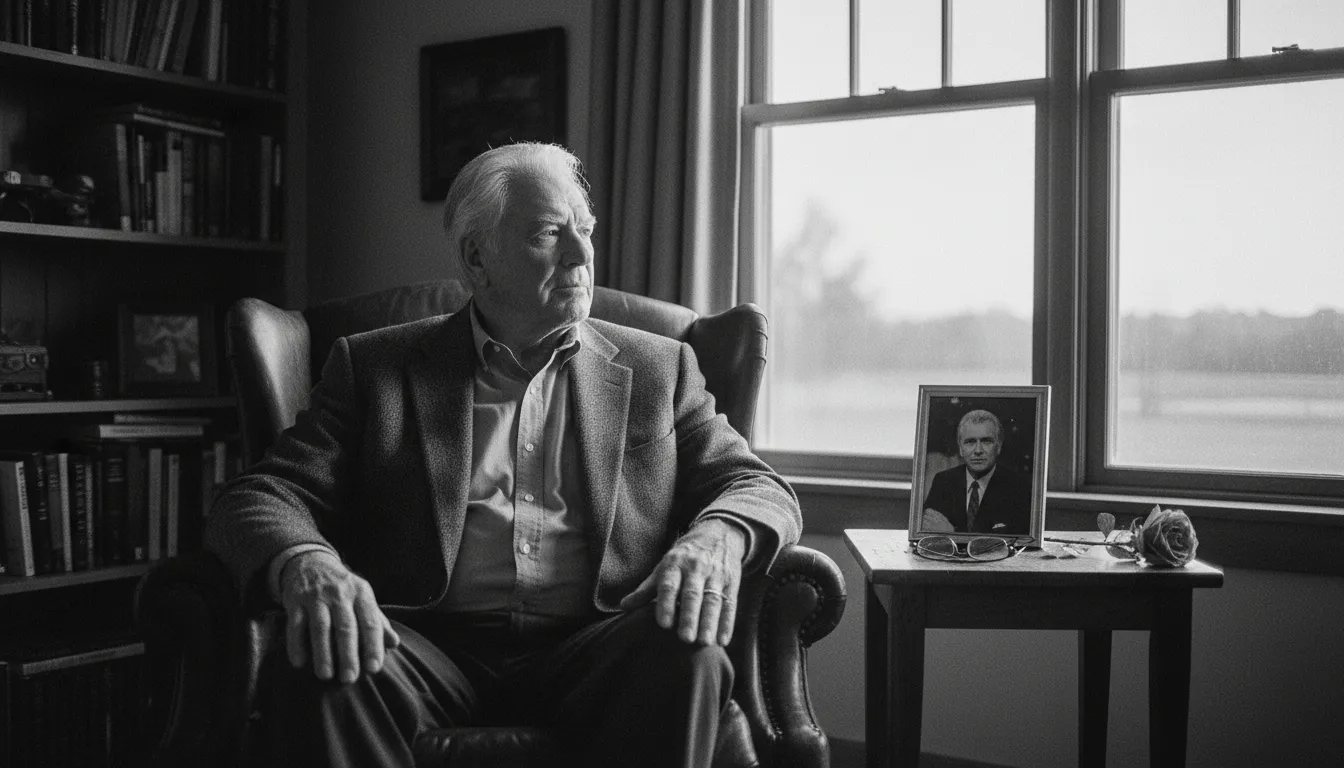
Robert Duvall, one of the most commanding and quietly transformative actors in the history of American film, died peacefully at his farm in Middleburg, Virginia, on February 15, 2026. He was 95. His wife, Luciana Pedraza, announced the news, saying he had "passed away peacefully at home, surrounded by love and comfort." No cause of death was given, and in keeping with his unassuming nature, no formal memorial service was planned. His family instead asked fans to honor his memory by watching a great film or "telling a good story around a table with friends."
From Military Bases to Boo Radley
Born January 5, 1931, in San Diego to a Navy rear admiral and an amateur actress, Robert Seldon Duvall grew up on military bases before graduating from Principia College in Illinois in 1953. He served in the U.S. Army before moving to New York to study at the Neighborhood Playhouse under the legendary Sanford Meisner. His screen debut came relatively late — at age 31 — in Robert Mulligan's To Kill a Mockingbird (1962), where he played the reclusive Boo Radley without speaking a single word. The performance announced a career built on economy and precision.
Iconic Roles Across Six Decades
Duvall appeared in nearly 100 films over six decades, carving out a filmography that would define an era. As Tom Hagen, the Corleone family's cool-headed consigliere in The Godfather (1972), he anchored one of the most celebrated films ever made. Seven years later, his portrayal of the surf-obsessed Lieutenant Colonel Kilgore in Francis Ford Coppola's Apocalypse Now (1979) — including the immortal line "I love the smell of napalm in the morning" — became one of cinema's most quoted moments.
His finest hour came with Tender Mercies (1983), in which he played a broken country singer seeking redemption. Duvall wrote his own songs for the role and delivered them himself, earning the Academy Award for Best Actor. It was recognition for a performance of startling vulnerability — proof that the same man who embodied menace and authority could lay himself bare on screen.
Later, Duvall wrote, directed, produced, and starred in The Apostle (1997), a passion project about a Pentecostal preacher that earned him another Oscar nomination. As recently as 2014, he was nominated again for The Judge, demonstrating a creative fire that burned well into his eighties.
Hollywood Mourns
Tributes poured in from across the industry. Francis Ford Coppola called the loss "a blow," writing on Instagram:
"Such a great actor and such an essential part of American Zoetrope from its beginning: The Rain People, The Conversation, The Godfather, Apocalypse Now."
Al Pacino remembered him as "a born actor" whose "phenomenal gift will always be remembered." Robert De Niro offered a simpler farewell: "God bless Bobby." Michael Keaton, who co-starred with Duvall in The Paper, wrote: "He was greatness personified as an actor." Walton Goggins, his co-star in The Apostle, called him "the greatest storyteller of all time" and "my friend, my mentor."
A Legacy Written in Restraint
What set Duvall apart was his philosophy of simplicity. "Basically just talk and listen, and keep it simple," he once said of his craft. In an era of theatrical excess, he trusted stillness. Generals, cowboys, preachers, criminals — he inhabited each with an authenticity that never felt performed. He leaves behind a body of work that will endure as long as people care about what film acting can be.