SpaceX Crew-12 Restores Full ISS Crew After Historic Gap
SpaceX's Crew-12 mission docked at the International Space Station on Valentine's Day, returning the orbital outpost to its full seven-person complement after a month of skeleton-crew operations following the first-ever medical evacuation from the
A Valentine's Day Arrival in Orbit
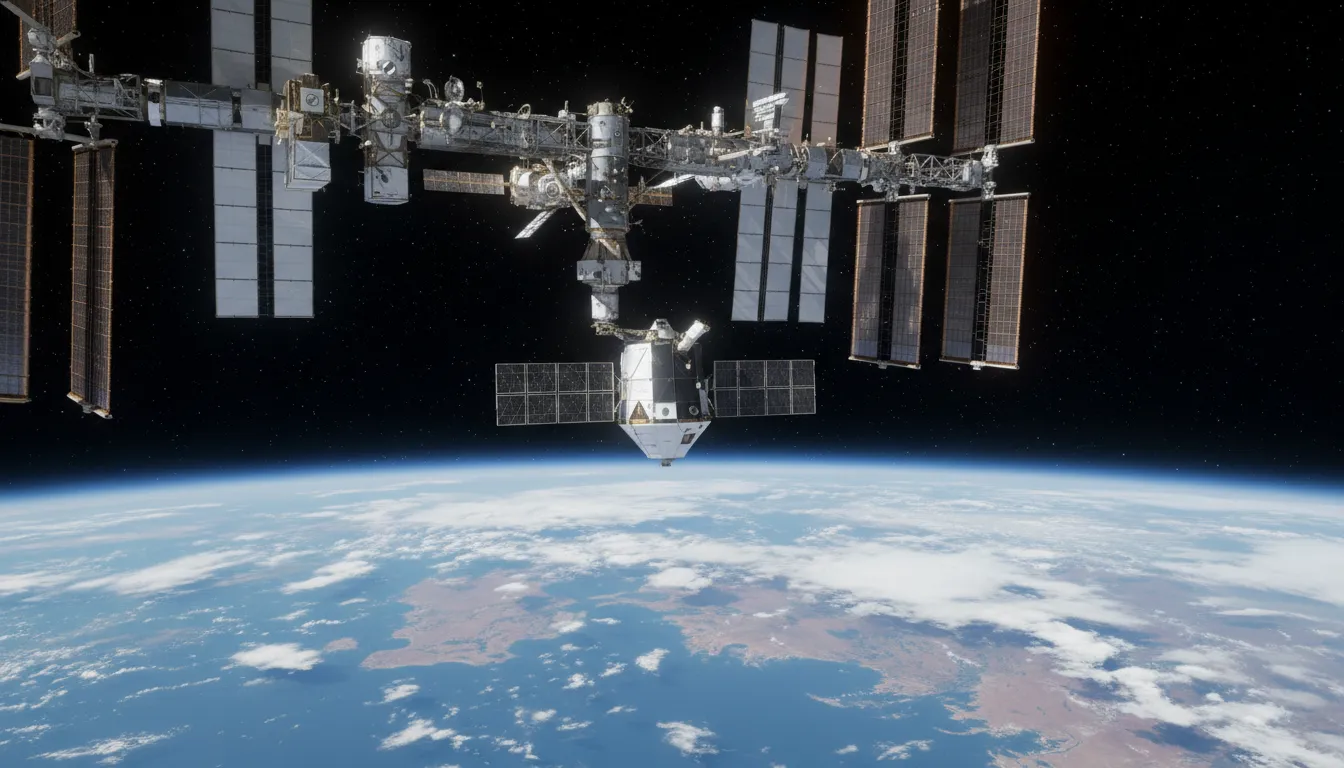
Four astronauts from three space agencies floated aboard the International Space Station on February 14, ending a tense month during which the orbital laboratory operated with just three crew members — too few to conduct spacewalks or a full research programme. The SpaceX Dragon capsule Freedom docked at the Harmony module's space-facing port at 3:15 p.m. EST, roughly 34 hours after a pre-dawn Falcon 9 launch from Cape Canaveral.
The Crew-12 roster reflects the ISS's multinational character: NASA astronauts Jessica Meir (commander, on her second long-duration mission) and rookie Jack Hathaway (pilot), European Space Agency astronaut Sophie Adenot — a French air force helicopter test pilot — and veteran Roscosmos cosmonaut Andrey Fedyaev. "We have so many countries represented, so many backgrounds, so many disciplines," Meir said after arrival, according to NPR.
Why the Station Was Short-Handed
The understaffing traced back to an unprecedented event in early January. NASA announced on January 8 that Crew-11 — commander Zena Cardman, Mike Fincke, Japan's Kimiya Yui and Russia's Oleg Platonov — would return to Earth a month ahead of schedule after a serious but stable medical issue arose with one crew member. The identity of the affected astronaut and the nature of the condition were withheld for privacy reasons.
Crew-11 splashed down on January 15, marking the first medical evacuation in the station's 25-year history. That left only three Expedition 74 members aboard — enough to keep the ISS running but, as NASA noted, insufficient for a single astronaut to "carry out a full range of research as well as required maintenance." Spacewalks, which demand a buddy system, were also impossible.
600th Falcon 9 — On the Same Day
Hours after Freedom docked, SpaceX notched another milestone from the opposite coast. At 8:59 p.m. EST, a Falcon 9 lifted off from Vandenberg Space Force Base in California carrying 24 Starlink V2 Mini satellites — the 600th Falcon 9 flight in the rocket's operational history. The first-stage booster, designated B1081, was flying for the 22nd time and landed successfully on the drone ship Of Course I Still Love You, SpaceX's 571st booster recovery.
The deployment brought SpaceX's orbiting Starlink constellation to roughly 9,700 satellites, serving more than 10 million subscribers across 160 countries — a user base the company doubled in the past year alone.
Broader Significance
The back-to-back launches underscore the pace of commercial spaceflight in 2026. SpaceX now routinely operates crew and cargo missions for NASA while simultaneously expanding its satellite internet network at an industrial tempo. The presence of a Russian cosmonaut on Crew-12 also signals that ISS cross-flight agreements remain intact despite persistent US-Russia geopolitical friction — a pragmatic arrangement both sides regard as essential for station safety.
Looking ahead, Crew-12's eight-month stay will overlap with preparations for Artemis II, NASA's crewed lunar flyby scheduled for March 2026 — humanity's first Moon mission since Apollo 17 in 1972. Together, the missions mark a period of intensifying human activity beyond Earth's atmosphere, powered by a maturing partnership between government agencies and the private sector.