Spain: A Renewable Shield Against the Oil Crisis
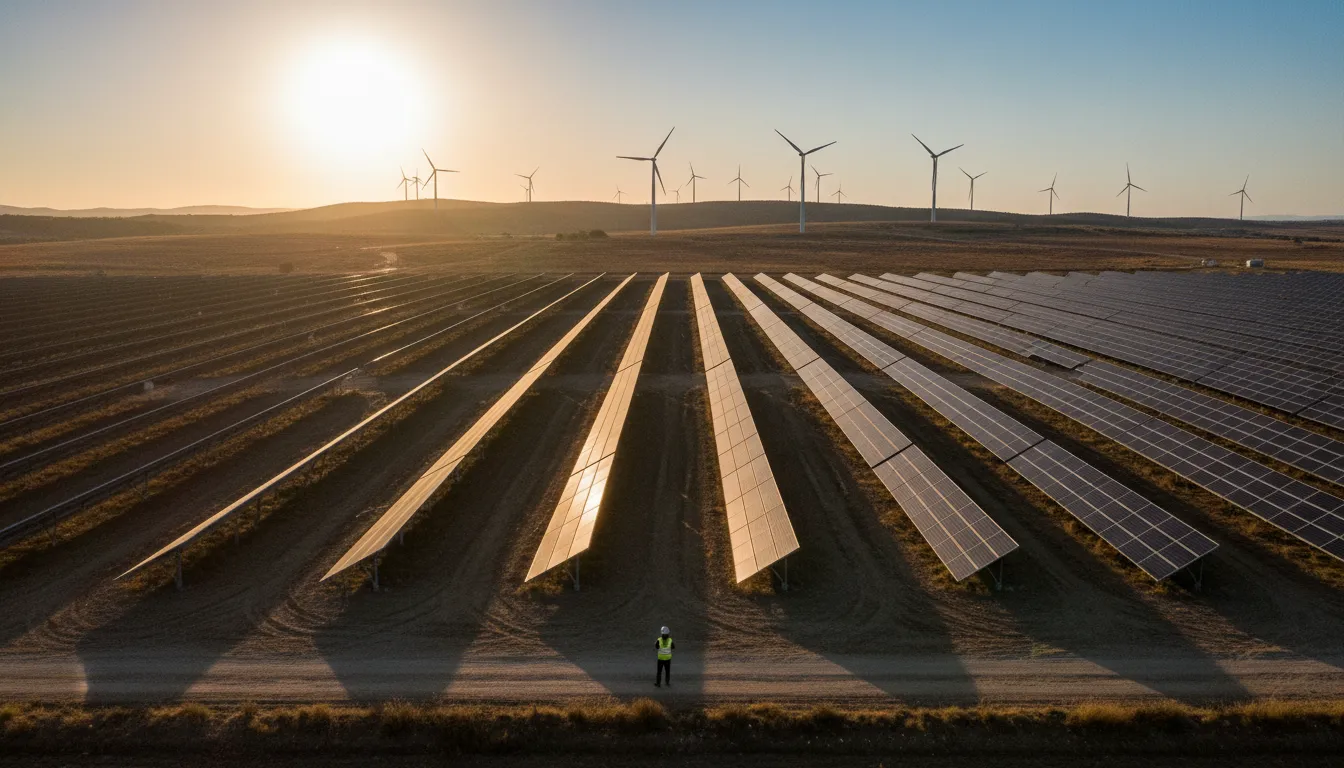
Spain has become a global leader in energy transition. With over 56% renewable electricity and 80 GW installed, it is mitigating the impact of soaring crude oil prices while other European countries suffer from skyrocketing bills.
A Green Cushion Against the Crude Oil Storm
While Brent crude surpasses $112 a barrel and energy bills skyrocket across much of Europe due to the crisis in the Middle East, Spain is emerging as an unusual success story: a country that has managed to cushion the blow thanks to its commitment to renewable energy. According to Euronews, the expansion of wind and solar power in Spain has reduced the influence of fossil fuel generators on electricity prices by 75% since 2019, according to data from the energy think tank Ember.
From the Most Expensive to the Cheapest Prices in Europe
In 2019, Spain recorded some of the highest electricity rates on the continent. By early 2026, the situation has reversed: the country enjoys some of the lowest electricity prices in Europe. The key has been doubling its wind and solar capacity since 2019, adding more than 40 GW, more than any other EU country except Germany, whose electricity market is twice the size of Spain's.
The figures speak for themselves. Spain closed 2025 with more than 80 GW of installed renewable capacity —48,130 MW of solar photovoltaic and 33,150 MW of wind— and started 2026 with renewables contributing 56.1% of electricity generation, according to Strategic Energy Europe. If emissions-free technologies, including nuclear, are added, the percentage rises to 71.2%.
Multi-Million Euro Savings on Imports
The transition has not only reduced household bills. Between 2020 and 2024, new solar and wind installations allowed Spain to avoid importing 26 billion cubic meters of gas, with an estimated saving of 13.5 billion euros, the largest reduction in the energy import bill in the entire EU.
In addition, Spain's direct exposure to the Strait of Hormuz is limited: only 5% of the oil and 2% of the gas that reaches the country transits through that route, according to government data collected by Infobae.
An Emergency Plan with a Structural Focus
On March 20, the government of Pedro Sánchez approved a plan of more than 80 measures that combines immediate aid —a reduction in VAT to 10% on gasoline, electricity and gas, the release of 11.5 million barrels from strategic reserves— with structural measures to accelerate electrification and renewable deployment. These include the reinstatement of the 15% deduction in personal income tax (IRPF) for the purchase of electric vehicles and incentives for the energy rehabilitation of homes.
The Remaining Challenge: Grid and Infrastructure
Spain's success, however, has limits that need to be addressed. During 2025, developers requested 40 GW of grid access, but only 4.5 GW were approved; 25 GW were rejected due to lack of capacity. 83.4% of the nodes in the electricity grid are saturated, according to industry data. The official goal —to reach 74% renewable electricity by 2030— requires installing an additional 50 GW in just four years.
As energy finance expert Gerard Reid summarizes: renewable equipment is purchased once every 25 years, while fossil fuels require continuous purchases at volatile prices. In times of geopolitical crisis, that difference becomes an economic shield that is hard to ignore.