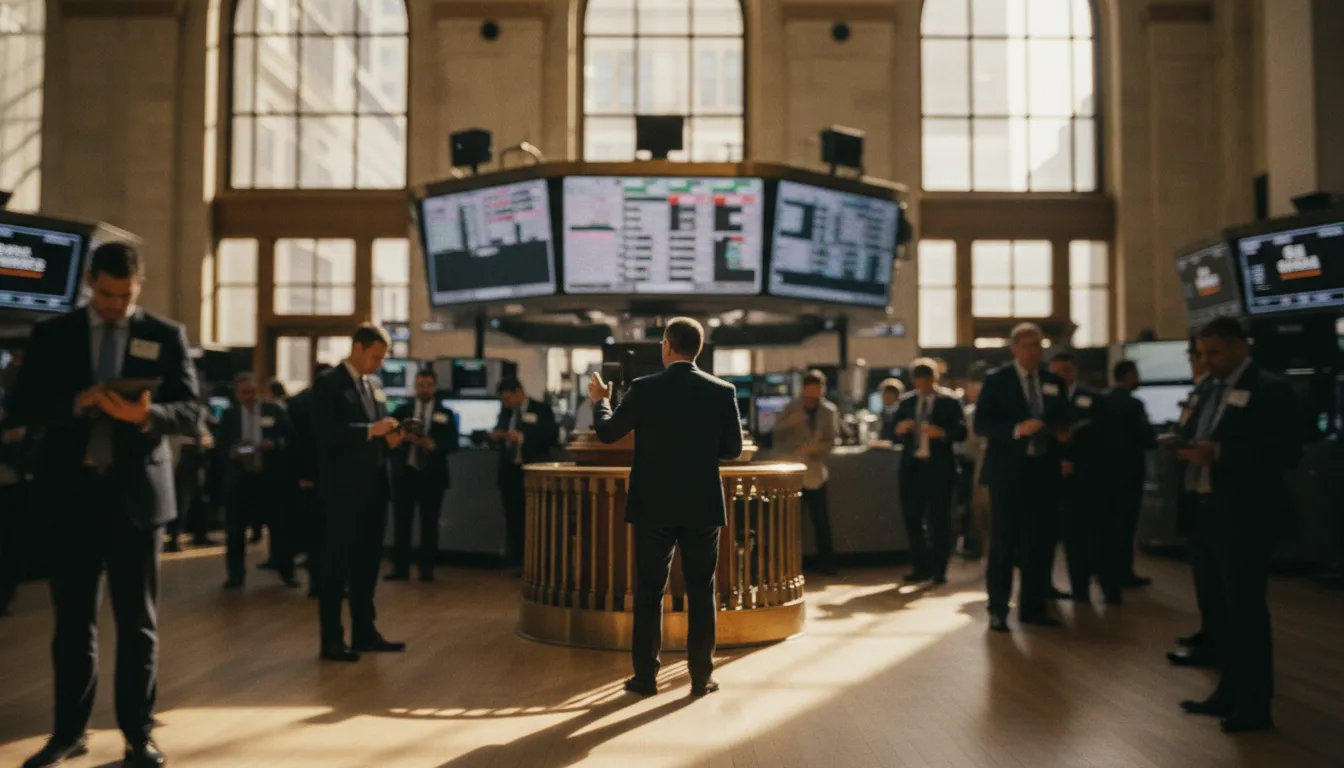
The 'AI Scare Trade' Upends Global Markets
A wave of AI-driven panic selling is pushing investors out of wealth management, real estate, and financial services, as fears grow that autonomous AI agents will displace the human expertise underpinning these businesses.
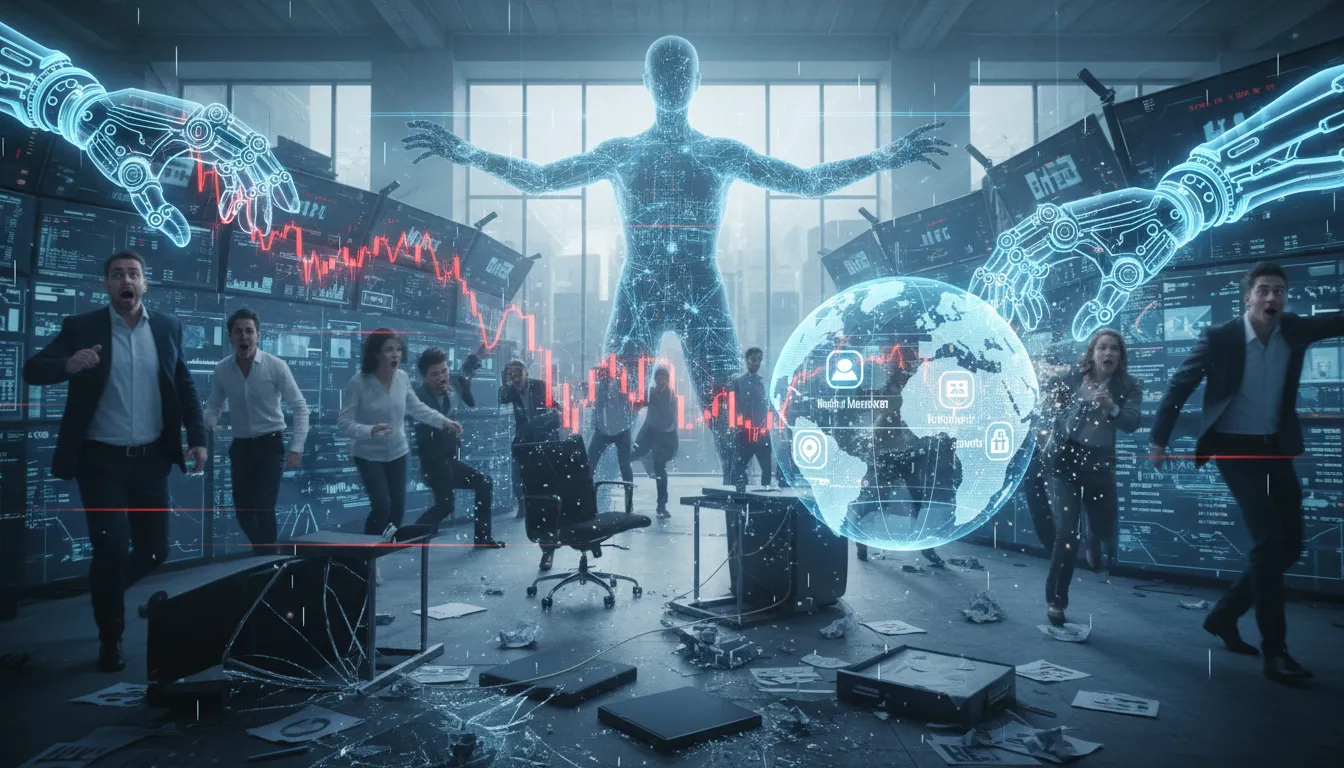
A New Phase in the AI Revolution
Global financial markets entered a new and unsettling chapter on February 18, 2026, as a broad selloff swept through sectors once considered immune to technological disruption. The trigger was not a recession warning or a central bank shock — it was artificial intelligence. The phenomenon has acquired a name: the "AI Scare Trade."
Unlike the AI-fueled rally of previous years — which enriched chip designers, cloud providers, and data centre operators — this rotation runs in the opposite direction. Investors are now fleeing businesses whose value proposition depends on human expertise: wealth managers, real estate brokers, insurance advisers, and logistics intermediaries.
Which Sectors Are Bleeding
The selloff gained momentum throughout early February, but February 18 marked what analysts described as a "violent rotation." In the United States, Charles Schwab dropped more than 10%, while Raymond James and LPL Financial both fell over 8%, according to Bloomberg. The damage was not contained to America: in London, wealth manager St. James's Place cratered 20% in a single session, as European investors absorbed the implications of zero-marginal-cost AI advisory services.
Real estate services suffered a parallel rout. CBRE Group and Jones Lang LaSalle each plunged around 12%, while Cushman & Wakefield shed 14% — among the steepest declines those firms had seen since 2020. Logistics was next: CH Robinson Worldwide tumbled 15%, touching an intraday record loss of 24%, as Reuters reported the "AI scare trade" spreading from software to the entire economy.
The Logic Behind the Flight
The immediate catalyst was the emergence of autonomous AI platforms capable of performing complex tax, estate, and advisory tasks without human intervention. But the underlying anxiety runs deeper. Investors are repricing an entire class of businesses — those Fortune described as operating a "doom loop": high fees justified by human intermediation, now exposed to AI agents that can replicate those services at near-zero marginal cost.
The rotation accelerated a trend that began with the "DeepSeek shock" in late January, when the release of highly efficient open-source AI models suggested that intelligence itself was becoming a commodity. "Investors are no longer just buying the picks and shovels of AI infrastructure," one market analyst noted. "They are actively fleeing firms whose moat was human expertise."
Meanwhile, capital is flowing toward companies with AI-defensibility — those that own proprietary data or build the tools that power AI development. Cadence Design Systems surged over 9% after releasing an agentic AI solution for chip design claiming 10x productivity gains.
A Broader Economic Backdrop
The turbulence arrives against a fragile macroeconomic backdrop. The International Monetary Fund projects global growth at 3.3% for 2026, but this headline figure conceals significant divergence: advanced economies are expected to expand by just 1.8%, weighed down by slowing consumption, high debt, and policy uncertainty. Global inflation is forecast to ease from 4.1% in 2025 to 3.8% in 2026 — progress, but still above targets in many major economies.
Fear or Fundamentals?
Not everyone is convinced the selloff reflects rational repricing. Bloomberg analysts questioned whether the AI scare trade is driven more by fear than by fundamentals, noting that actual AI deployment in regulated professional services remains limited by compliance requirements and liability concerns. A 2025 Thomson Reuters report found that lawyers and accountants were still using AI for narrow, bounded tasks — far from the autonomous displacement investors appear to be pricing in.
Yet the speed and breadth of the rotation suggest a structural shift in market psychology. After years of rewarding AI optimism, investors are now stress-testing which industries can survive a world where intelligence is abundant and cheap — and punishing those that cannot answer convincingly.