What Are the Parthenon Marbles and Why Greece Wants Them Back
The Parthenon Marbles are ancient Greek sculptures removed from Athens over 200 years ago and held in the British Museum. Their ownership remains one of the world's most heated cultural heritage disputes.
Sculptures That Shook the Ancient World
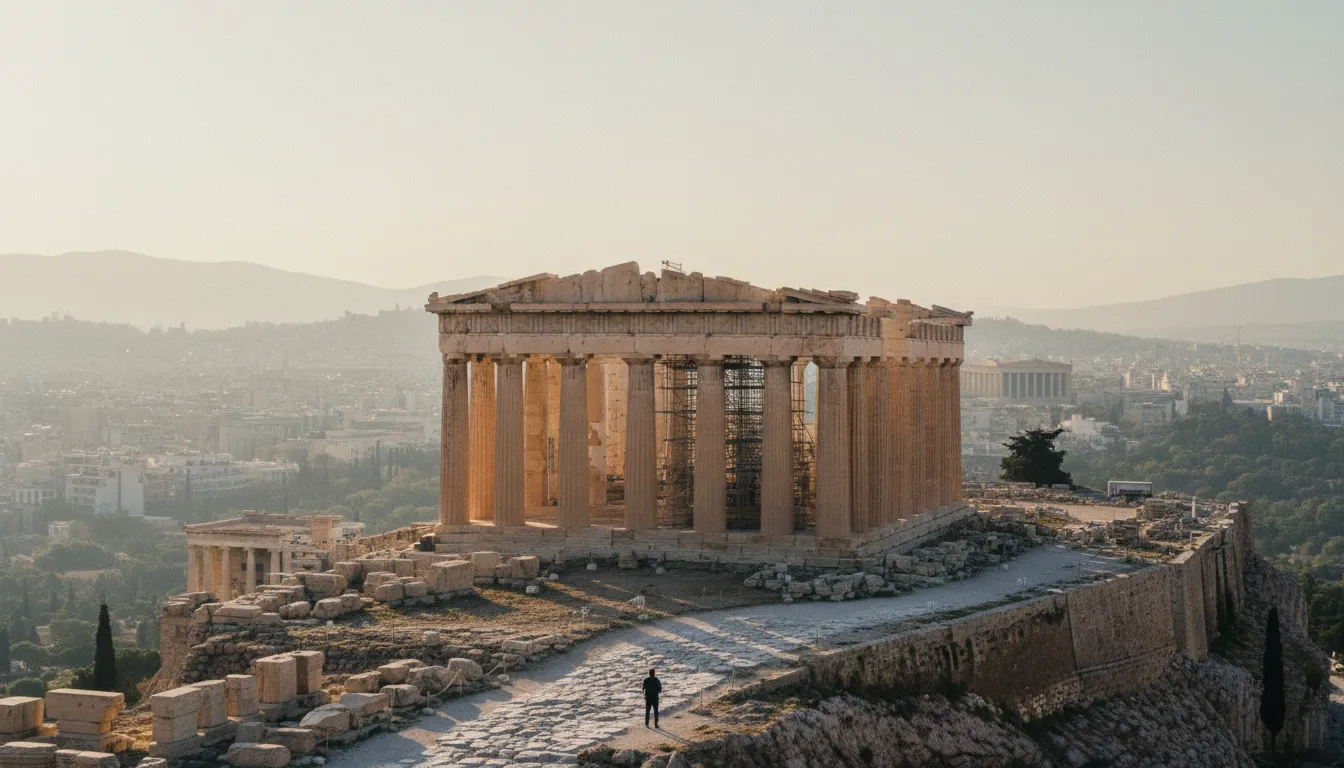
High on the Acropolis in Athens, the Parthenon once gleamed with some of the finest sculptures ever carved. Created between 447 and 432 BC under the supervision of the master sculptor Pheidias, the decorative programme included 92 metopes (carved relief panels), a 160-metre continuous frieze, and dozens of monumental figures filling both pediments of the temple.
The metopes depicted mythological battles—centaurs versus Lapiths, gods versus giants—that served as metaphors for Athens' triumph over Persia. The frieze showed the grand Panathenaic procession, the city's most important religious festival honouring the goddess Athena. Together, these works embodied the artistic, political, and spiritual ambitions of Athens at the height of its Golden Age under the statesman Pericles.
How Lord Elgin Removed Them
In 1801, Thomas Bruce, the 7th Earl of Elgin, was serving as British ambassador to the Ottoman Empire, which then controlled Greece. Over the next decade, his agents stripped roughly half the surviving Parthenon sculptures from the building, along with pieces from the Erechtheion, the Temple of Athena Nike, and the Propylaia. The marbles were shipped to Britain aboard several vessels—one of which, the brig Mentor, sank off the island of Kythira and was only partially salvaged.
Elgin claimed he had permission from Ottoman authorities, citing a document known as a firman. However, the original firman has been lost. Only a questionable Italian translation survives, and historians continue to debate whether it actually authorised the removal of fixed sculptures or merely allowed Elgin to sketch and make casts.
In 1816, a British Parliamentary Select Committee investigated the acquisition. It concluded the removal was legal under the laws of the time, and Parliament purchased the collection for the British Museum for £35,000—roughly £3.5 million today.
What Greece Says
Greece has formally demanded the marbles' return since 1983, when Culture Minister Melina Mercouri made an impassioned appeal to UNESCO. Athens argues several key points:
- The sculptures are an integral part of a single monument—displaying half in London and half in Athens makes it impossible to appreciate the artwork as its creators intended.
- The removal occurred under foreign occupation; the Greek people never consented to it.
- Greece built the Acropolis Museum, which opened in 2009, specifically to house the marbles in a modern, climate-controlled gallery with a direct sightline to the Parthenon itself.
Several institutions have already returned fragments. The Vatican, Heidelberg University, and the Antonino Salinas Museum in Palermo have all handed Parthenon pieces back to Athens, adding moral pressure on Britain.
What the British Museum Says
The British Museum maintains that it is the legal owner of the sculptures under the 1816 Act of Parliament and the 1963 British Museum Act, which prevents trustees from permanently disposing of collection objects. Museum officials also argue that keeping the marbles in London allows millions of visitors to see them alongside artefacts from other civilisations, fulfilling the ideal of a "universal museum."
Critics of return also worry about a precedent effect: if the Parthenon Marbles go back, it could trigger a cascade of repatriation claims against museums worldwide, potentially dismantling encyclopaedic collections built over centuries.
Why the Debate Endures
The dispute sits at the intersection of law, ethics, and identity. Legally, Britain's position rests on 19th-century statutes. Ethically, the global tide is shifting toward restitution of cultural property taken during colonial-era power imbalances. For Greeks, the marbles are not just art—they are a symbol of national identity and democratic heritage stretching back 2,500 years.
Behind-the-scenes talks between Greece and the British Museum have reportedly explored creative compromises, including long-term loans or rotating exhibitions, but neither side has accepted a formal deal. Meanwhile, public opinion polls consistently show that a majority of British citizens support returning the sculptures to Athens.
Until a resolution is reached, the Parthenon Marbles will remain among the most powerful symbols of an unresolved question: who truly owns the art of the ancient world?