What Is Sleeping Sickness and How Does It Kill?
African sleeping sickness is a parasitic disease spread by tsetse flies that invades the brain, disrupts sleep cycles, and kills without treatment. Here's how the parasite works, why it evaded medicine for a century, and how a single pill may finally end it.
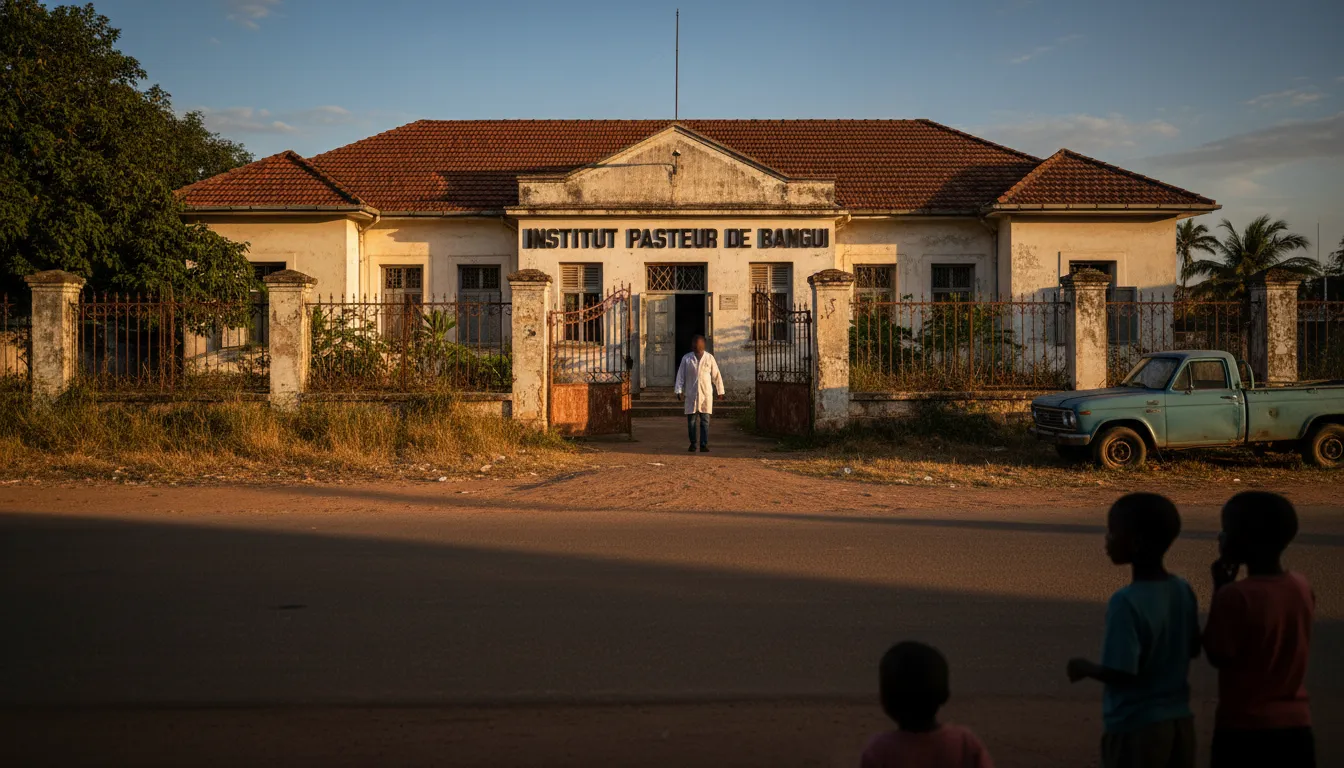
A Parasite That Hijacks the Brain
Human African trypanosomiasis — better known as sleeping sickness — is one of the most insidious diseases on Earth. Caused by the microscopic parasite Trypanosoma brucei, it is transmitted through the bite of the tsetse fly, a blood-feeding insect found only in sub-Saharan Africa. Left untreated, the disease is almost always fatal.
Despite a dramatic 97 percent reduction in cases over the past two decades, sleeping sickness still threatens roughly 55 million people living in endemic areas across the continent, according to the World Health Organization. The WHO's goal is to interrupt transmission entirely by 2030.
How the Tsetse Fly Spreads the Disease
The tsetse fly (Glossina) picks up Trypanosoma parasites when it feeds on an infected human or animal. Over two to three weeks, the parasites multiply inside the fly's gut, then migrate to its salivary glands. When the fly bites its next victim, it injects parasite-laden saliva directly into the skin.
Once inside the human body, the parasites enter the bloodstream and lymphatic system, multiplying rapidly. In rare cases, the disease can also pass from mother to unborn child, or through blood transfusions and organ transplants, according to the U.S. Centers for Disease Control and Prevention.
Two Forms, Two Speeds
Sleeping sickness comes in two distinct varieties, each caused by a different subspecies of the parasite:
- T. b. gambiense (West and Central Africa) — accounts for about 92 percent of cases. It progresses slowly, sometimes over months or years, with patients showing few early symptoms.
- T. b. rhodesiense (East and Southern Africa) — far more aggressive. It can progress to the fatal second stage within weeks.
Stage One to Stage Two: When It Crosses the Blood-Brain Barrier
The disease unfolds in two stages. In the first stage, parasites circulate in the blood and lymph, causing fever, headaches, swollen lymph nodes, and joint pain. Many patients mistake it for malaria or the flu.
The second stage begins when parasites breach the blood-brain barrier and invade the central nervous system. This is what gives the disease its name: patients experience severe disruption of their sleep-wake cycle, sleeping during the day and lying awake at night. Confusion, personality changes, seizures, and eventually coma follow. Without treatment, death is virtually certain.
A Brutal History of Treatment
For decades, treating sleeping sickness was nearly as dangerous as the disease itself. The standard second-stage drug, melarsoprol — an arsenic-based compound introduced in 1949 — killed between 3 and 10 percent of patients who received it, often through fatal brain swelling. Patients described the intravenous infusion as a burning sensation coursing through their veins.
Newer treatments improved safety but remained difficult to administer. Eflornithine requires 56 intravenous infusions over 14 days. The oral drug fexinidazole, approved in 2018, was a major step forward but still demands a 10-day course and can cause nausea, vomiting, and heart-rhythm disturbances — challenging in remote villages with no clinics.
A Single Pill on the Horizon
A breakthrough may finally be at hand. Acoziborole, developed by the nonprofit Drugs for Neglected Diseases initiative (DNDi) in partnership with Sanofi, is the first single-dose oral treatment for both stages of sleeping sickness. Three tablets, swallowed once — and the only significant side effect observed in clinical trials was mild to moderate headache.
Phase II/III trials published in The Lancet Infectious Diseases showed success rates of up to 96 percent across both disease stages. The European Medicines Agency's scientific committee issued a positive opinion in February 2026, as NPR reported, clearing the way for distribution in endemic countries.
Why Elimination Is Finally Possible
Sleeping sickness has surged and retreated in waves for over a century. Epidemics devastated Uganda and the Congo Basin in the early 1900s. Mass screening campaigns drove cases below 5,000 by the mid-1960s — but political instability and collapsed health systems allowed a resurgence, peaking at an estimated 300,000 undetected cases in 1998.
Today, fewer than 1,000 cases are reported annually, nearly two-thirds of them in the Democratic Republic of Congo. A simple, safe, single-dose cure could be the tool that finally closes the gap to zero — if it reaches the remote communities that need it most.