Why Scientists Think Orcas Might Be Several Species
Killer whales look alike, but resident fish-eaters and mammal-hunting Bigg's orcas are so genetically and culturally distinct that researchers now argue they deserve separate species status.
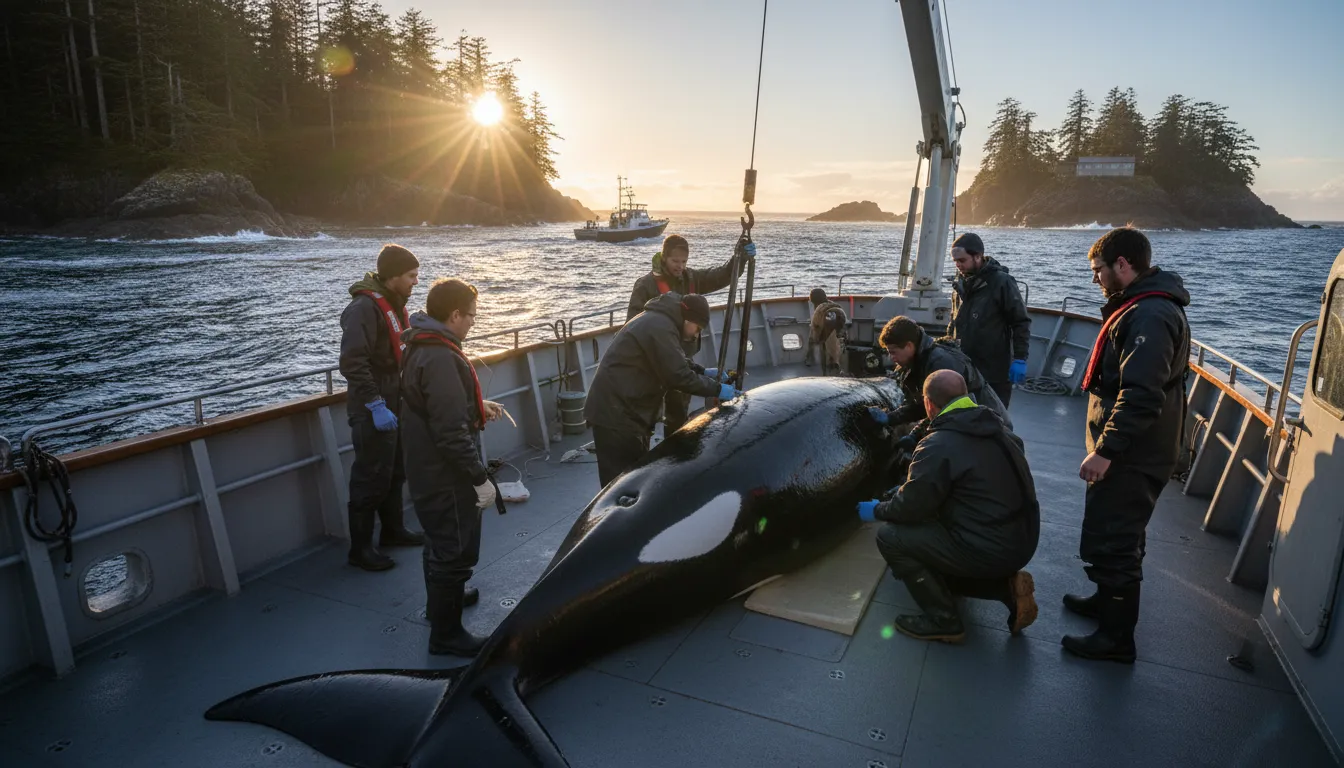
One Name, Many Animals
The killer whale — Orcinus orca — is officially a single species found in every ocean on Earth. Yet a fish-eating orca off British Columbia and a seal-hunting orca patrolling the same waters will never interbreed, barely communicate, and may even prey on each other. Scientists increasingly argue that what we call a single species is, in fact, several distinct animals sharing a name.
What Is an Ecotype?
Biologists use the term ecotype to describe populations of the same species that have diverged in behavior, diet, and appearance in response to different environments. Killer whales are the textbook case. Along North America's Pacific coast alone, researchers at NOAA Fisheries recognize three ecotypes: Resident, Bigg's (Transient), and Offshore killer whales. Each looks similar enough to confuse a casual observer, yet the differences run far deeper than diet.
Resident vs. Bigg's: A Divide in Culture and DNA
Resident orcas are the salmon specialists. Their lives revolve around Chinook salmon runs, and they travel in large, stable family groups — pods — where offspring stay with their mothers for life. They are famously vocal: their calls help coordinate fish hunts and reinforce social bonds.
Bigg's killer whales, named after pioneering orca researcher Michael Bigg, hunt marine mammals — seals, sea lions, and even other cetaceans. They travel in smaller, quieter groups and stalk prey in near-silence; their quarry, unlike salmon, can hear whale calls. The two ecotypes share habitat but operate in parallel worlds.
A landmark 2024 study published in Royal Society Open Science analyzed genetic data across both populations and concluded the evidence for separation is overwhelming. The authors proposed that Bigg's orcas be formally designated Orcinus rectipinnus and Residents as Orcinus ater. The Society for Marine Mammalogy's Taxonomy Committee stopped short of full species recognition, but in 2024 it did officially upgrade them to subspecies — the first formal taxonomic split in orca history.
The Cannibalism Question — and What It Reveals
Recent research published in Marine Mammal Science and covered by Live Science found orca dorsal fins on a Russian beach bearing unmistakable bite marks from other killer whales. The finding, while striking, actually reinforces the ecotype-as-separate-species argument: mammal-eating Bigg's orcas do not appear to view fish-eating Residents as their own kind. Scientists note that the hunted animals belong to a genetically distinct lineage the hunters likely do not recognize as kin — making the label "cannibalism" scientifically imprecise.
The same study suggests this predation pressure may explain why Resident orcas evolved such tight-knit, large family groups in the first place: safety in numbers against ecotypes that hunt them.
Why the Distinction Matters for Conservation
The taxonomy debate has real stakes. The Southern Resident killer whale population — just 73 individuals as of the 2024 census, according to NOAA — is listed as Endangered under the U.S. Endangered Species Act. Their crisis stems from declining Chinook salmon stocks, vessel noise, and toxic contaminants. If Residents and Bigg's orcas are formally separated into distinct species, conservation law could require tailored protections for each — a significant shift in how governments manage these animals.
Meanwhile, research published in late 2025 further fragmented the picture, revealing that West Coast transient (Bigg's) orcas are themselves split into two populations along an east-west divide, rarely mixing and hunting in different areas.
A Richer Picture of a Familiar Animal
Killer whales have fascinated humans for centuries, but the science is catching up to their true complexity. What was once a single apex predator is emerging as a mosaic of cultures, diets, and likely species — each shaped by thousands of years of learned behavior passed from mother to calf. The question is no longer whether orcas are diverse, but how quickly our classifications and conservation frameworks can keep pace.