Why Tropical Insects Are Nearing Their Heat Limit
A landmark study of more than 2,000 insect species reveals that tropical insects already live dangerously close to their thermal ceiling — and unlike their highland cousins, they have little biological room to adapt.
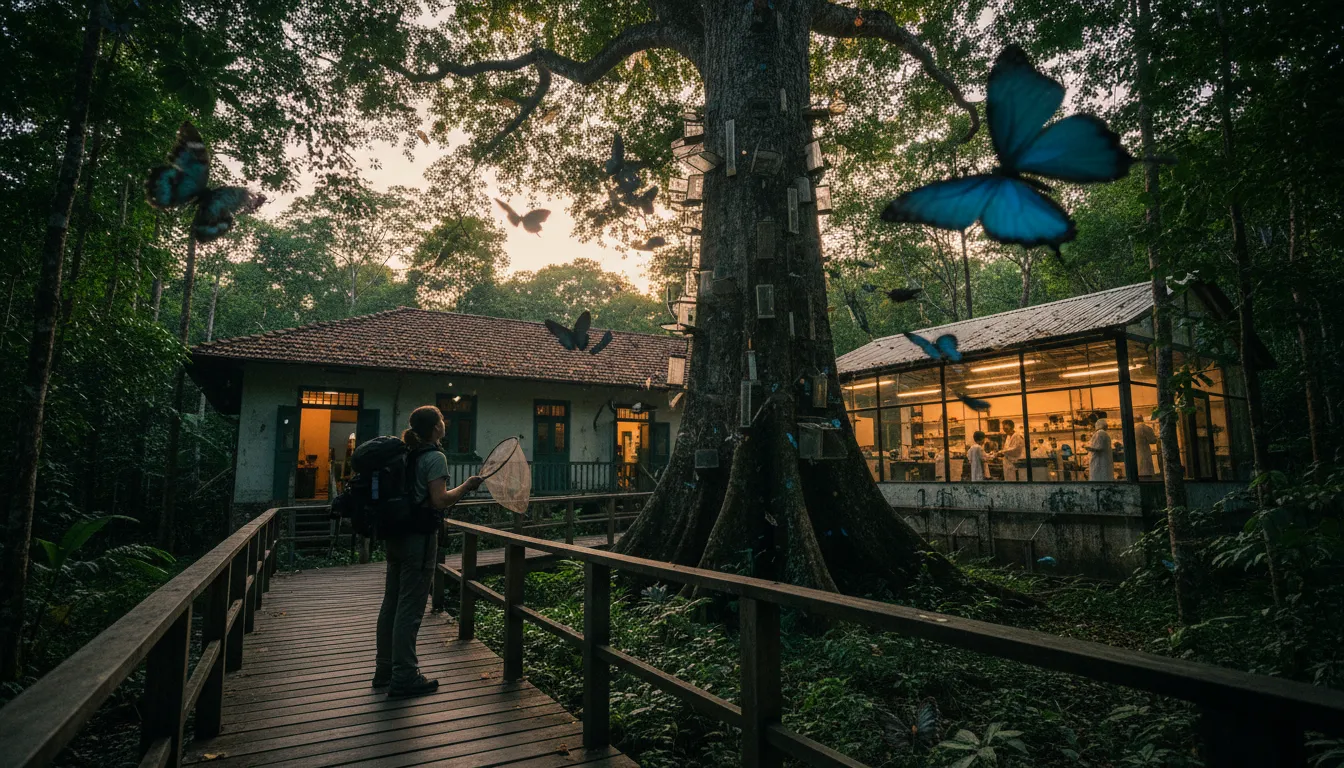
The Hidden Vulnerability at the Heart of Tropical Ecosystems
Of all the creatures threatened by a warming planet, insects rarely command the same headlines as polar bears or coral reefs. Yet a growing body of research — including a landmark 2026 study published in Nature covering more than 2,000 species — reveals that tropical insects are already operating near the very edge of what their bodies can tolerate. Unlike animals that regulate their own body temperature, most insects are at the mercy of their environment. And the environment is changing fast.
How Insects Manage Heat
Insects are ectotherms — they do not generate significant internal body heat the way mammals do. Instead, they rely on external sources and a toolkit of behavioral and physiological strategies to stay within a safe temperature range.
On the behavioral side, many species bask in sunlight to warm up for activity, seek shade or burrow into soil to escape midday heat, and adjust their posture to reduce or increase solar absorption. Some desert insects even practice "stilting" — raising their bodies on extended legs to lift themselves above the scorching ground-level boundary layer of air.
At the cellular level, insects can produce heat shock proteins (HSPs) — molecular chaperones that prevent proteins from misfolding and clumping under high temperatures. They can also alter metabolic rates and, in some cases, lose water through evaporation to cool down slightly. Certain mosquito species, remarkably, expel a droplet of warm blood from their bodies after feeding to shed excess heat.
But these mechanisms have hard limits. And for tropical insects, those limits are being approached alarmingly quickly.
Why Tropical Species Are Especially at Risk
The paradox of tropical insects is that they live in the richest, most biodiverse region on Earth — yet they are among the most thermally fragile. The reason is evolutionary. Because tropical temperatures have historically been stable and warm year-round, insects there evolved in a narrow thermal window. They never needed to develop the broad heat tolerance that species in variable temperate climates acquired over millennia.
Highland insects, by contrast, face wide daily temperature swings and have evolved a valuable trait called thermal plasticity — the ability to adjust their physiology to cope with changing conditions. Lowland tropical species largely lack this capacity. As the Nature study found, their thermal limits are embedded deep in their protein architecture and cannot be quickly rewired by evolution.
The numbers are stark: under current climate trajectories, up to 52% of future surface temperatures in the Amazon lowlands could trigger heat mortality in half of the insect community studied.
What Is at Stake for Ecosystems
Insects are not merely background actors in tropical forests — they are the engine of these ecosystems. They pollinate roughly 75% of global food crops, a service valued at nearly $200 billion annually. They decompose organic matter, cycling nutrients back into soil. They form the dietary foundation for birds, reptiles, amphibians, and countless other species.
When insect populations collapse, the effects ripple outward rapidly. Predator populations crash. Decomposition slows. Soil fertility drops. Pollination becomes unreliable. Research has shown that in European nature reserves alone, flying insect biomass has fallen by over 75% in recent decades — a warning signal for what may come in the tropics.
The Limits of Adaptation
Could insects simply evolve faster tolerance? Research in thermoregulation suggests the ceiling is mostly structural. Thermal tolerance is tied to how stable proteins are at high temperatures — and that is determined by genome-level biology that takes thousands of generations to meaningfully shift. With climate change projected to accelerate faster than most insect generations can track, evolutionary rescue is unlikely to keep pace.
Behavioral adaptation offers some hope: insects that can find cooler microhabitats — deep leaf litter, shaded soil, forest interiors — may buffer themselves somewhat. This is why intact forest cover matters so much. Deforestation removes the thermal refuges that allow insects to survive hot spells, forcing them into open terrain where temperatures can be several degrees hotter.
The Bigger Picture
The thermal vulnerability of tropical insects is not an isolated problem. It connects directly to food security, biodiversity loss, and the stability of ecosystems that millions of people depend on. Understanding how insects regulate heat — and why that regulation fails under warming — is essential context for any serious conversation about protecting life on a hotter planet.
The message from the science is clear: in the tropics, the margin for error is already thin. Reducing greenhouse gas emissions and preserving intact forest are not just conservation goals — they are the conditions under which much of life on Earth continues to function.