Women's Day 2026: Marches, Rights Gaps, and CSW70
On March 8, 2026, hundreds of cities worldwide mark International Women's Day with feminist marches and strikes, as the UN links the global moment to CSW70 and warns women hold just 64% of the legal rights men enjoy.
A Global Day of Protest and Demand
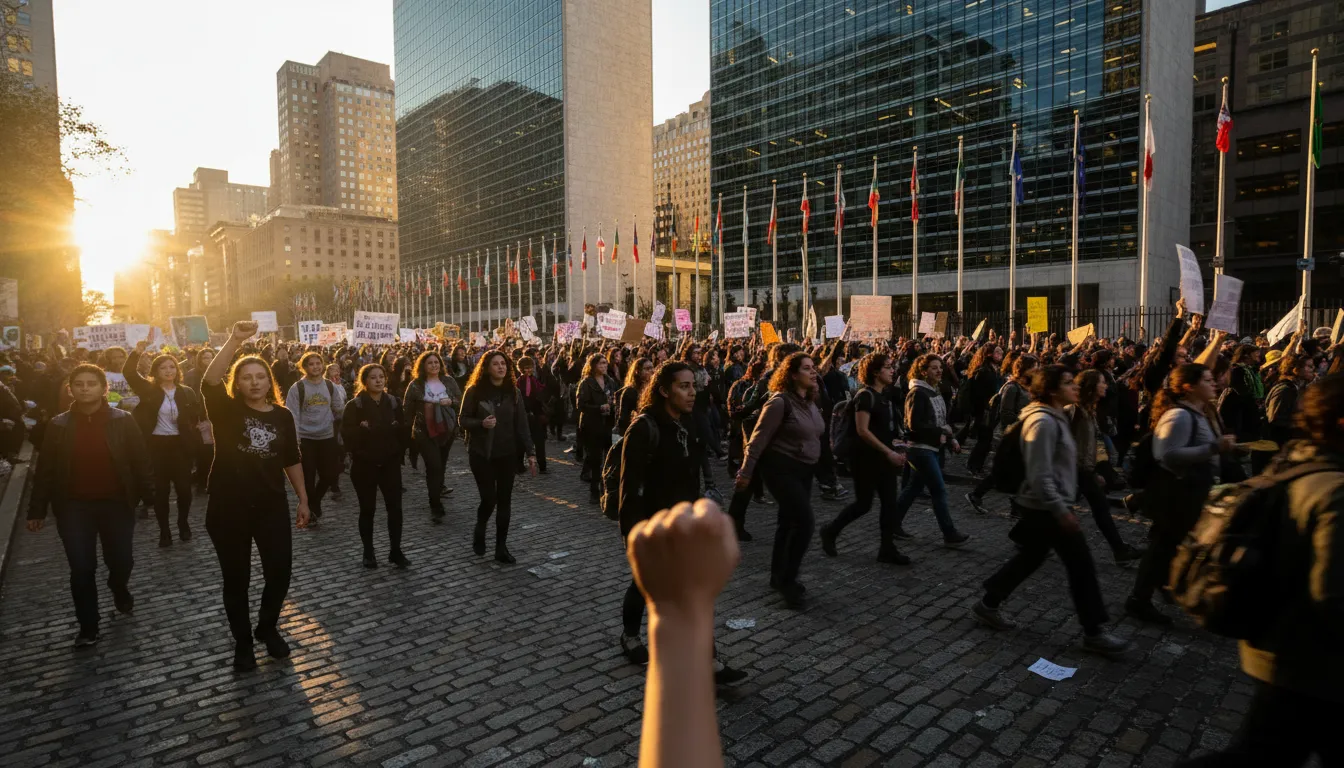
From the streets of Paris to the plazas of Madrid, from Nairobi to Buenos Aires, March 8, 2026 brought hundreds of thousands of people into the streets for International Women's Day — the most politically charged edition in years. Under the United Nations theme "Rights. Justice. Action. For ALL Women and Girls," this year's observance is deliberately woven into the opening of the 70th session of the Commission on the Status of Women (CSW70), running March 9–19 at UN Headquarters in New York.
The Number That Defines the Moment
A stark statistic has become the rallying cry of 2026's feminist movement: women worldwide hold just 64% of the legal rights available to men. A new UN report published ahead of IWD found that no country has yet achieved full legal parity, and at the current rate of progress, closing the gap would take 286 years. The report highlights failures in areas ranging from consent-based rape laws to equal pay protections and property rights in marriage.
UN Secretary-General António Guterres called for eight concrete government actions for a more equal world, emphasising that formal laws alone are insufficient. "Women face higher costs, weaker enforcement, stigma and institutional bias — meaning formal rights often don't translate into real remedies," the report noted.
Europe's Streets Fill with Protesters
In France, the Feminist Strike Collective and allied unions called for nationwide strikes and marches. Demonstrators gathered from 11 a.m. at Place Stalingrad in Paris before marching toward Place de la République, with organisers framing the action as a fight against both wage inequality and gender-based violence.
In Spain — home to one of Europe's most active feminist movements since the landmark 2018 general strike — major marches were held across the country. Madrid's demonstration set off from Atocha station at noon, while Barcelona hosted two separate marches reflecting an ongoing ideological schism within the movement over trans-inclusive feminism. Organisers noted that Sunday's date increased public turnout.
A Global Coalition
Across Africa, events from Nairobi to Lagos echoed the UN's call for reproductive rights and access to justice. A particular focus in the region was digital violence: the Media Foundation for West Africa urged governments and tech companies to enforce policies protecting women online, citing data showing that the share of women journalists who linked online attacks to real-world harm more than doubled — from 20% in 2020 to 42% by 2025.
In Latin America, marches in Buenos Aires and other cities continued the tradition of mass feminist mobilisation that has defined the region for over a decade, with reproductive rights and femicide prevention at the forefront of demands.
CSW70: From Streets to the Security Council Chamber
The UN has deliberately framed IWD 2026 and CSW70 as a single, continuous political moment. The priority theme of CSW70 — "Ensuring and strengthening access to justice for all women and girls" — directly mirrors the grievances being voiced on the streets. Governments attending the two-week session face calls to commit to binding measures on pay transparency, criminalisation of online gender-based violence, and universal access to reproductive healthcare.
Civil society groups warn that a global backlash against women's rights — particularly in countries rolling back abortion access and LGBTQ+ protections — makes these commitments more urgent than ever. The convergence of grassroots protest and high-level diplomacy on March 8, 2026 underscores a central argument of the modern feminist movement: marching matters, but changing laws matters more.