2026 Municipal Elections: National Rally Waiting in the Wings Ahead of First Round
French voters head to the polls this March 15th for the first round of municipal elections, the first election organized under the new system resulting from the August 11, 2025 reform. In Paris, Grégoire and Dati face off in a tight contest, while the National Rally is emerging as a third force in medium-sized cities.
A New Voting System That Changes the Rules of the Game
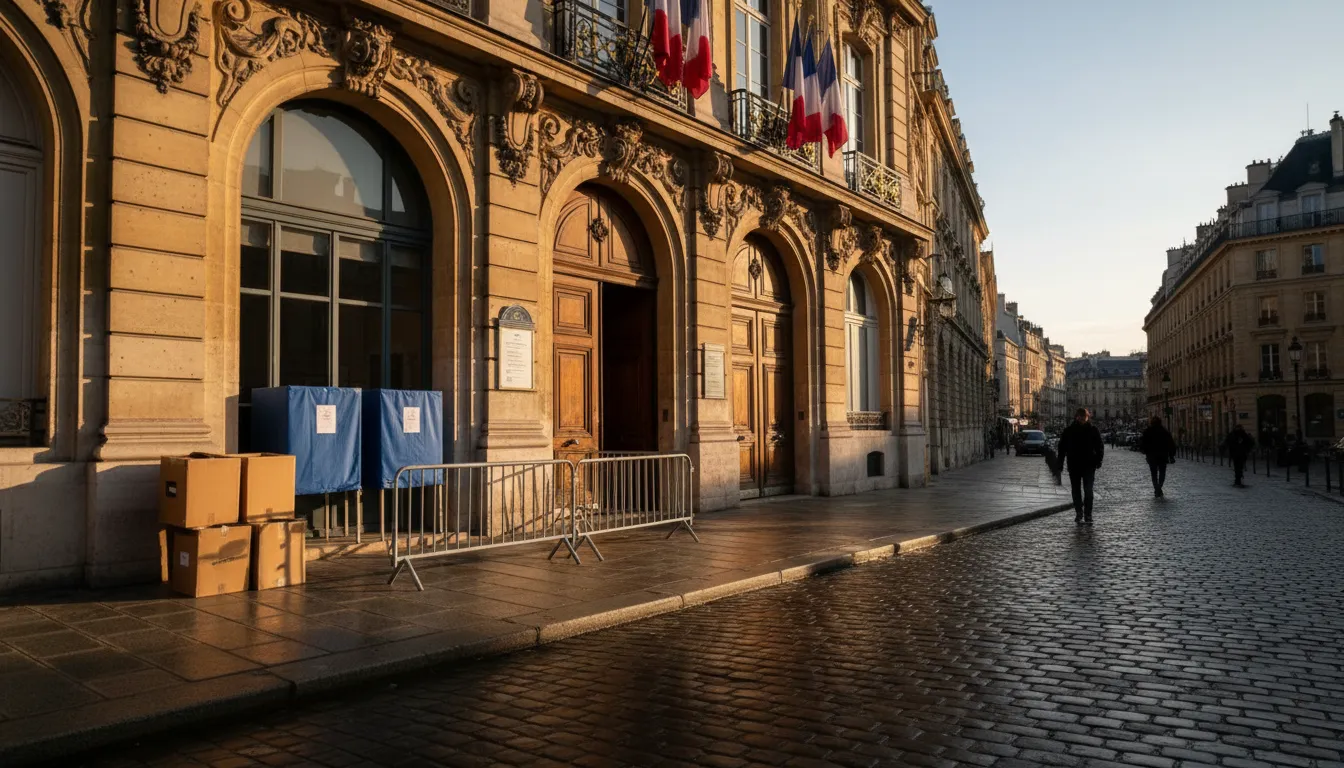
The law of August 11, 2025 profoundly reforms the French municipal electoral landscape. In the three major metropolitan areas—Paris, Lyon, and Marseille—voters now cast two separate ballots: one for the municipal council, the other for the district council. The majority bonus awarded to the list that comes out on top is also reduced to 25% of the seats on the municipal council (compared to 50% in other municipalities), making majorities more fragile and alliances indispensable. Nationally, all municipalities are adopting a proportional list system with gender parity for the first time, putting an end to an electoral system that was previously fragmented according to the size of the cities.
Paris: Grégoire in the Lead, But Nothing is Certain
In the capital, the latest polls credit Emmanuel Grégoire, candidate of the PS-Ecologistes-PCF alliance, with 32 to 35% of voting intentions in the first round—a slight lead over Rachida Dati, supported by Les Républicains and the center-right, who hovers around 26-27%, according to Ipsos and Elabe. Behind this high-profile duel, a cluster of candidates hovering around 11-12%—representing La France Insoumise and Reconquête, in particular—could play kingmakers in the second round. The reduction of the majority bonus to 25% in the capital complicates any prospect of hegemony and forces the lists to negotiate mergers to avoid the dispersion of votes on the evening of March 22nd.
The National Rally, a Rising Third Force in Medium-Sized Cities
Outside the capital, it is the rise of the National Rally that is attracting attention. The party is fielding more than 700 lead candidates nationwide—compared to 410 in 2020—with a concentration in its strongholds in the Northeast and Southeast. In municipalities with fewer than 1,000 inhabitants, the National Rally garners up to 43% of voting intentions, according to the French Electoral Survey published by Ipsos; in urban areas with more than 100,000 inhabitants, this score falls to 21%, but the party remains a force to be reckoned with. Building on its 13 mayoralties currently held, the National Rally hopes to cross a new threshold of municipal credibility and establish itself in medium-sized cities that until now have been strongholds of the left or the Republican right.
Abstention, the Great Unknown of the Election
After the historic record of 2020—where more than 55% of voters abstained, in a context of unprecedented health crisis—observers are hoping for a rebound in participation. Pollsters predict a range of 60 to 70% of voters, with Odoxa suggesting a possible "good vintage" at 68%. However, French interest in this election has declined slightly in recent weeks, from 69% to 67% according to OpinionWay. A high rate of abstention would favor parties with the most mobilized electorate—which could amplify the National Rally's breakthrough in medium-sized cities where its electorate is known to be particularly engaged.
Decisive Negotiations Between the Two Rounds
If no list crosses the threshold of an absolute majority on the evening of March 15th—which seems likely in the vast majority of cities—the negotiations between the rounds will be decisive. Lists that have obtained at least 10% of the votes cast will be able to remain; those at 5% will be able to merge with a better-placed list. The week separating the two rounds therefore promises to be the real political playing field, where withdrawals and alliances will decide the direction of the municipal councils for the next six years.