BW Election: Greens Win, Özdemir to Become Premier
The Green party narrowly won the state election in Baden-Württemberg on March 8, 2026, with 30.2 percent, just ahead of the CDU. Cem Özdemir will make history as the first premier of Turkish descent — while the AfD nearly doubled its result and the SPD reached a historic low.
A Historic Result for the Southwest
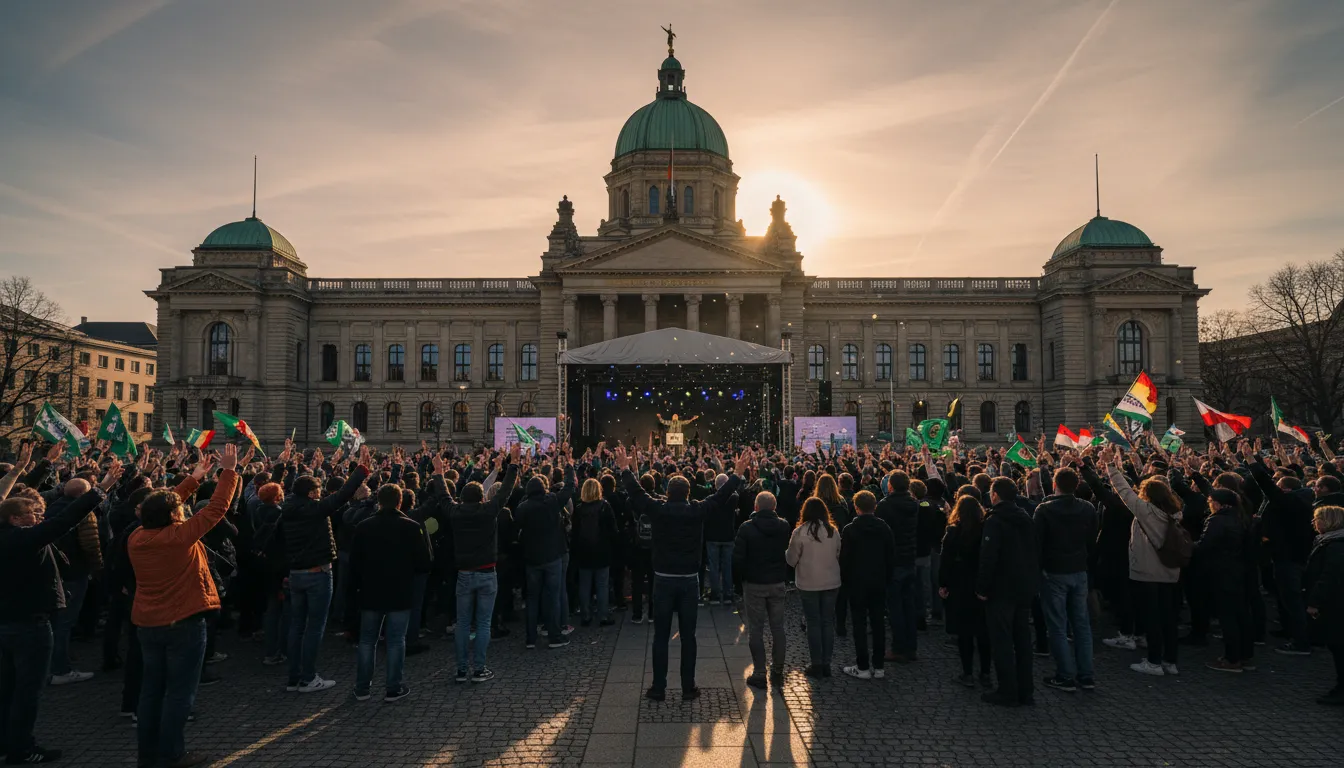
It was an election night of superlatives: The Greens won the state election in Baden-Württemberg on March 8, 2026, with 30.2 percent of the vote, narrowly ahead of the CDU (29.7%). This means that Cem Özdemir, the Green party's top candidate and former Federal Minister of Agriculture, will go down in German history as the first premier of Turkish descent — a historic signal from the republic's strongest economic state.
Close Race to the End
For months, polls favored the CDU and its top candidate, Manuel Hagel. But Özdemir turned the race around in the final stretch. His personal approval rating of around 50 percent significantly exceeded support for his own party — a strategy he consciously employed: The Green party logo deliberately took a backseat on many campaign posters. After the election, Hagel spoke of "mixed feelings" — his party had gained votes, but failed to achieve its goal of taking over the government.
Federal Chancellor Friedrich Merz described the result as "bitter" — a severe setback for the CDU shortly after taking office in Berlin.
AfD Nearly Doubles, SPD at Rock Bottom
The AfD achieved its strongest result in Baden-Württemberg with 18.8 percent and 35 seats — almost a complete doubling compared to the 2021 election. AfD federal chairman Tino Chrupalla described his party as the "winner of the evening." At the same time, the AfD is ruled out as a coalition partner by all other parties.
The SPD marked the other extreme: With only 5.5 percent, it recorded the worst result in its history in Baden-Württemberg. Party leader Andreas Stoch announced his resignation immediately after the election. FDP state leader Hans-Ulrich Rülke also resigned after the Liberals failed to clear the five percent hurdle with 4.4 percent — for the first time in over three decades, the FDP is no longer represented in the Stuttgart state parliament. The Left party also missed out on entering parliament with 4.4 percent.
Green-Black Remains the Only Option
Only four factions are represented in the new state parliament: Greens and CDU together have 112 of 157 seats, giving them a two-thirds majority — strong enough to even amend the state constitution. A continuation of the black-green alliance, which has proven successful for a decade, is considered the only realistic coalition option.
Immediately after the election, Özdemir made it clear that he would not accept any offer to share the premiership with the CDU: Whoever has the most votes gets to appoint the premier — no ifs, ands, or buts.
Historic Turning Point in Difficult Times
The election outcome falls in a phase of economic uncertainty: Industrial jobs are under pressure in Baden-Württemberg, the home state of Daimler and Bosch. Migration and fears of economic decline shaped the election campaign. Özdemir — the son of Turkish immigrants, raised in Bad Urach — sees his election victory in this climate as proof that Germany "is capable of more than many think."