Cancer DNA Chaos Enzyme Found; CRISPR Fights Superbugs
Scientists identify N4BP2 as the enzyme triggering chromosomal chaos in one in four cancers, while a separate UC San Diego team unveils a CRISPR system that actively reverses antibiotic resistance — two landmark biomedical breakthroughs published in the same week.
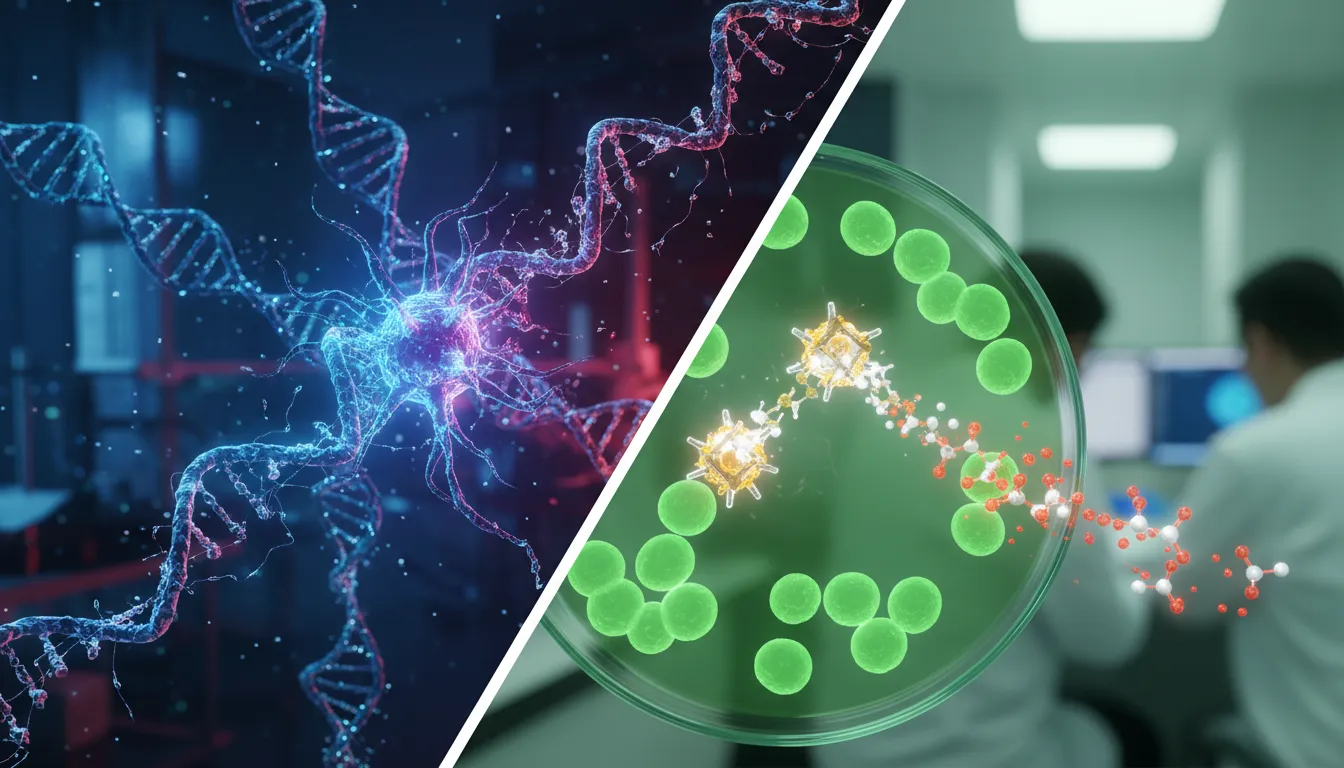
The Enzyme Behind Cancer's Chromosomal Chaos
For more than a decade, scientists have known that roughly one in four cancers carries the hallmarks of chromothripsis — a violent event in which a chromosome shatters into dozens or hundreds of fragments and reassembles in a scrambled order. A single episode can generate more genomic alterations than a lifetime of ordinary mutations, allowing a tumor to rapidly evolve and evade treatment. The mechanism, however, remained stubbornly obscure.
That changed in December 2025, when UC San Diego researchers led by senior author Don Cleveland and first author Ksenia Krupina published their findings in Science. The culprit is an enzyme called N4BP2, a nuclease that triggers the catastrophic DNA fragmentation at the heart of chromothripsis.
The process begins when errors in cell division trap a chromosome inside a fragile bubble-like structure called a micronucleus. When these compartments rupture, the trapped DNA is left exposed in the cell's cytoplasm. N4BP2 uniquely penetrates these compartments and slices the vulnerable chromosome apart. When the team removed N4BP2 from cancer cells, chromosomal destruction dropped sharply. Conversely, forcing the enzyme into healthy cell nuclei caused intact chromosomes to break — even in non-cancerous cells.
The discovery is considered a milestone because it provides what researchers describe as "a new and actionable point of intervention." Blocking N4BP2 or its downstream pathways could curb the genomic chaos that allows tumors to outmaneuver therapies. The findings also illuminate extrachromosomal DNA — circular fragments linked to particularly aggressive cancers — which now appear to arise directly from chromothripsis rather than as an independent process. Nearly all osteosarcomas and many brain cancers show elevated chromothripsis signatures, making the clinical stakes high.
CRISPR Takes Aim at Superbugs
Published the same week, a second landmark study from UC San Diego describes a new CRISPR-based "gene drive" system called pPro-MobV that can spread through bacterial populations and disable antibiotic-resistance genes. The research, led by professors Ethan Bier and Justin Meyer and published in npj Antimicrobials and Resistance, addresses one of public health's most urgent crises: antimicrobial resistance, which the WHO projects will kill more than 10 million people annually by 2050.
Unlike conventional antibiotics — which kill bacteria outright and thereby accelerate selective pressure toward resistance — pPro-MobV exploits natural bacterial mating tunnels to ferry CRISPR cassettes from cell to cell. Once inside a resistant bacterium, the cassette inserts into resistance-conferring genes on plasmids, restoring sensitivity to existing drugs. Crucially, the system works inside biofilms, the dense protective layers that normally shield bacteria from treatment and make chronic infections so difficult to clear.
Researchers envision deploying it in hospitals, wastewater treatment plants, and agricultural settings such as fish ponds and feedlots. Built-in kill switches allow the cassette to be removed if needed — a key safety feature for clinical use. "With this technology we can take a few cells and let them go to neutralize antibiotic resistance in a large target population," said Bier.
A Convergence Worth Noting
The near-simultaneous publication of these two findings is likely coincidental, but the timing highlights a broader acceleration in biomedical research. Both studies move beyond observation toward mechanistic understanding with clear therapeutic hooks — a combination that has historically signaled genuinely translatable science. Full clinical applications remain years away, but the molecular foundations laid this week are substantial, and the field is watching closely.