Crisis in the Strait of Hormuz: Slovakia Braces for Higher Fuel Prices
The military conflict between the US, Israel, and Iran has effectively halted oil traffic through the Strait of Hormuz. Brent crude has jumped to nearly $80 a barrel, and Slovakia is preparing for fuel price increases of tens of cents per liter.
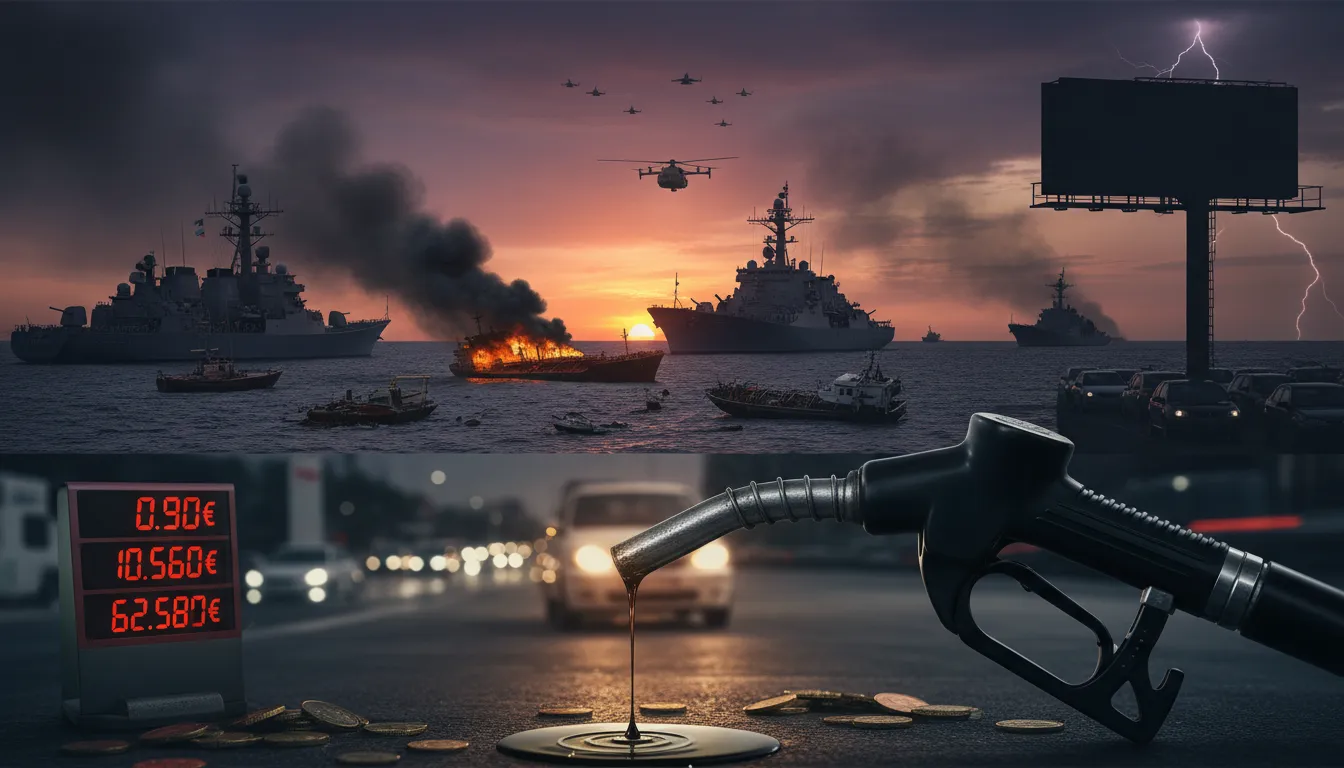
Strait of Hormuz Paralyzed by War
American and Israeli attacks on Iran have triggered one of the most serious crises in global energy in recent decades. The Strait of Hormuz — a narrow sea corridor between Iran and Oman, through which approximately 20 percent of the world's oil and liquefied natural gas trade passes — is de facto blocked. Tankers are queuing up before entering the strait, insurers are refusing to cover risks, and most shipping companies have suspended operations. According to available information, more than 150 tankers are stranded near the strait.
Brent crude, the global price benchmark, jumped by more than nine percent to nearly $80 a barrel. European diesel futures contracts saw an even more significant jump — up to 23 percent to two-year highs, which will directly affect fuel prices at gas stations across Europe, including Slovakia.
Slovakia in an Energy Trap
Slovakia is in a particularly vulnerable position. The country has historically been dependent on oil imports, with the Druzhba pipeline from Russia being its primary supply route. This channel has been significantly restricted since the outbreak of the war in Ukraine, meaning that Slovakia has had to look for alternative sources — including supplies from the Middle East.
Analyst Marek Eštok warned that the concurrent threat — a closed Strait of Hormuz and a problematic Druzhba pipeline — puts Slovakia in an "energy trap." According to the Pravda daily, Slovakia is in a situation where it has limited supplies from two main directions simultaneously — which is an unprecedented challenge for the country's energy security.
Pump Prices Could Rise by Tens of Cents
Lukáš Kovanda, an analyst at Trinity Bank, estimates that, given the current situation, fuel prices in Slovakia could rise by roughly 20 to 30 cents per liter. In the event of a long-term closure of the Strait of Hormuz and further escalation, the price increase could be in the range of up to two euros per liter — which would have a fundamental impact not only on households but also on the entire economy, including logistics, agriculture, and manufacturing.
Analysts at global banks Barclays and UBS warn that the price of Brent crude could break through the $100 a barrel mark if the situation in the strait does not calm down. UBS even did not rule out a scenario in which the price of oil rises above $120 a barrel.
Dramatic Gas Price Increases Also Loom
The crisis is not just about oil. The Strait of Hormuz also handles 20 percent of global liquefied natural gas (LNG) exports, mainly from Qatar. European countries, including Slovakia, which have significantly increased LNG imports in recent years as a substitute for Russian gas, are thus exposed to a double price pressure.
According to analysts quoted by Pravda, a gas price increase of 130 percent cannot be ruled out in the event of a long-term blockage of the route. European gas storage facilities are at an acceptable level of filling, but a long-term outage would cause a new price shock for households and industry.
Government Monitoring the Situation
The Slovak government and energy companies are monitoring developments and, according to STVR, are preparing contingency plans in case of a long-term closure of the strait. The International Energy Agency (IEA) has indicated its readiness to release strategic oil reserves if the situation requires it — but experts warn that this is only a temporary solution.
For Slovak drivers and households, this means only one thing in the coming days: the crisis in the distant Middle East is very quickly translating into the wallets of ordinary people. The longer the Strait of Hormuz is out of operation, the more painful the consequences will be for Slovakia.