Druzhba Pipeline Blocked: Slovakia Faces Most Serious Oil Crisis
The Druzhba pipeline, a key source of Russian oil, has been blocked via Ukraine since January 27, 2026, causing daily economic losses for Slovakia and driving up fuel prices – at a time when global oil prices are already being pushed higher by the Iranian crisis in the Strait of Hormuz.
Pipeline Shutdown Since January, Supplies Dwindling
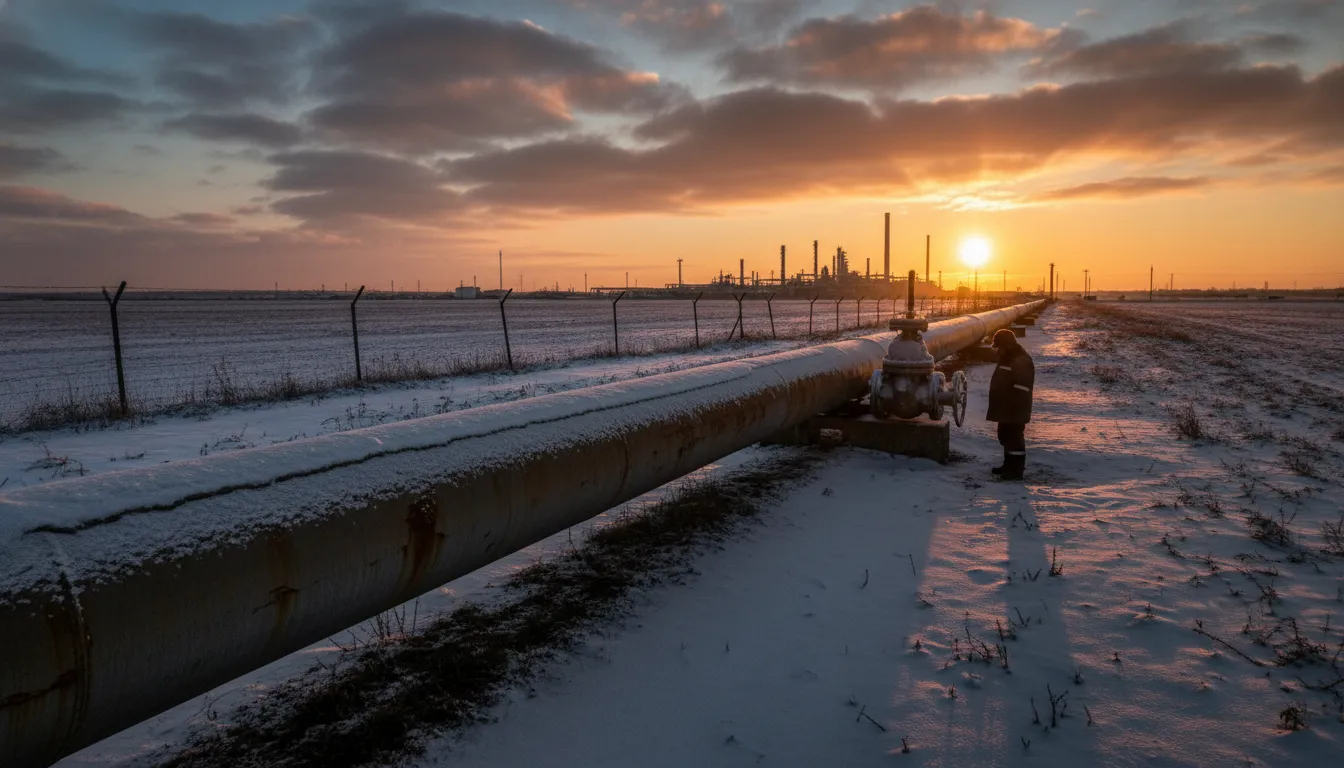
Slovakia has been facing its most serious energy crisis in years since the end of January 2026. The Russian Druzhba pipeline, which supplies the Bratislava refinery with crude oil, has been interrupted since January 27th after a Russian drone attack damaged pipeline infrastructure near the Brody oil hub in western Ukraine. The Bratislava refinery, which normally processes 122,000 barrels per day and supplies fuel not only to Slovakia but also to the Czech Republic, has been forced to operate below full capacity.
The government has approved the release of 250,000 tons of crude oil from strategic reserves – equivalent to roughly one month of refinery operations – with the understanding that these reserves will be gradually drawn down until September 2026. An alternative route via the Adria pipeline technically exists, but transit fees are, according to an analysis by the Institute of Central Europe, up to five times higher than with Druzhba, which places a significant economic burden on the refinery.
Fico Negotiates, Kyiv Hesitates
Prime Minister Robert Fico is actively seeking a diplomatic solution. After a meeting with European Commission President Ursula von der Leyen on March 10, both confirmed their agreement that oil transit through the Ukrainian network must be restored. Fico stated: "I am glad that we share the same view on this matter with the European Commission." However, Kyiv is hesitant to carry out repairs – President Volodymyr Zelenskyy has conditioned any work on the pipeline on a ceasefire and estimated that the repair would take up to six weeks.
Meanwhile, Slovakia and Hungary insist that the pipeline is not seriously damaged and accuse Kyiv of political blackmail. As a sign of protest, Slovakia has halted emergency electricity supplies to Ukraine. Hungary, in turn, blocked the provision of a €90 billion EU loan to Ukraine – until oil transit is restored.
EU Circumvents Veto, Tensions Rise
Brussels responded with a creative financial maneuver: the Nordic and Baltic countries agreed on a bilateral loan of €30 billion for Kyiv, which does not require the consent of all member states, thus circumventing the veto of both Slovakia and Hungary. According to reports from Ukrainska Pravda and Euronews, this sum is intended to help Ukraine overcome the first half of 2026.
German Chancellor Friedrich Merz also intervened in the dispute, suggesting at a conference the possibility of freezing EU funds for countries not sharing European unity – explicitly mentioning Slovakia and Hungary. Fico refused to be lectured: "Slovakia is not a small schoolboy." The coalition partner SNS went even further, calling Merz's words reminiscent of the Third Reich. Diplomatic tensions between Bratislava and Berlin have thus deepened further.
Hormuz Adds Pressure to Oil Prices
The situation is also complicated by global energy instability. As a result of the military conflict between the US, Israel, and Iran, shipping through the Strait of Hormuz, which accounts for about 20% of global oil trade, has been almost completely halted since the beginning of March. According to Al Jazeera, the Iranian Revolutionary Guard has threatened that "not a liter of oil will pass" through the strait, with Brent crude prices exceeding $119 a barrel. Analysts at Deutsche Bank and Oxford Economics warn of the risk of stagflation in Europe if prices remain at high levels.
What Next?
Slovakia finds itself caught in the grip of several crises at once: a blocked pipeline, rising global energy prices, diplomatic pressure from the West, and the looming depletion of strategic reserves. The government maintains that the situation is manageable for now, but without the resumption of transit through Druzhba, the economic pressure on industry and households will increase with each passing week. The solution remains in the hands of Kyiv – and time is running out.