Europe's Nuclear Shield: Merz Bets on Paris and London
German Chancellor Friedrich Merz is exploring whether German fighter jets could transport French and British nuclear weapons in the future — a historic paradigm shift in German security policy in light of growing doubts about US guarantees under Trump.
A Historic Shift in Berlin
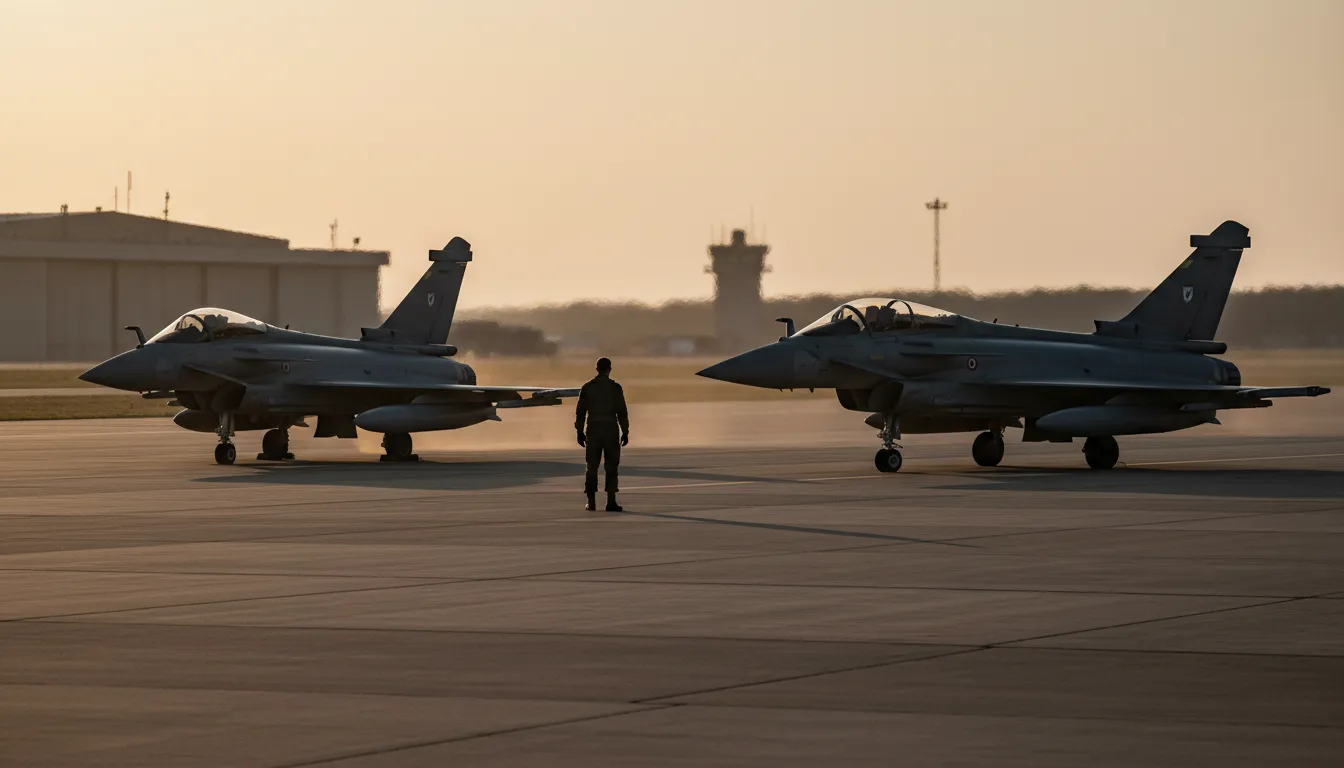
Chancellor Friedrich Merz has made one of the most significant security policy proposals in German post-war history: German fighter jets could transport French and British nuclear weapons in the future. In a widely noted podcast interview in February 2026, Merz stated that he considered it "possible" to involve the Bundeswehr in a joint European nuclear deterrent — without Germany seeking its own nuclear weapons. With this, Berlin is seriously taking up an offer that Paris made years ago for the first time.
Trigger: Doubts About the American Security Pledge
The impetus for this debate comes from Washington. President Donald Trump has repeatedly publicly questioned the US security guarantees for Europe, which have been taken for granted for decades. Whether the US would extend its nuclear umbrella over Europe in a crisis is now considered an uncertain variable among security experts. At the Munich Security Conference in February, Merz said he had initiated "initial talks" with French President Emmanuel Macron about a European nuclear deterrent.
For decades, Germany has had the capability, as part of NATO's NATO nuclear sharing arrangement, to transport American B61 bombs with fighter jets. The outdated Tornado jets are currently being replaced by modern F-35 aircraft. Merz's idea: This capability could, in principle, be extended to European nuclear weapons.
Macron's "Forward Deterrence" for Europe
France responded with a far-reaching announcement. On March 2, 2026, Macron presented a new nuclear doctrine, which he called "dissuasion avancée" (forward deterrence). For the first time since 1992, France will increase its number of nuclear warheads — currently around 290. At the same time, French nuclear bombers are to be stationed on European soil in the future to complicate the calculations of potential attackers. According to reports, eight European countries, including Germany, Poland, the Netherlands, Belgium, Greece, Sweden, and Denmark, have declared their willingness to participate in this framework.
However, Macron emphasized unequivocally: The decision-making power over the use of French nuclear weapons remains exclusively in Paris. It is an extension of the French deterrence concept — not a joint European "bomb".
Great Britain as a Third Partner
Great Britain is also included in the new considerations, although London is no longer an EU member. Prime Minister Keir Starmer stated that they are "deepening nuclear cooperation with France." A Nuclear Steering Group in Paris is linking the nuclear policies of both countries more closely. In March 2026, Germany, France, and Great Britain also agreed in a joint declaration on coordinated measures against Iranian missile and drone capabilities — a signal for a growing security policy triangle.
Paradigm Shift with Risks
Security experts describe Merz's initiative as a historic turning point. For decades, Germany had avoided any debate about a stronger role in nuclear deterrence — a reflex from the Second World War. Critics warn of an erosion of the Non-Proliferation Treaty and a dangerous logic of nuclear rearmament in Europe. Proponents, on the other hand, argue that the changed world situation — with an unpredictable Russia and an uncertain America — forces Europe to rethink its own defense.
Whether concrete structures will emerge from the talks remains open. But the taboo has been broken: Germany is discussing nuclear deterrence — and seriously so.