Four Years On: Russia Pounds Ukraine as Nuclear Fears Mount
On the eve of the fourth anniversary of Russia's full-scale invasion, Moscow launched a massive missile and drone assault on Ukrainian cities as Putin declared nuclear weapons an 'absolute priority' following the expiry of the last US-Russia arms treaty.
A Night of Fire Across Ukraine
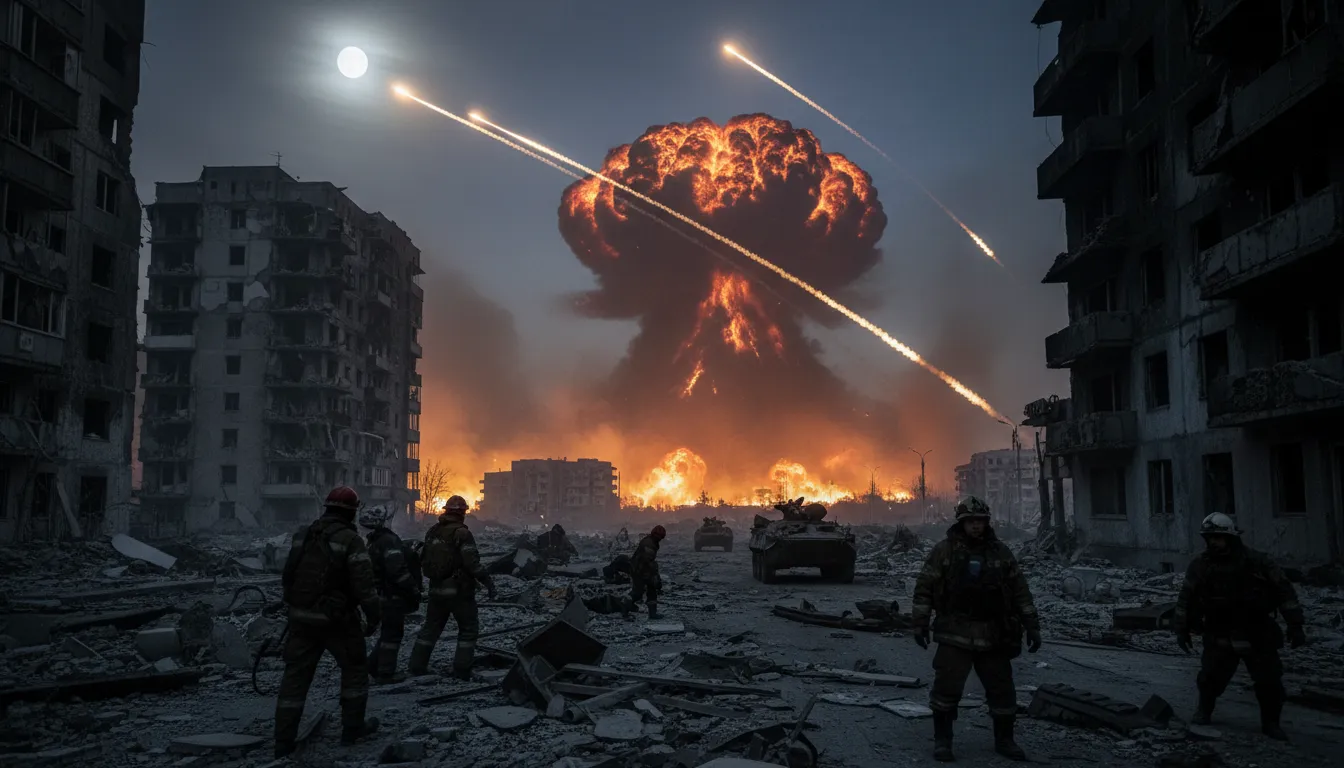
Russia unleashed one of its largest attacks in months on Ukraine on the night of February 22, launching 50 ballistic and cruise missiles and 297 drones just two days before the fourth anniversary of its full-scale invasion. The primary targets were Ukraine's energy infrastructure, though the barrage also struck residential buildings and railway facilities across multiple regions.
In Kyiv, at least one person was killed and more than 15 others were wounded — including four children — as Ukrainian air defenses scrambled to intercept the incoming barrage. The Kharkiv region suffered strikes on 12 settlements, injuring six people. Fires broke out at energy facilities in Odesa. Ukrainian President Volodymyr Zelensky said Russian forces had launched more than 1,300 drones, 1,400 guided bombs, and 96 missiles in that week alone — what Kyiv describes as a deliberate effort to shatter civilian infrastructure before winter's end.
Putin Declares Nuclear Forces an 'Absolute Priority'
The attacks coincided with Vladimir Putin's televised address for Russia's Defender of the Fatherland Day, in which he declared the development of the country's nuclear triad an "absolute priority."
"The development of the nuclear triad, which guarantees Russia's security and ensures effective strategic deterrence and a balance of forces in the world, remains an absolute priority," Putin said. He also pledged to accelerate development of advanced weapons systems and to draw on battlefield lessons from Ukraine.
The declaration came less than three weeks after the expiry of New START — the last remaining nuclear arms control treaty between Washington and Moscow — which lapsed on February 5, 2026. With no successor agreement in sight, analysts warn of a new nuclear arms race. The Council on Foreign Relations has described the post-New START era as "nukes without limits," with neither side bound by verified ceilings on warhead numbers or delivery systems.
Pope Leo Urges an Immediate Ceasefire
At the Vatican, Pope Leo XIV used his Angelus address on February 22 to issue an urgent appeal, declaring that ending the war "cannot be postponed." The pontiff lamented "so many victims, so many lives and families shattered, such immense destruction, such unspeakable suffering," and called for weapons to fall silent and dialogue to resume.
Leo has repeatedly offered the Vatican as a neutral venue for negotiations between Kyiv and Moscow — an offer Russia has so far declined. The pontiff has met President Zelensky three times since taking office and has consistently framed peace as a moral imperative, not a political option.
Europe Rallies, Diplomacy Stalls
On February 24 — the anniversary itself — the European Parliament convened an extraordinary plenary session in Brussels, approving a €90 billion loan to Ukraine funded through joint EU debt, agreed by all 27 member states. Pro-Ukraine demonstrations were held in Washington, Paris, and Prague.
US-mediated peace talks in Geneva, led by special envoy Steve Witkoff, ended ahead of schedule the previous week without any breakthrough. Ukrainian officials and analysts have warned that American-brokered pressure could lead to an agreement locking in Russian territorial gains without sufficient security guarantees for Kyiv.
As Ukraine enters its fifth year of war, sustained Russian strikes, nuclear rhetoric from Moscow, and stalled negotiations paint a bleak picture — with no clear path to peace on the horizon.