Duterte Faces ICC Over Drug War Crimes Against Humanity
The International Criminal Court opened a landmark confirmation hearing in The Hague on February 23 against former Philippine President Rodrigo Duterte, charged with crimes against humanity for thousands of killings during his brutal 'war on drugs.'
A Historic Reckoning in The Hague
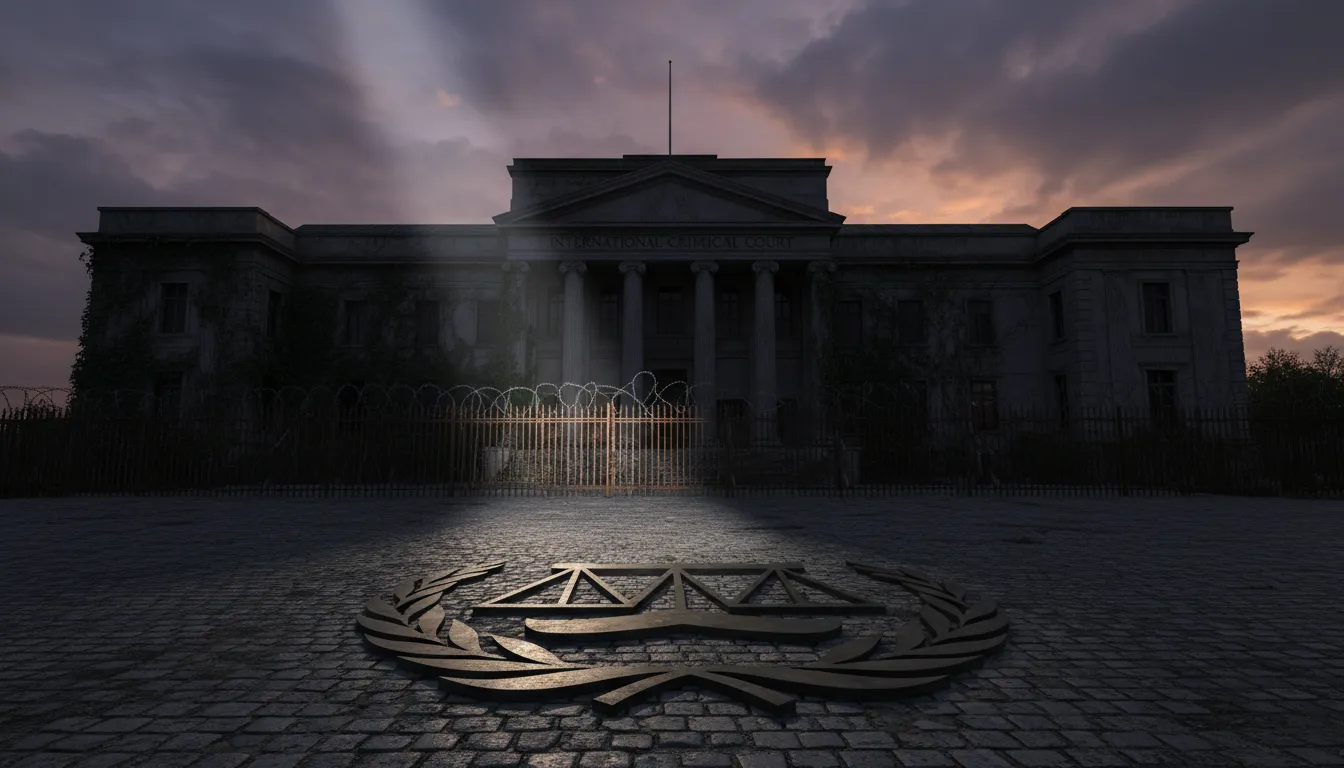
The International Criminal Court (ICC) opened a landmark confirmation of charges hearing on Monday against former Philippine President Rodrigo Duterte, marking one of the most significant moments in international justice in years. Four sessions scheduled across February 23–27 in The Hague will determine whether sufficient evidence exists to send the 79-year-old to trial for crimes against humanity stemming from his notorious "war on drugs."
The Charges
Prosecutors have brought three counts of crimes against humanity for murder, spanning killings committed between November 2011 and March 2019 — a period covering both Duterte's tenure as mayor of Davao City and his time as Philippines president. The indictment covers dozens of specific incidents: nine operations in Davao City resulting in 19 deaths, five incidents with 14 killings of alleged drug syndicate members during his presidency, and 35 village-level operations resulting in 45 murders and attempted murders.
Prosecutors allege Duterte bears criminal responsibility through indirect commission, ordering, instigating, and aiding these killings — a legal theory that places systemic state policy squarely at the feet of its architect.
Scale of the Killings
The anti-drug campaign unleashed after Duterte's election in June 2016 was staggering in its violence. The United Nations estimated approximately 8,663 deaths attributable to police operations alone. Human Rights Watch puts the toll above 12,000, while domestic rights organizations suggest the true figure could reach 30,000 when unidentified armed assailants — believed to operate with official sanction — are counted. In just the first six months of Duterte's presidency, an average of 34 people died per day.
Human Rights Watch documented a systematic pattern in which police regularly planted handguns on victims to fabricate justifications for the killings, suggesting not rogue behavior but institutionalized murder.
The Road to The Hague
Duterte's journey to the ICC dock has been legally tortuous. The Philippines withdrew from the Rome Statute in March 2019, in part to escape ICC scrutiny — but the court retained jurisdiction over crimes committed while the country was still a member. The ICC authorized a full investigation in 2023.
In a dramatic turn, Duterte was arrested on March 11, 2025, by Philippine National Police acting on an Interpol notice at Manila's Ninoy Aquino International Airport as he arrived from Hong Kong. President Ferdinand Marcos Jr. — once a declared opponent of ICC cooperation — approved the handover, citing Interpol obligations. The Philippines thus became only the second country in history to arrest a former head of state and transfer them to the ICC, following Ivory Coast's surrender of Laurent Gbagbo.
Hearing Held in Absentia
In a last-minute procedural twist, Pre-Trial Chamber I granted the defence's request to waive Duterte's physical attendance. The hearing proceeds with legal teams arguing in his absence. Judges found him fit to participate in proceedings as recently as January 26, 2026. If the chamber confirms the charges — a decision expected within 60 days of the hearing's close — the case advances to a full trial before the ICC.
An International Precedent
Rights organizations have framed the proceedings as a watershed. Amnesty International called the hearing "a crucial opportunity for justice" for victims and survivors. Maria Elena Vignoli of Human Rights Watch emphasized that "the ICC case reflects the determination of victims and their families to advance justice against all odds."
Legal scholars are watching closely: this is the first ICC case involving a former leader of a country that withdrew from the Rome Statute but was brought back into accountability through the court's retained jurisdiction. The outcome will shape how international law handles future withdrawals designed as escape hatches from justice.
What Comes Next
The confirmation hearing is not a verdict — it is a gatekeeping procedure under Article 61 of the Rome Statute to assess whether the prosecution's evidence clears the threshold of "substantial grounds to believe" Duterte committed the alleged crimes. If it does, a historic trial will follow. For the thousands of families who lost relatives in back-alley police operations and vigilante killings, the four days in The Hague represent something they have long been denied at home: a day in court.