How Commercial Space Stations Work—and Why the ISS Era Is Ending
With the International Space Station set for retirement, NASA is betting on private companies to build its replacements. Here's how commercial space stations work and what the transition means for humanity's future in orbit.
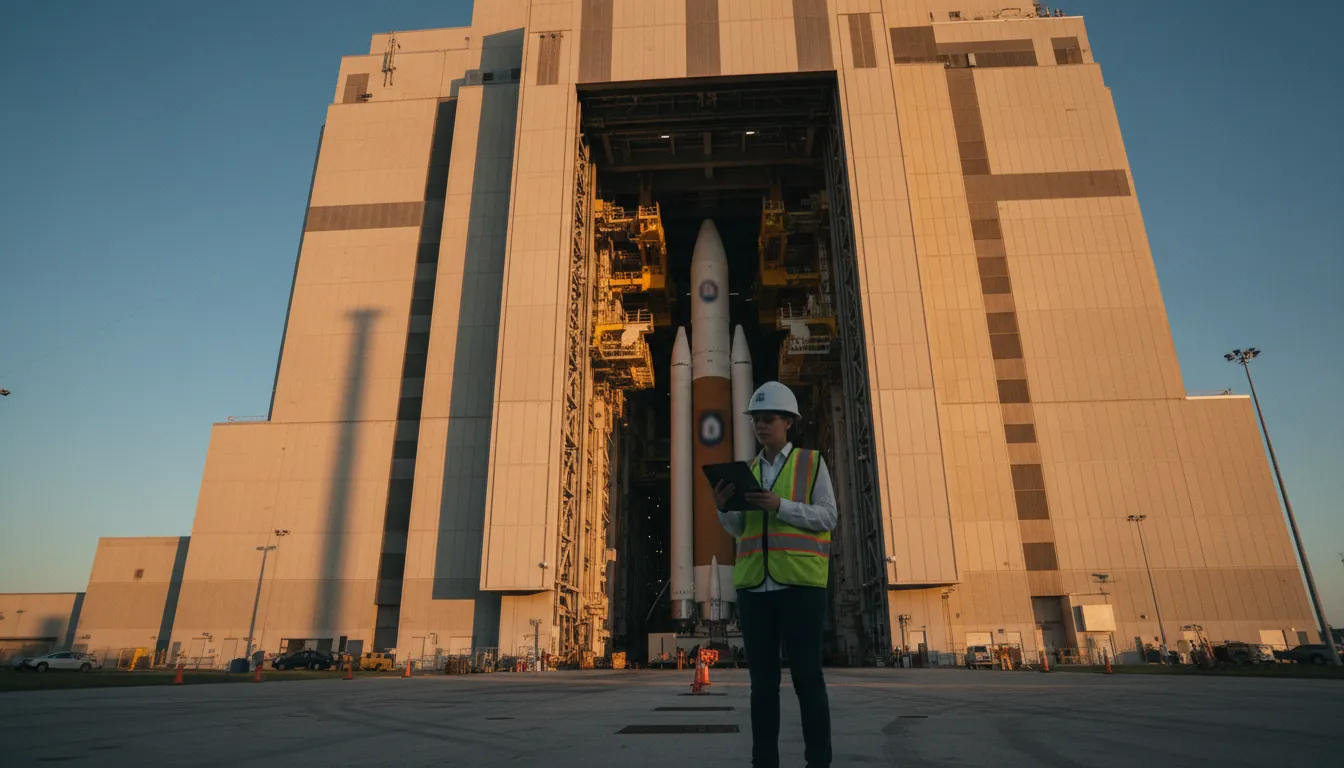
The Biggest Lab in History Is Closing
The International Space Station has orbited Earth for more than a quarter-century, hosting over 3,000 scientific experiments and continuous human presence since the year 2000. But the roughly $150 billion outpost is aging. NASA plans to deorbit the ISS around 2030, sending its remains into a remote stretch of the Pacific Ocean. What comes next represents a fundamental shift: for the first time, the stations replacing it will be owned and operated by private companies, not governments.
Why NASA Is Handing Over the Keys
Operating the ISS costs NASA roughly $3–4 billion per year—about a third of its human spaceflight budget. By transitioning to commercial stations, the agency plans to buy research time as a customer rather than bearing the full cost of ownership. That frees up funds for deeper-space ambitions like lunar bases and eventual Mars missions.
In 2021, NASA awarded over $400 million in initial contracts under its Commercial Low-Earth Orbit Destinations (CLD) programme to stimulate private development. Phase 2 contracts, worth between $1 billion and $1.5 billion, are expected in 2026, with NASA hoping for at least two years of overlap between commercial operations and the ISS before the old station's fiery farewell.
Who Is Building What
Several companies are racing to fill the ISS-shaped hole in low-Earth orbit:
- Vast Space — Haven-1: Set to become the first privately built space station, Haven-1 is a single-module outpost weighing about 14,000 kg. It will launch aboard a SpaceX Falcon 9 and host crews of up to four astronauts delivered by Crew Dragon. The station includes a microgravity research lab with 10 payload slots and Starlink internet connectivity—a first for any space station.
- Axiom Space: Rather than launching a standalone station, Axiom plans to attach its first module to the ISS itself, then detach and fly independently once additional modules arrive. This incremental approach lowers risk by leveraging existing ISS infrastructure during the transition.
- Blue Origin — Orbital Reef: A joint venture with Sierra Space, Orbital Reef envisions a multi-module station designed to support research, tourism, and manufacturing. The project completed its System Definition Review with NASA, though its launch target has shifted toward 2030.
- Starlab (Voyager Technologies): Backed by Airbus and originally developed by Nanoracks, Starlab aims to provide a continuously crewed research platform in low-Earth orbit.
How a Commercial Station Differs From the ISS
The ISS was built through an intergovernmental treaty involving 15 nations, assembled piece by piece over more than a decade. Commercial stations flip this model. Private companies own the hardware, set the schedules, and sell access to multiple customers—NASA being just one of them. Other buyers include pharmaceutical firms running microgravity drug experiments, materials scientists growing high-purity crystals, national space agencies without their own orbital outpost, and even space tourists.
The economics look different, too. Where the ISS had one operator and many partners, commercial stations compete for business, which in theory drives down costs and accelerates innovation. NASA estimates it could save hundreds of millions of dollars per year by purchasing services rather than managing operations directly.
The Gap That Worries Experts
The biggest concern is timing. The ISS is scheduled to deorbit around 2030, but none of the commercial replacements are guaranteed to be fully operational by then. A gap in crewed access to low-Earth orbit would break a streak of continuous human presence in space stretching back to November 2000. Lawmakers and aerospace analysts have warned that even a short gap could cede strategic ground to China, which operates its own Tiangong station independently.
MIT Technology Review named commercial space stations one of its 10 Breakthrough Technologies of 2026, underscoring both the promise and the urgency of the transition.
What It Means for Humanity in Orbit
If the transition succeeds, low-Earth orbit could evolve from a single shared outpost into a neighbourhood of competing stations—each tailored to different customers and purposes. That shift would mark the moment space infrastructure moved from a government monopoly to a commercial marketplace, much as satellite communications did decades earlier. The ISS proved humans could live and work in space; its successors must prove they can do it profitably.