How Political House Arrest Works—and Why It Persists
Political house arrest confines dissidents and rivals to their homes instead of prison cells, giving governments a tool that silences opposition while softening the optics of repression.

A Cage With a Front Door
When Myanmar's military junta announced it had moved Nobel laureate Aung San Suu Kyi from prison to house arrest, it called the gesture a humanitarian kindness. Rights groups called it public relations. That tension captures the essence of political house arrest — a practice as old as monarchy, yet still flourishing in the modern era.
Unlike ordinary criminal home detention, political house arrest targets individuals not for what they did, but for what they represent. It removes a leader from public life without the international backlash that accompanies a prison sentence or worse. Understanding how it works reveals why governments — from democracies to dictatorships — keep reaching for this tool.
How It Works in Practice
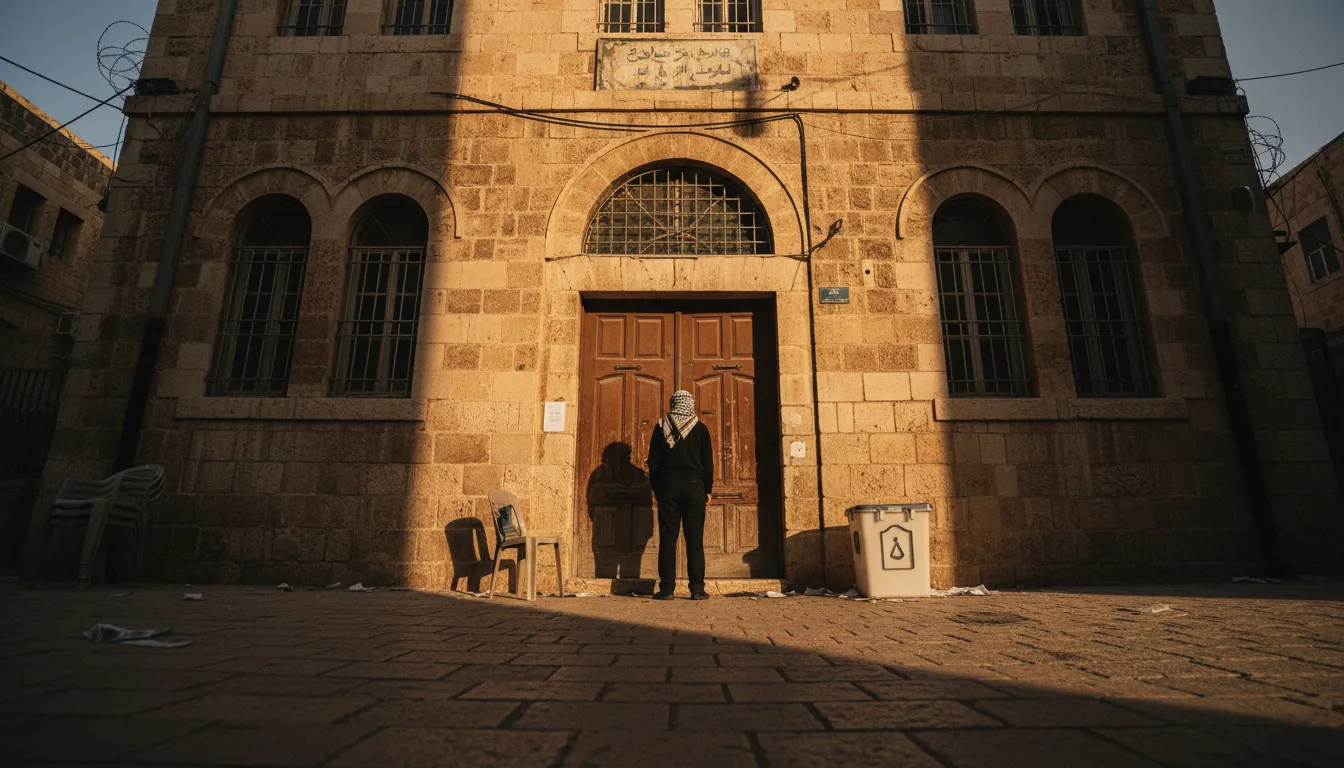
At its simplest, political house arrest confines a person to a designated residence under constant surveillance. Security forces control who enters and exits. Communication — phone calls, internet, mail — is typically restricted or monitored. The detainee may be denied access to lawyers, journalists, and sometimes even family members.
The legal basis varies wildly. In democratic legal systems, house arrest usually requires a court order and comes with defined conditions: ankle monitors, approved travel windows for work or medical care, and periodic judicial review. In authoritarian settings, no such safeguards exist. A decree from a military council or a directive from a security ministry can impose indefinite confinement with no charges, no trial, and no appeal.
Enforcement ranges from a police officer stationed outside the door to a full military cordon. Iran's security apparatus placed opposition leaders Mir-Hossein Mousavi and Mehdi Karroubi under house arrest in 2011 — a detention that persisted for years with no formal charges or legal proceedings. In Pakistan, then-President Pervez Musharraf placed Chief Justice Iftikhar Muhammad Chaudhry under house arrest in 2007, triggering a lawyers' movement that ultimately toppled Musharraf himself.
Why Governments Prefer It to Prison
House arrest offers authoritarian regimes several advantages over incarceration. First, optics: telling the world that an opponent lives at home sounds gentler than throwing them in a cell. Myanmar's junta framed Suu Kyi's transfer as a Buddhist act of mercy, even as her son said he still did not know where she was or whether she was alive.
Second, deniability. Governments can claim the detainee is free to live comfortably, deflecting accusations of political persecution. As Radio Free Europe/Radio Liberty has documented, this allows regimes to "neutralize" opposition figures while maintaining a veneer of moderation.
Third, isolation. A political prisoner in a crowded jail can become a symbol, rallying fellow inmates and drawing media attention. A dissident alone in a house, cut off from supporters and cameras, fades from public consciousness — which is often the point.
A Long History
The practice stretches back centuries. In 1633, the Catholic Church confined Galileo Galilei to his villa near Florence for championing heliocentrism — a sentence he served until his death. After Nikita Khrushchev was ousted as Soviet leader in 1964, he was banished to his country dacha under KGB watch rather than executed, as earlier Soviet tradition would have demanded.
Suu Kyi remains the modern archetype. She spent roughly 15 of the 21 years between 1989 and 2010 under house arrest, winning the Nobel Peace Prize while confined and becoming one of the world's most recognized political prisoners.
International Law and Its Limits
The International Covenant on Civil and Political Rights prohibits arbitrary detention and guarantees the right to a fair trial — protections that political house arrest routinely violates. The United Nations and organizations like Freedom House classify house arrest without due process as a form of political imprisonment.
Yet enforcement remains weak. Diplomatic statements and sanctions rarely force a regime to free a detainee. As Burma Campaign UK's director Mark Farmaner said of Suu Kyi's latest transfer: "This isn't about change or reform — it's about public relations designed to preserve military rule."
Political house arrest endures precisely because it occupies a grey zone — harsher than freedom, softer than a cell, and just ambiguous enough to let governments claim they are being merciful while silencing the voices they fear most.