How De Novo Protein Design Works—and Why It Matters
Scientists can now design entirely new proteins from scratch using AI tools like RFdiffusion, opening doors to custom medicines, enzymes, and materials that evolution never created.
Building Proteins Nature Never Imagined
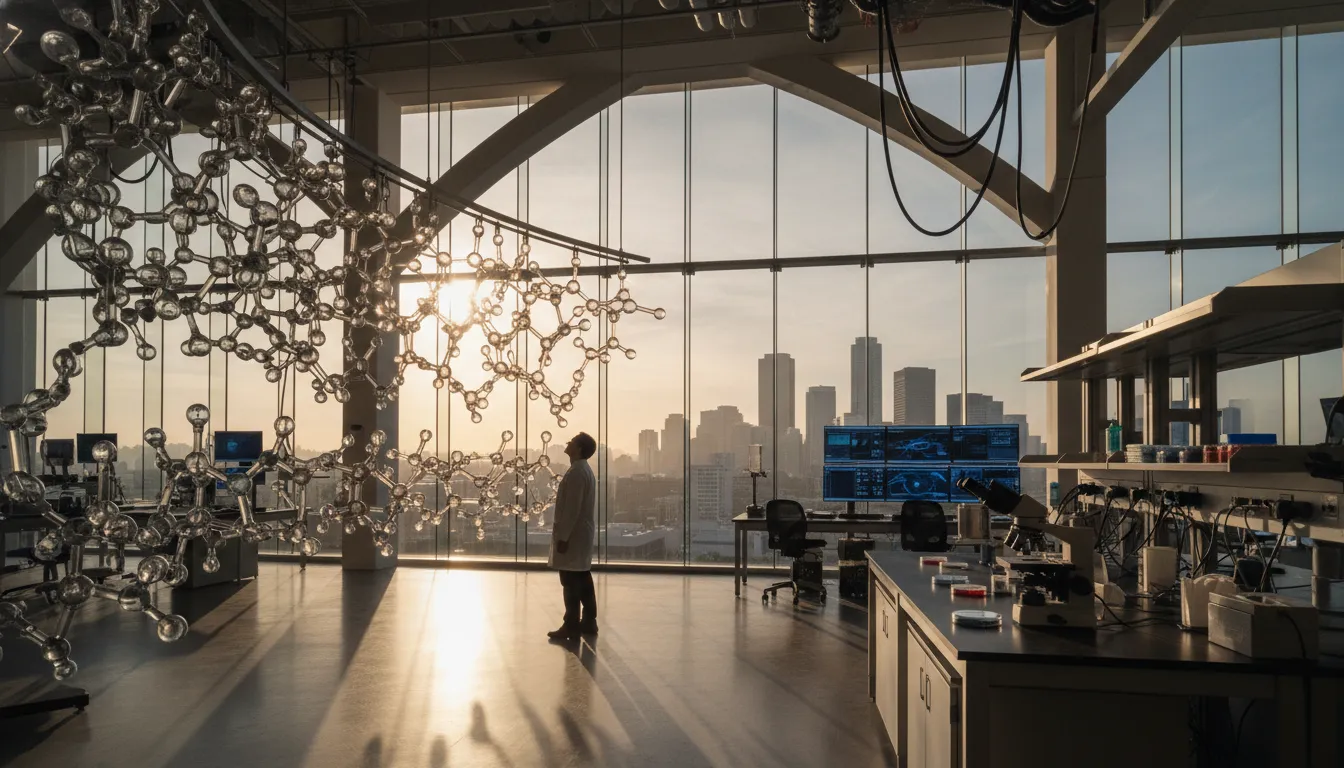
Proteins are the molecular machines of life. They catalyze reactions, fight infections, build tissues, and relay signals across your body. For billions of years, evolution shaped every protein on Earth through random mutation and natural selection—a slow, blind process. Now scientists have learned to skip evolution entirely and design brand-new proteins from scratch.
The field is called de novo protein design, and it earned David Baker of the University of Washington the 2024 Nobel Prize in Chemistry. Combined with breakthroughs in artificial intelligence, it is poised to reshape medicine, materials science, and industrial chemistry.
What Proteins Are—and Why Shape Is Everything
A protein is a chain of amino acids that folds into a precise three-dimensional shape. That shape determines what the protein does: a slight shift can turn a helpful enzyme into a useless lump. Nature's proteins evolved their shapes over millennia. De novo design flips the script: scientists choose a desired shape and function first, then compute an amino acid sequence that will fold into it.
Think of it like architecture. Traditional biology studies existing buildings to understand how they stand. De novo design lets you draft blueprints for structures no one has ever built—and then construct them.
How the Design Process Works
Protein design follows three broad steps:
- Define the target structure. Researchers specify the 3D backbone they want—perhaps a pocket that grips a drug molecule or a cage that delivers a vaccine component.
- Compute the sequence. Software tools search for an amino acid sequence predicted to fold reliably into that shape. The program must satisfy thousands of physical constraints: hydrogen bonds, hydrophobic packing, electrostatic interactions.
- Validate in the lab. The designed gene is synthesized, inserted into cells, and the resulting protein is tested to confirm it actually folds and functions as intended.
For decades, the second step was the bottleneck. Early tools were slow and had low success rates. That changed dramatically with AI.
The AI Revolution: From AlphaFold to RFdiffusion
In 2020, DeepMind's AlphaFold stunned biologists by predicting protein structures with near-experimental accuracy. Baker's lab adapted similar deep-learning architectures—not to predict shapes, but to generate them.
The result was RFdiffusion, a generative AI model that treats protein design like image generation. It starts with random noise and progressively refines it into a viable protein structure, raising experimental success rates by two orders of magnitude. A companion tool, ProteinMPNN, then finds an optimal amino acid sequence in about one second—more than 200 times faster than previous software, according to the National Institutes of Health.
The latest version, RFdiffusion3, can design proteins that interact with DNA, small molecules, and other proteins with atomic precision, producing enzymes nearly as effective as those found in nature.
Real-World Applications
The practical payoffs are already emerging:
- Medicine: Baker's group has designed small proteins that block SARS-CoV-2 infection, nanoparticles that serve as influenza vaccine candidates, and binders that neutralize lethal snake venom toxins.
- Diagnostics: Custom protein sensors can detect substances like fentanyl, offering rapid, low-cost screening tools.
- Materials: Researchers at MIT have begun designing proteins by their motion, not just shape, opening the door to sustainable fibers and biodegradable alternatives to petroleum-based plastics.
- Industrial enzymes: Designed enzymes can catalyze chemical reactions that no natural enzyme performs, potentially greening manufacturing processes.
Challenges Ahead
Despite rapid progress, hurdles remain. Not every designed protein folds correctly once synthesized, and success rates—while vastly improved—still require screening multiple candidates. Designing proteins with complex, multi-step catalytic functions remains harder than designing simple binders. And translating lab successes into approved drugs or commercial products takes years of safety testing and regulatory review.
Still, the trajectory is clear. With AI tools now open-source and improving rapidly, the Protein Design Archive already catalogued over 1,500 structurally confirmed designs by early 2025. Scientists are no longer limited to the proteins evolution happened to produce. They can now build molecular machines to order—one amino acid at a time.