How Glacier Protection Laws Work—and Why They Matter
Glaciers store about 75% of Earth's freshwater and supply water to nearly two billion people. A small but growing number of countries have passed laws to shield them from mining and development—but enforcement remains a global challenge.
Frozen Reserves Under Legal Guard
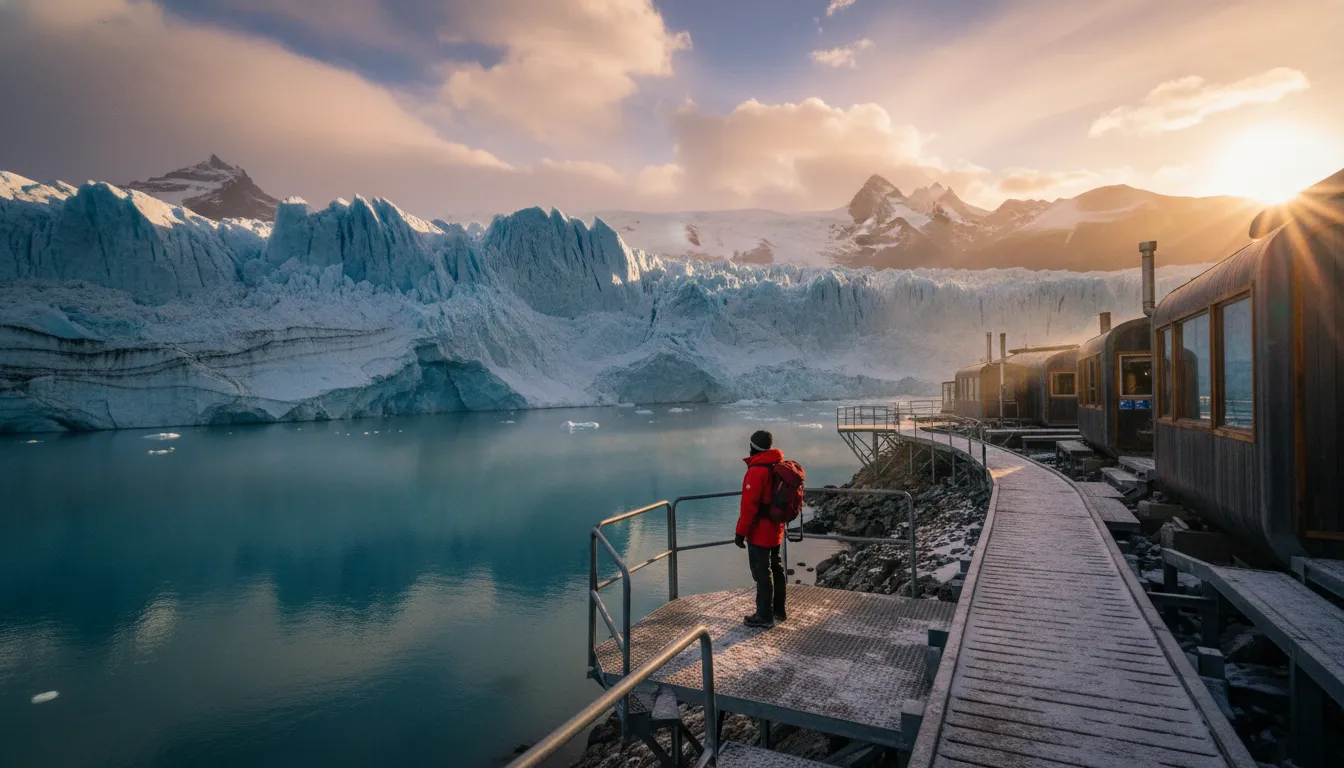
Glaciers hold roughly three-quarters of Earth's freshwater, making them the planet's largest reservoir of drinkable water. Nearly two billion people—one in every four humans—depend on glacier and snowmelt for drinking water, irrigation, and hydroelectric power. Yet these frozen reserves face twin threats: climate change is shrinking them, and industrial activity, especially mining, accelerates their destruction. In response, a handful of countries have attempted something unusual: passing laws that treat glaciers as legally protected public assets.
What Glacier Protection Laws Do
Glacier protection laws (GPLs) typically classify glaciers—and often the periglacial zones surrounding them—as public goods and strategic water reserves. They prohibit or restrict activities that could damage ice bodies, including mining, infrastructure construction, and industrial waste disposal. Most require national glacier inventories, mandate environmental impact assessments before any nearby development, and establish monitoring programs.
A key feature of the most comprehensive GPLs is their inclusion of periglacial environments—areas of frozen or ice-saturated ground at the edges of glaciated regions. These zones act as slow-release water reservoirs, feeding rivers during dry seasons when other water sources run low. Protecting only visible ice while ignoring periglacial ground would leave much of the glacial water system exposed.
Argentina: The Pioneer
Argentina became the world's first country to enact a dedicated glacier protection law in 2010. Law 26.639 declared all glaciers and periglacial landscapes public assets, banned mining and oil extraction on or near them, and mandated a comprehensive national glacier inventory. The law's path was rocky from the start: an earlier 2008 version was vetoed by President Cristina Fernández de Kirchner under pressure from the mining industry, which generates billions in annual revenue.
Argentina's roughly 17,000 glaciers supply an estimated 70 percent of the country's freshwater. Yet in April 2026, Congress approved reforms that transferred authority over defining protected glacier areas from the national scientific institute (IANIGLA) to provincial governments—a move critics say allows political convenience to override scientific standards.
Chile, Kyrgyzstan, and Beyond
Chile has debated glacier protection legislation since 2006, driven by controversies like the Pascua-Lama gold mine, which threatened high-altitude glaciers in the Atacama region. Nearly 75 percent of Chile's population relies on glacial meltwater. Despite multiple legislative attempts, no comprehensive law has passed, partly because state-owned copper giant Codelco operates in glaciated areas. Courts and environmental regulators have stepped in to limit mining activity on glaciers even without formal legislation.
Kyrgyzstan's parliament approved a glacier protection law in 2014, but the president vetoed it. In countries like Canada, Ecuador, and Switzerland, glacier protections are embedded within broader national park, environmental, or water management legislation rather than standalone laws.
The Mining Tension
The central conflict in glacier protection is economic. Many of the world's richest deposits of copper, gold, lithium, and silver sit beneath or beside Andean glaciers. Mining companies argue that modern extraction techniques can coexist with glacier preservation. Environmentalists counter that dust, chemical contamination, and physical disruption from mining accelerate ice loss far beyond natural rates.
Argentina's 2026 reform illustrates this tension: industry estimates suggest the loosened rules could unlock over $30 billion in mining investment over the next decade, primarily targeting copper and gold. Environmental organizations including Greenpeace have launched legal challenges, arguing the reforms violate constitutional protections for water resources.
Why It Matters Globally
Glacier loss is accelerating worldwide. Human-caused climate change accounts for roughly 69 percent of glacier mass loss observed between 1991 and 2010, according to research cited by the National Snow and Ice Data Center. Small glaciers and ice caps have contributed about 60 percent of the total glacier-driven sea level rise since the 1990s, despite comprising just four percent of global land ice.
As glaciers shrink, the legal frameworks protecting them become more urgent—and more contested. The question facing lawmakers from the Andes to Central Asia is whether short-term economic gains from mining can justify the long-term loss of irreplaceable freshwater reserves that billions of people depend on.