How Pentagon Press Access Works—and Why It Matters
The Pentagon press corps has operated inside the world's largest office building since 1943. Here's how military press credentials work, how the system evolved from Vietnam to the embed era, and why access to defense reporting matters for democracy.
A Pressroom Inside the War Machine
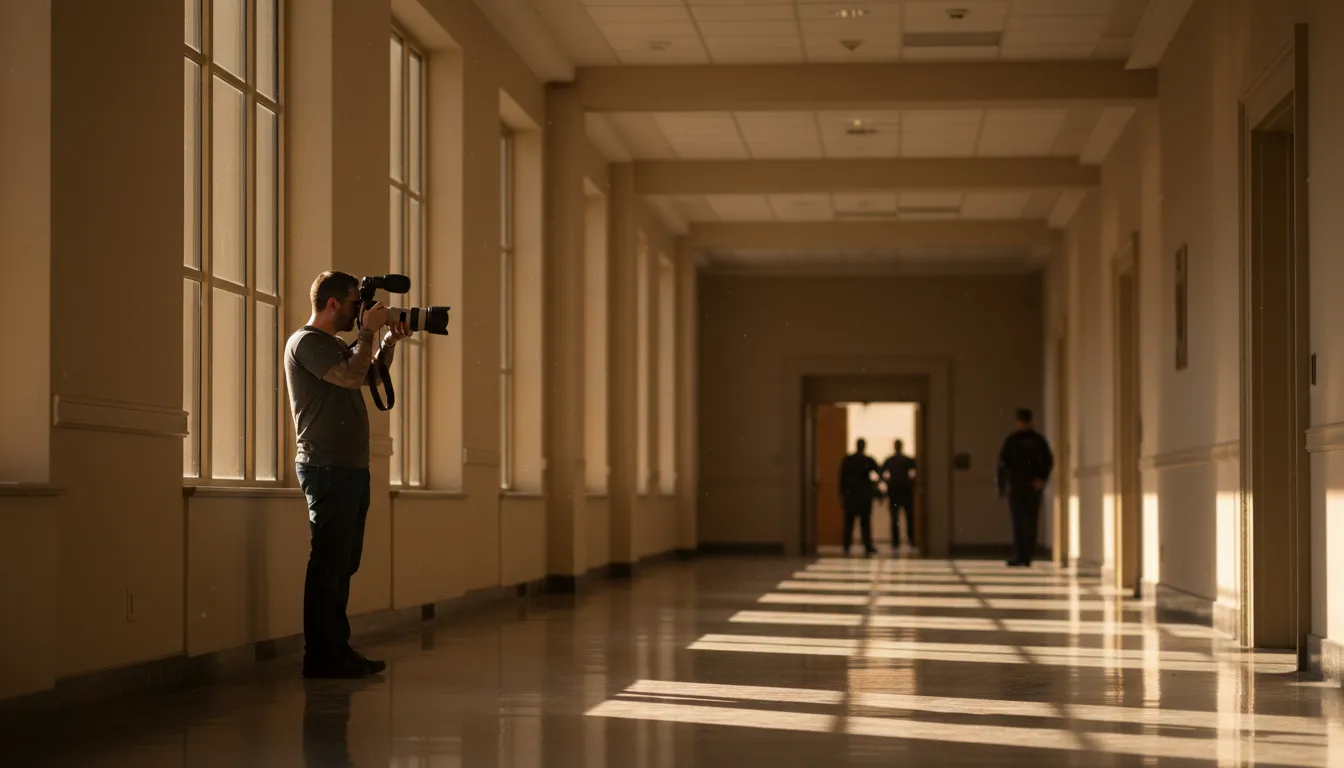
Since the Pentagon opened its doors in 1943, journalists have maintained a permanent presence inside the headquarters of the United States Department of Defense. The Pentagon press corps — organized through the Pentagon Press Association, which represents roughly 100 members from about 56 news outlets — is one of the most consequential reporting operations in the world. These reporters cover military operations, defense policy, and national security decisions that affect millions of lives.
But how does this access actually work? And what happens when it is restricted or revoked?
How Press Credentials Work
Pentagon press badges grant reporters access to unclassified, open areas of the building — including the pressroom, briefing rooms, and certain corridors. Credentials must be worn visibly above the waist at all times. Reporters do not have access to classified spaces, secure communications, or restricted military areas.
Historically, credentialed journalists could move relatively freely through much of the building, attend daily briefings by the Pentagon spokesperson, and approach officials for on-the-record and background conversations. The Defense Department has long maintained that press access is a "privilege, not a right," and that journalists have no greater legal entitlement to enter the Pentagon than the general public.
That framing, however, exists in tension with decades of First Amendment case law establishing that the government cannot arbitrarily restrict press access to spaces it has traditionally opened to journalists.
From Vietnam to Embedded Reporting
The relationship between the U.S. military and the press has shifted dramatically over the past half-century. During the Vietnam War, correspondents enjoyed broad access to the battlefield. At the conflict's peak, more than 600 accredited journalists operated in-country. The unflinching coverage they produced — showing the human cost of a grinding guerrilla war — helped turn public opinion against the conflict.
The military's takeaway was blunt: keep the press out. During the 1983 invasion of Grenada, reporters were barred entirely from the operation's early stages. In the 1991 Gulf War, the Pentagon introduced a pool system, corralling journalists into supervised groups. All copy, photographs, and video were subject to security review before release.
The modern embed program emerged before the 2003 Iraq invasion, when the Defense Department placed journalists directly within fighting units. Embedding gave reporters unprecedented frontline access but also raised concerns about whether proximity to troops compromised editorial independence. Despite these tensions, embedding became the standard model for wartime reporting and remains in use.
Why Legal Protections Matter
The Supreme Court has drawn clear lines around press freedom in national security contexts. In Near v. Minnesota (1931), the court established that the government cannot impose prior restraint — censoring publications before they appear — except in narrow wartime circumstances, such as revealing troop locations. The landmark New York Times Co. v. United States (1971), the Pentagon Papers case, reinforced that principle when the court blocked the Nixon administration from stopping publication of a classified Vietnam War study.
These precedents mean that while the Pentagon can control physical access to its building, it faces significant constitutional constraints on punishing journalists for what they publish or on conditioning access on editorial compliance.
Why Pentagon Reporting Matters
The Defense Department commands a budget exceeding $800 billion annually and oversees operations that span every continent. Pentagon reporters serve as the public's primary source of independent information about how that money is spent, how military operations are conducted, and how defense policy is shaped.
Without a functioning press corps inside the building, the public relies almost entirely on the government's own statements — a dynamic that historians and press freedom advocates argue undermines democratic accountability. As the Columbia Journalism Review has noted, the Pentagon pressroom has been continuously occupied since the Eisenhower era, making any disruption to that presence historically significant.
Whether through pool systems, embed programs, or daily briefings, the mechanisms of Pentagon press access reflect a broader tension at the heart of democracies: balancing genuine national security needs against the public's right to know what its military is doing in its name.