How Pharming Works—Drugs From Genetically Modified Animals
Pharming uses genetically engineered animals like goats and chickens to produce human therapeutic proteins in their milk or eggs, offering a cheaper and scalable alternative to traditional drug manufacturing.
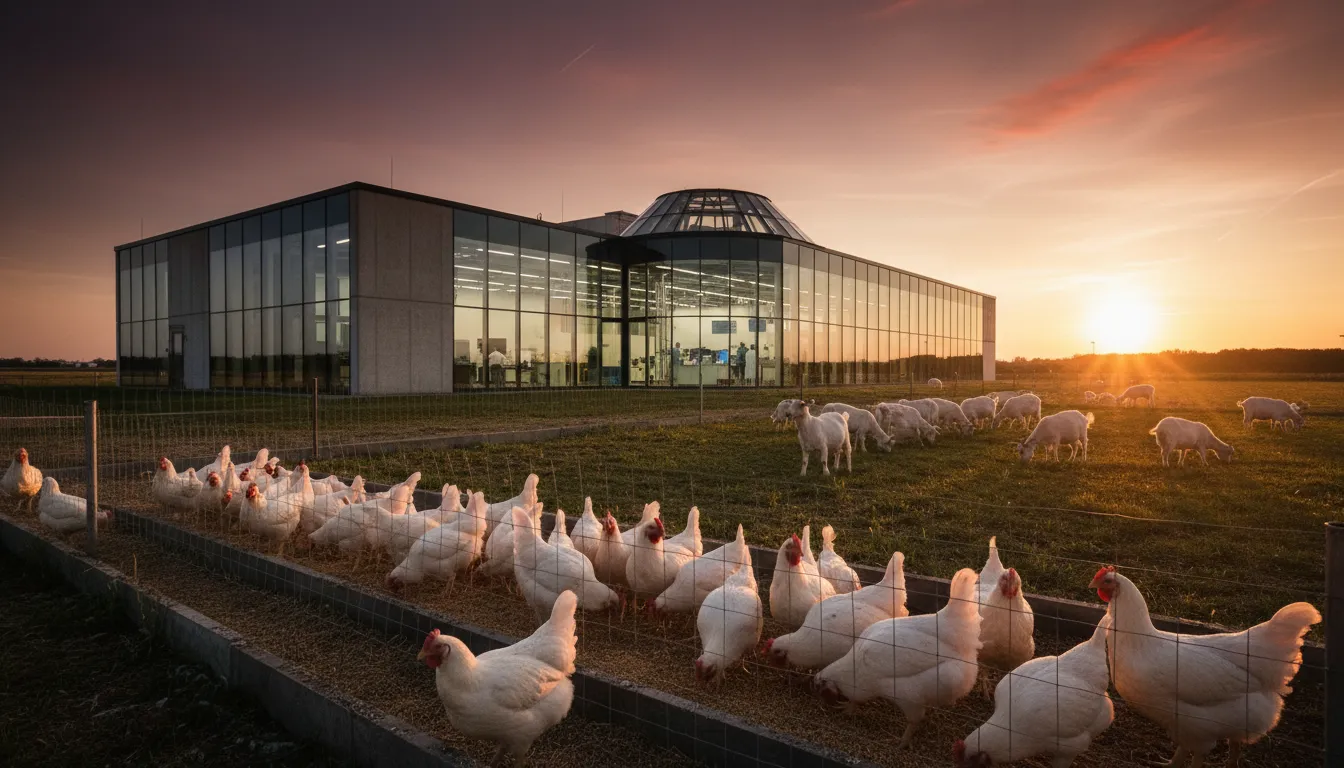
From Farm to Pharmacy
Somewhere in a climate-controlled facility, a flock of hens lays eggs that look perfectly ordinary. But crack one open, and the egg white contains a human therapeutic protein capable of treating a rare, life-threatening disease. Welcome to pharming—a portmanteau of "pharmaceutical" and "farming"—where genetically modified animals serve as living bioreactors for drug production.
The concept sounds like science fiction, yet pharmed drugs have been on the market for over a decade. As traditional biopharmaceutical manufacturing struggles with rising costs and capacity limits, pharming offers a radically different approach: let biology do the heavy lifting.
How Scientists Turn Animals Into Drug Factories
Pharming begins with recombinant DNA technology. Scientists identify the human gene that codes for a desired therapeutic protein—an enzyme, antibody, or hormone. They then fuse that gene with a regulatory DNA sequence from the target animal, one that directs protein expression to a specific tissue such as the mammary gland or the oviduct.
This engineered DNA construct, called a transgene, is introduced into a fertilized embryo, typically through microinjection or viral vectors. The resulting animal carries the human gene in every cell but only activates it where intended. In goats and cows, the protein appears in milk. In chickens, it accumulates in egg whites.
Once the animal matures and begins producing milk or laying eggs, the target protein is extracted and purified using standard biochemical techniques. The animal itself is unharmed—goats are milked normally, and hens lay eggs on their usual schedule.
Real Drugs, Real Patients
The first pharmed drug to reach patients was ATryn, a recombinant human antithrombin produced in the milk of transgenic goats. Approved by the European Commission in 2006 and by the U.S. FDA in 2009, ATryn treats hereditary antithrombin deficiency, a clotting disorder affecting roughly one in every 5,000 people. According to its manufacturer, a single transgenic goat produces as much antithrombin per year as 90,000 human blood donations.
In 2015, the FDA approved Kanuma (sebelipase alfa), a recombinant enzyme produced in the eggs of genetically engineered chickens. Kanuma treats lysosomal acid lipase deficiency, a rare inherited condition that causes fat to accumulate dangerously in the liver and spleen. It became the first drug manufactured in chicken eggs and approved for human use.
Why Eggs and Milk Beat Steel Tanks
Conventional biopharmaceutical production relies on mammalian cell cultures grown in stainless-steel bioreactors—a process that is effective but expensive and slow to scale. Building a new production facility can cost hundreds of millions of dollars and take years.
Pharming offers several advantages:
- Lower cost: Animals are relatively inexpensive to maintain compared to industrial cell-culture facilities.
- Rapid scale-up: Breeding more animals is faster than constructing new factories.
- High yield: A hen can lay up to 300 eggs per year, and researchers at the Roslin Institute have shown that as few as three eggs can deliver a clinically relevant drug dose.
- Proper protein folding: Animal cells naturally add the complex sugar modifications that many human proteins need to function correctly—something bacterial systems cannot do.
Challenges and Ethical Questions
Pharming is not without hurdles. Only about one percent of microinjected embryos produce a live animal that properly expresses the transgene, making the initial creation of founder animals time-consuming. Regulatory oversight is also complex: the FDA's approval of Kanuma required coordination between its Center for Veterinary Medicine and its Center for Drug Evaluation and Research.
Animal welfare concerns persist, though researchers emphasize that transgenic animals show no adverse health effects and live normal lives. Containment is another consideration—pharmed animals must be kept separate from the food supply to prevent therapeutic proteins from entering the food chain.
What Comes Next
Advances in gene-editing tools like CRISPR are making it faster and more precise to create transgenic animals, potentially improving the low success rates that have historically limited pharming. Researchers are also exploring new host species and expression systems to broaden the range of proteins that can be produced.
As demand for complex biologic drugs continues to grow—monoclonal antibodies, enzyme replacements, and novel cytokines—pharming stands as a proven, scalable alternative that turns the world's oldest industry into a frontier of modern medicine.


