How Synthetic Fertilizers Feed Half the World
Behind every loaf of bread and bowl of rice lies an invisible chemical revolution. Synthetic fertilizers, born from a century-old process, now sustain nearly half of all humanity — and their price swings can trigger global hunger.
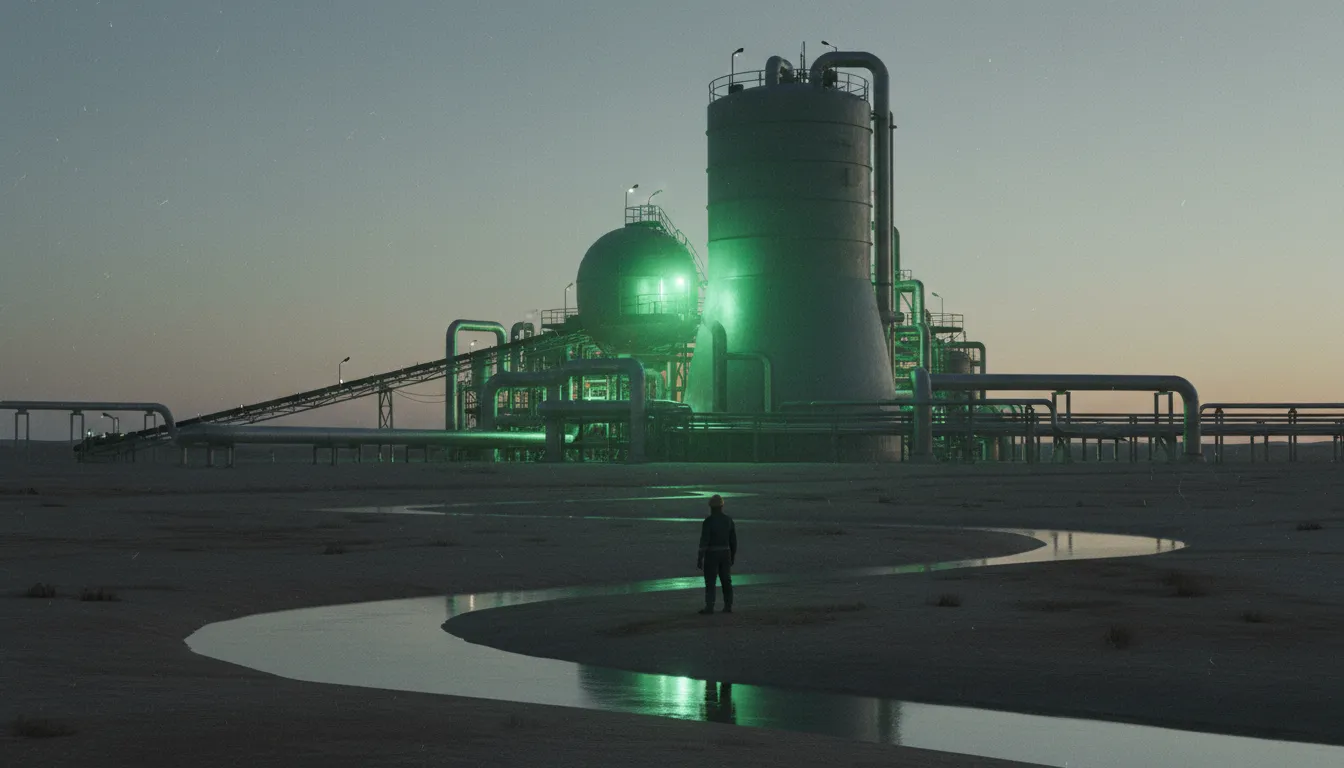
The Invisible Engine of Global Agriculture
Pick up any food product and trace it back far enough, and you will almost certainly arrive at the same place: a bag of granular fertilizer dissolving into farmland soil. Synthetic fertilizers now feed roughly half the world's population — an estimated 3.5 to 4 billion people who would not survive on what unassisted soil could produce. Understanding how fertilizers work is not just chemistry class trivia; it is a window into one of the most consequential technologies in human history.
What Plants Actually Need
Plants build themselves almost entirely from three inputs: sunlight, water, and nutrients pulled from the soil. Of those nutrients, three matter most, abbreviated on every fertilizer bag as N-P-K: nitrogen, phosphorus, and potassium.
- Nitrogen (N) drives leafy green growth. It is a core component of chlorophyll — the molecule that captures sunlight — and of amino acids, the building blocks of every protein a plant produces.
- Phosphorus (P) fuels root development and seed formation. Without it, plants cannot replicate DNA or build the cell walls needed for reproduction.
- Potassium (K) acts as the plant's immune system and plumbing. It regulates water uptake, activates enzymes, and bolsters resistance to disease.
Soils naturally contain all three nutrients, but intensive farming depletes them faster than ecological cycles can replenish. That is where fertilizers come in — supplementing what the earth can no longer provide on its own.
The Haber-Bosch Revolution
Nitrogen is paradoxically both everywhere and nowhere. It makes up 78% of the atmosphere, yet plants cannot absorb it directly from the air. For millennia, farmers relied on manure, crop rotation, and a fortunate partnership between legumes and nitrogen-fixing bacteria in their roots. By the early 20th century, scientists were warning that these natural sources would not be enough to feed a growing industrial world.
In 1909, German chemist Fritz Haber cracked the problem in a laboratory: he forced atmospheric nitrogen and hydrogen together under extreme heat and pressure in the presence of an iron catalyst, producing ammonia (NH₃) — a compound plants can actually use. By 1913, industrial chemist Carl Bosch had scaled the reaction into the world's first large-scale synthetic ammonia plant, operated by BASF. Both men eventually received Nobel Prizes in Chemistry for their work.
The Haber-Bosch process — as it became known — is arguably the most consequential invention of the 20th century. Research published by Our World in Data estimates that without it, the world's crop yields in 2000 would have required nearly four times more farmland to sustain the same harvest. The global population could not have grown from 1.6 billion in 1900 to over 8 billion today without the nitrogen those plants supplied.
From Factory to Field: How It Works
The Haber-Bosch process converts atmospheric nitrogen into ammonia at industrial scale. That ammonia becomes the feedstock for a cascade of nitrogen fertilizer products — urea, ammonium nitrate, ammonium sulfate — which farmers apply to fields as granules, liquids, or gases injected directly into the soil.
Once in the soil, microbes convert ammonia into nitrate ions (NO₃⁻), which plant roots absorb through a process called ion exchange. Phosphorus and potassium fertilizers, derived largely from mined mineral deposits, follow a similar path: they dissolve in soil water, forming ions that roots draw in alongside moisture.
The catch is efficiency. Crops typically absorb only about half the nitrogen applied. The rest either leaches into groundwater, runs off into rivers and lakes — causing oxygen-depleting algae blooms known as eutrophication — or is broken down by soil bacteria into nitrous oxide (N₂O), a greenhouse gas roughly 270 times more potent than CO₂ over a century. According to MIT's Climate Portal, the Haber-Bosch process alone accounts for about 1% of all human-made carbon dioxide emissions, and fertilizer-related nitrous oxide emissions add significantly to that footprint.
Why Prices Ripple Into Everything
Because the Haber-Bosch process runs on natural gas — both as a hydrogen source and as fuel — fertilizer prices track energy markets almost perfectly. When gas prices spike, so does the cost of nitrogen fertilizer, which flows directly into food prices globally.
This chain reaction has played out visibly in recent years. The 2022 energy crisis, triggered by Russia's invasion of Ukraine (Russia is a major natural gas and fertilizer exporter), sent nitrogen fertilizer prices to record highs. USDA analysis found that the price surge hit smallholder farmers in sub-Saharan Africa and South Asia hardest — those with the least financial buffer to absorb input cost shocks. In 2025, World Bank data showed the fertilizer price index rising 15% in a single quarter, with some phosphate products climbing over 40%.
China's export restrictions on nitrogen fertilizers — which shrank its exports by over 90% in 2024 — demonstrated how geopolitical decisions in one country can instantly tighten global supply and push food prices higher everywhere else.
The Search for Smarter Alternatives
Scientists and agribusinesses are racing to close the efficiency gap. Precision fertilization — using sensors, satellite data, and AI to apply exactly the right nutrient dose at the right time — can cut nitrogen losses significantly. Research into enhanced nitrogen-fixing bacteria aims to recreate the legume trick in wheat and maize. And green ammonia, produced using renewable electricity instead of natural gas, promises to decouple the process from fossil fuels entirely.
For now, the world remains deeply dependent on a century-old chemical reaction happening inside enormous pressurized reactors. The next time global grain prices rise, there is a good chance the answer lies not in drought or war alone, but in the price of the invisible granules farmers are — or are not — able to afford.


