How the IPC Measures Famine—From Phase 1 to Phase 5
The Integrated Food Security Phase Classification is the global standard for measuring hunger. Here is how its five-phase scale works, what triggers a famine declaration, and why critics say it undercounts the hungry.
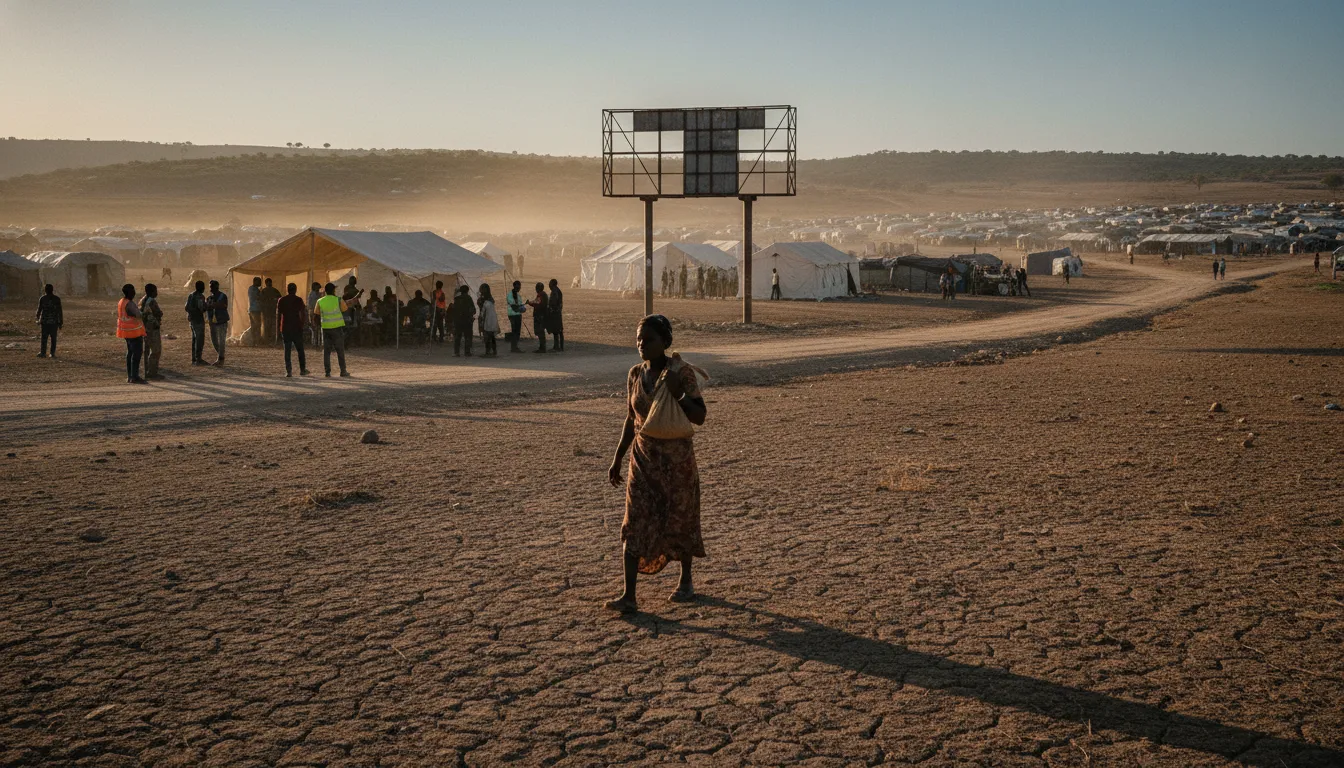
A Common Language for Hunger
When the United Nations declares that a region faces famine, the announcement does not come from a single agency's gut feeling. It rests on a technical framework called the Integrated Food Security Phase Classification, or IPC—a standardized scale that translates complex data about food, nutrition, and death into a single severity rating. Governments, aid organizations, and donors use that rating to decide where billions of dollars in humanitarian assistance go each year.
Understanding how the IPC works matters because the word "famine" carries enormous political and financial weight. A classification too late can cost thousands of lives; a classification too loose can misdirect scarce resources.
Origins and Structure
The IPC was created in 2004 by the UN Food and Agriculture Organization for use in Somalia, where overlapping crises made it nearly impossible to compare food security data across regions. Today a global partnership of 19 organizations—including the World Food Programme, UNICEF, and FEWS NET—maintains the system, which has been applied in more than 30 countries.
The framework classifies areas into five phases of acute food insecurity:
- Phase 1 — Minimal: Households can meet essential food and non-food needs.
- Phase 2 — Stressed: Households have minimally adequate food but cannot afford some essentials like education or health care.
- Phase 3 — Crisis: Households face significant food gaps or are depleting assets to survive. Acute malnutrition is elevated.
- Phase 4 — Emergency: Households face extreme food gaps, very high acute malnutrition, and excess mortality.
- Phase 5 — Catastrophe/Famine: Starvation, death, and destitution are widespread. When an entire area meets the threshold, the classification shifts from "Catastrophe" (household-level) to "Famine" (area-level).
What Triggers a Famine Declaration
Phase 5 — Famine is the most difficult classification to trigger, by design. Three outcome thresholds must all be met simultaneously in a given area:
- Food deprivation: At least 20 percent of households face an extreme lack of food.
- Acute malnutrition: The rate of global acute malnutrition (GAM) among children reaches 30 percent or higher.
- Mortality: The crude death rate exceeds two deaths per 10,000 people per day.
The IPC further distinguishes between a famine classified with solid evidence—direct, reliable data for all three indicators—and one classified with reasonable evidence, where analysts have strong data for two indicators and can reasonably infer the third. This two-tier approach was introduced so that conflict zones with limited humanitarian access, where collecting mortality data is dangerous or impossible, can still receive a famine classification when circumstances clearly warrant it.
Even then, the classification must pass a Famine Review—an additional quality-assurance step involving independent experts—before it is officially issued.
How the Data Gets Collected
IPC analyses are consensus-based. Technical working groups of trained analysts from governments, UN agencies, and NGOs gather to evaluate data from multiple external sources: household food consumption surveys, market price monitoring, nutrition screenings, satellite weather data, and displacement figures. They follow a structured protocol set out in the IPC Technical Manual, but expert judgment plays a significant role, particularly where hard data is thin.
This consensus model is both the system's strength and a source of criticism. It prevents any single organization from controlling the narrative, but it can also slow the process when political sensitivities are high.
Criticism: Does the IPC Undercount Hunger?
A 2025 study published in Nature Food found that global food insecurity estimates systematically undercount those in acute need—by roughly 20 percent. The researchers concluded that one in five people experiencing hunger may go unrecorded, partly because IPC analyses rely on data that is hardest to collect precisely where crises are worst.
Other critics, including researchers writing in Science, argue that the high evidentiary bar for a Phase 5 declaration can delay life-saving aid. By the time all three famine thresholds are documented, thousands may have already died.
Defenders of the system counter that a rigorous standard protects the credibility of the classification. If famine were declared too easily, donor fatigue could set in and the label would lose its power to mobilize emergency resources.
Why It Matters
International agencies and governments use IPC analyses to allocate more than $6 billion in humanitarian assistance annually. The classification determines which crises receive emergency funding, which populations get food airdrops, and which regions are prioritized for nutritional programs. For millions of people in places like Sudan, Gaza, and the Horn of Africa, the difference between Phase 3 and Phase 4—or Phase 4 and Phase 5—can be the difference between receiving aid and going without.