How Wall Street Buys Single-Family Homes—and Why It Matters
Large investment firms and private equity funds have purchased hundreds of thousands of U.S. single-family homes since 2012, reshaping housing markets and sparking fierce debate over affordability and homeownership.
What Are Institutional Investors in Housing?
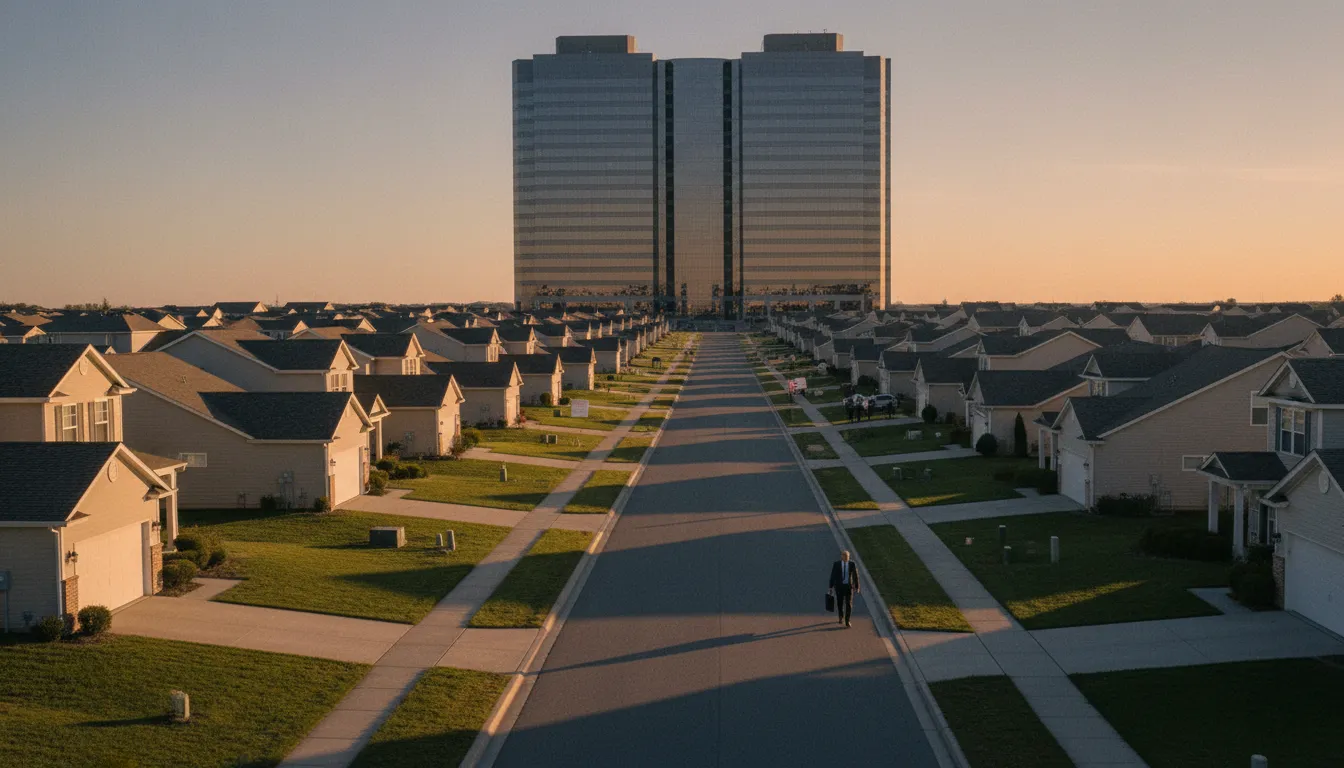
Institutional investors in housing are large companies—private equity firms, real estate investment trusts (REITs), and hedge funds—that purchase residential homes in bulk and rent them out rather than selling them to individual buyers. Unlike the traditional "mom-and-pop" landlord who might own one or two properties, these corporations can control tens of thousands of homes across dozens of markets.
The best-known example is Invitation Homes, created by Blackstone in 2012 with roughly $10 billion and a straightforward thesis: buy up foreclosed homes cheaply, renovate them, and collect rent at scale.
How It Started: The 2008 Crash Connection
Before the 2008 financial crisis, the single-family rental market was almost entirely composed of individual landlords—roughly three-quarters of rental homes were owned by entities holding fewer than ten properties. The crash changed everything.
Millions of homes fell into foreclosure and prices plummeted, especially in Sun Belt cities like Atlanta, Phoenix, and Tampa. Blackstone spotted an opportunity and began systematically buying distressed properties at auction. The federal government inadvertently helped accelerate the trend: in 2012, Fannie Mae sold thousands of foreclosed homes in bulk, effectively validating the institutional rental model and inviting others to follow.
At the peak of investment activity in late 2012, investors accounted for roughly 20% of all home sales in some markets. New financial vehicles—single-family rental REITs and listed operating companies—allowed firms to package thousands of houses into Wall Street securities for the first time in history.
How the Business Model Works
The economics rely on scale and standardization. Large investors typically target three-bedroom, two-bathroom homes in suburbs with good school districts, spending $20,000–$25,000 on renovations before listing them for rent. Owning hundreds of properties within a single metropolitan area creates efficiencies in maintenance, leasing, and property management that individual landlords simply cannot match.
All-cash offers and the ability to waive contingencies give institutional buyers a decisive edge at auction. Unlike a family that needs mortgage approval and inspection periods, a corporate buyer can close within days—often outcompeting ordinary homebuyers before a deal can even be negotiated.
By 2022, approximately 32 large institutional investors collectively owned around 450,000 single-family homes across the United States, according to a U.S. Government Accountability Office (GAO) report. That represents less than 1% of the national single-family housing stock—but the concentration is far higher in specific cities. Institutions own an estimated 25% of single-family rentals in Atlanta, 21% in Jacksonville, and 18% in Charlotte.
The Impact: A Contested Debate
Researchers, policymakers, and housing advocates sharply disagree on what institutional investors actually do to housing markets.
Critics argue that bulk corporate buying removes starter homes from the ownership market, inflating prices for first-time buyers and converting potential homeowners into perpetual renters. Research cited by CNBC found that corporate owners are statistically more likely to file eviction notices than smaller landlords. Some companies, including Invitation Homes, have faced regulatory action over illegal rent increases.
Defenders counter that institutions benefit renters in supply-constrained neighborhoods by adding renovated rental inventory that would otherwise sit vacant or deteriorate. Studies have found that large investors have a modest or even downward effect on rents in some markets. The GAO concluded that the evidence remains mixed and that the primary driver of housing unaffordability is a chronic undersupply of new homes—not investor activity.
The Brookings Institution notes that even a complete ban on institutional purchases would have limited effects on homeownership rates, since most homes they acquire are already rentals or foreclosures unlikely to reach first-time buyers under any scenario. The Urban Institute echoes this caution, arguing that supply constraints—not investor demand—are the root cause of the affordability crisis.
What Policymakers Are Doing
The debate has moved from academic journals into law. In early 2026, the U.S. Senate passed the 21st Century ROAD to Housing Act, which would bar any investor owning at least 350 homes from purchasing additional single-family properties. Exceptions exist for build-to-rent construction and distressed properties needing significant renovation, but investors would ultimately be required to sell those homes—with existing tenants given the right of first refusal to buy.
Whether the bill becomes law remains uncertain as it faces resistance in the House. But it reflects a growing bipartisan consensus that the era of unchecked institutional accumulation of American homes may be drawing to a close—and that the rules governing who can own a house in the United States are overdue for revision.