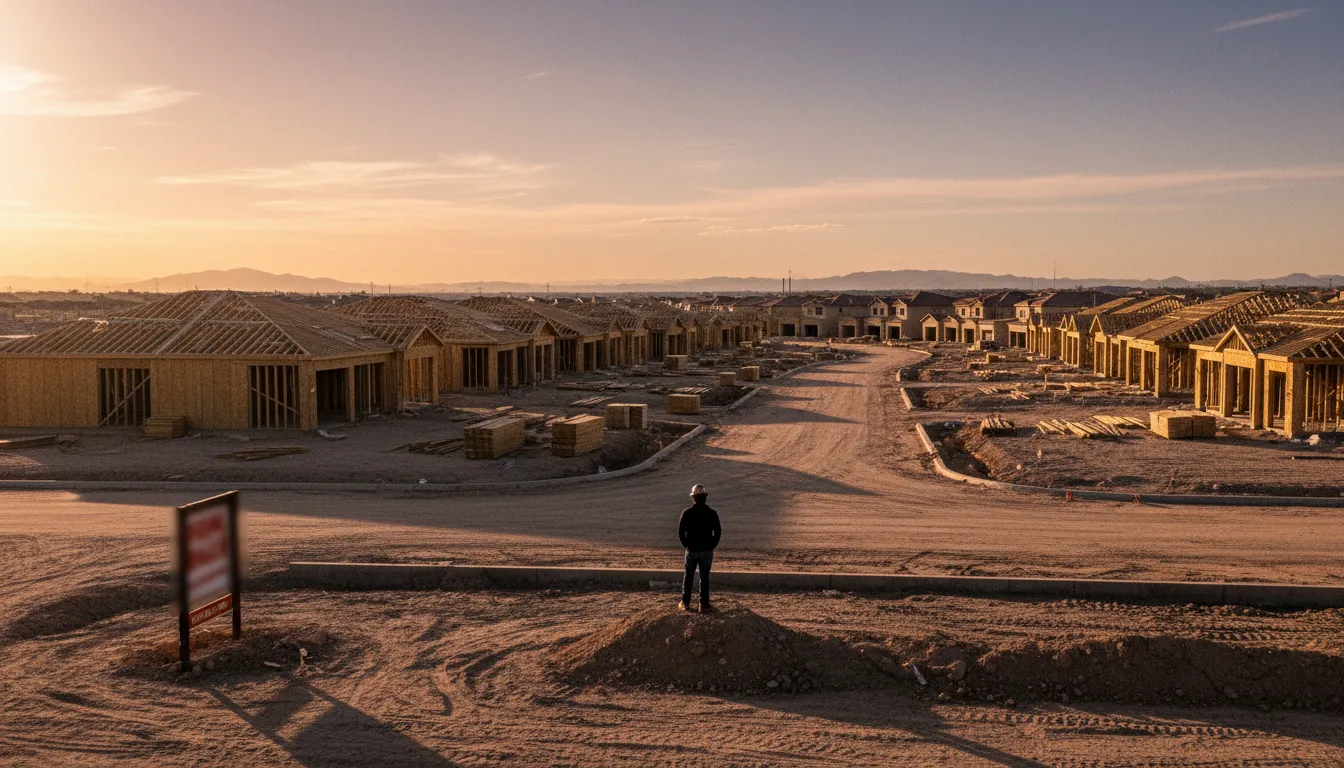
Iran War Clouds a Promising Spring Housing Season
Just as mortgage rates fell below 6% for the first time since 2022, the U.S.-Iran war sent oil prices surging past $90 a barrel — threatening to derail the most affordable spring homebuying season in three years.
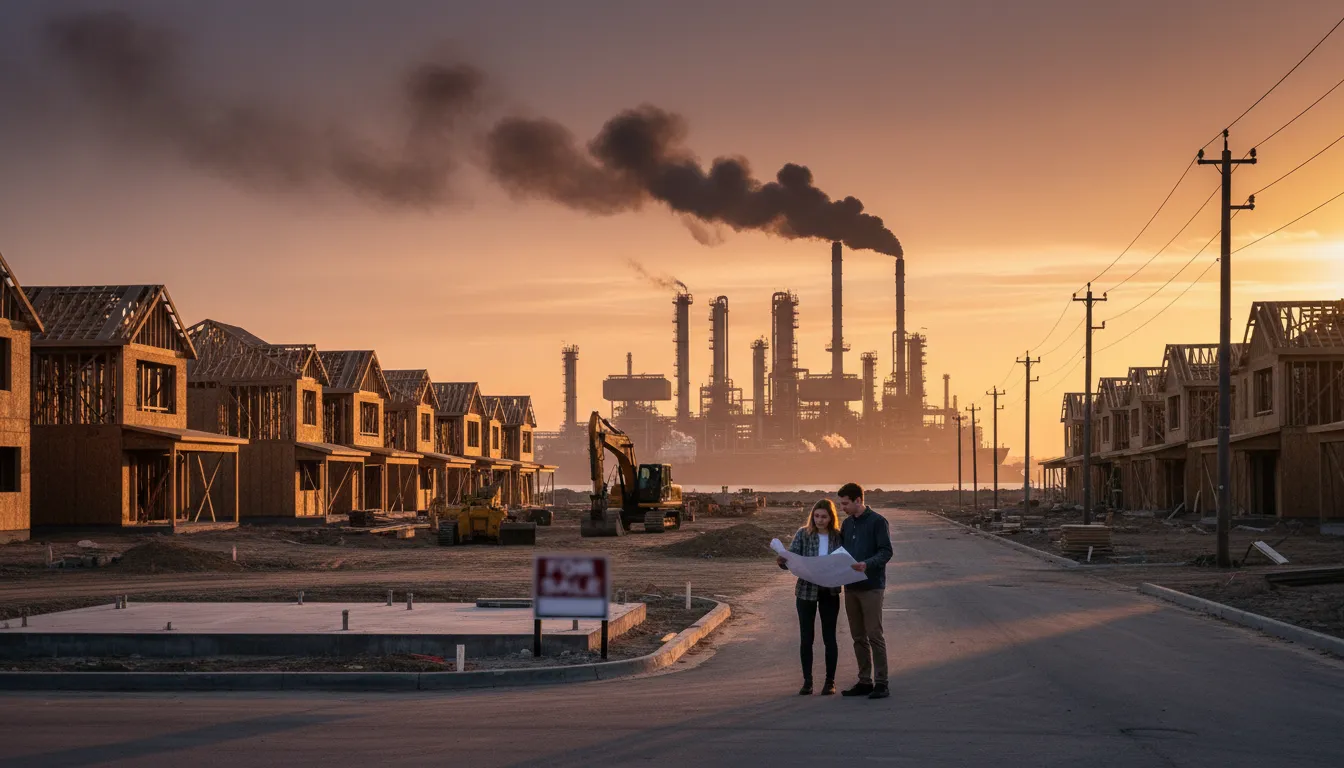
A Window Opens, Then Narrows
For months, American homebuyers waited for a sign that the market was finally turning in their favor. On February 26, 2026, they got it: the average 30-year fixed mortgage rate dropped to 5.98%, the first time it had dipped below 6% since 2022. Inventory was rising, income growth was outpacing home-price gains, and analysts at Redfin were heralding what they called "the Great Housing Reset."
Then the bombs fell on Iran — and the window began to close.
The Energy Shock Arrives
U.S. and Israeli strikes on Iranian territory triggered an immediate response in energy markets. Iran declared the Strait of Hormuz — a chokepoint through which roughly one-fifth of global oil and LNG supplies flow — effectively closed to tanker traffic. WTI crude futures surged past $90 a barrel, with Brent crude climbing to its highest level since mid-2024, according to Bloomberg.
The shock rippled almost immediately into consumer prices. U.S. gasoline rose roughly 26 cents per gallon within days, and economists at Goldman Sachs warned that a sustained Hormuz disruption could push oil above $100 a barrel — adding as much as 0.35 percentage points to headline U.S. inflation within three months.
Mortgage Rates Reverse Course
The effect on home financing was swift. As oil-driven inflation fears pushed up Treasury yields, the 30-year mortgage rate reversed its recent gains, climbing back to around 6.07–6.13% by early March, according to CBS News. For a buyer who had failed to lock in a rate before the jump, that shift translates to roughly $200 more per month on a typical mortgage — enough to push some borrowers out of qualifying ranges entirely.
"This is exactly the kind of shock that can freeze demand," one housing analyst told HousingWire. "Buyers who were on the fence are now definitely on the fence."
Consumer Confidence Already Fragile
The conflict landed on already-shaky ground. The University of Michigan's Index of Consumer Sentiment stood at 56.6 in February — well below year-ago levels — and over 80% of renters reported being at least somewhat worried about cutting essential spending, per NBC News. Higher energy bills, whether for heating, electricity, or transport, eat directly into the savings that prospective buyers rely on for down payments.
NPR reported that analysts see two divergent scenarios ahead: if the conflict is short-lived and markets stabilize, mortgage rates could ease back below 6% and the spring season could still recover. But if the Hormuz closure persists, the inflationary feedback loop — higher oil → higher yields → higher rates — could choke off the recovery entirely.
The Global Picture
The turbulence is not limited to the United States. Nominal house prices grew just 2.4% year-over-year across 55 tracked markets in late 2025, according to Knight Frank data — with real (inflation-adjusted) growth hovering near zero. Asian economies face particular exposure: a six-week Hormuz closure could raise regional inflation by up to 0.7 percentage points, further suppressing household purchasing power globally.
JLL's February 2026 market outlook had projected global real estate investment volumes surpassing $1 trillion in 2026 — the highest since 2022. That forecast now carries an asterisk.
A Season in the Balance
The spring homebuying season remains the year's most critical for the U.S. housing market. If the Iran conflict de-escalates quickly, the underlying fundamentals — falling rates, rising inventory, and stronger purchasing power — could still deliver a meaningful rebound. But if geopolitics prevails over economics, the market faces a frustrating paradox: the best affordability conditions in years, squandered by forces far beyond any buyer's control.