Italy Leads EU Property Rebound as Affordability Fades
Europe's property market is recovering strongly in 2026, with Italy posting record investment volumes and projected to lead EU growth — even as house prices have outpaced household incomes by 10% over the past decade, deepening an affordability crisis for millions of renters.

A Market Finds Its Footing
European real estate is entering 2026 with renewed momentum after a cautious 2025. Investment volumes across the continent rose 13% last year, with Q4 2025 reaching €86 billion — the strongest quarter since early 2022, according to ING's real estate research team. Looking ahead, analysts forecast a further 14% growth to approximately €275 billion in 2026, driven by stabilizing interest rates, improving financing conditions, and a return of investor confidence.
The European Central Bank's policy rate, held at 2%, has provided the predictability that property markets crave. Real estate bond issuance hit €37 billion in 2025, the highest since 2021, and is projected to reach €40 billion in 2026 — potentially the second-highest on record. Property valuations, which fell 9% between 2022 and 2024, have begun recovering, posting a 1.3% rebound in the first half of 2025.
Italy: Europe's Standout Performer
Within this continental recovery, Italy has emerged as the clear front-runner. Total Italian real estate investment volumes hit €12.5 billion in 2025, a 23% jump year-on-year and the second-best result ever recorded, according to Cushman & Wakefield. The retail sector hit an all-time high of €3.4 billion, while student housing investments doubled.
Research group Scenari Immobiliari projects Italy will post the fastest real estate growth in the EU through 2026, with transaction values rising 8.4% to around €175.8 billion — outpacing Spain, the UK, Germany, and France. Residential transactions climbed roughly 7% in 2025 alone, driven by a convergence of favorable factors: moderating inflation, historically low unemployment, relative political stability, and ECB rate cuts making mortgages more accessible.
Foreign capital has played a decisive role, accounting for 58% of total Italian investment volumes, concentrated in retail, hospitality, and industrial logistics. The country's appeal reflects a broader pattern: London, Madrid, Paris, and Berlin have led European investor rankings for the fourth consecutive year, according to PwC and ULI's Emerging Trends report, but secondary markets like Milan and Rome are closing the gap.
The Affordability Crisis Beneath the Optimism
The market revival carries a sobering social dimension. Over the past decade, EU house prices rose 10% faster than household incomes, according to European Commission data — a structural shift that has progressively frozen out lower-income households and an entire generation of first-time buyers. Between 2015 and 2024, average EU house prices surged 53%, while rents climbed 27.8% from 2010 through early 2025.
The divergence is sharpest in Hungary (+209.5%), Lithuania (+135%), and Portugal (+124.4%), where price-to-income ratios have become extreme. Today, nearly 10% of urban EU households spend more than 40% of their disposable income on housing — the threshold at which costs are classified as a genuine burden. In Greece, that figure reaches 29% of urban residents.
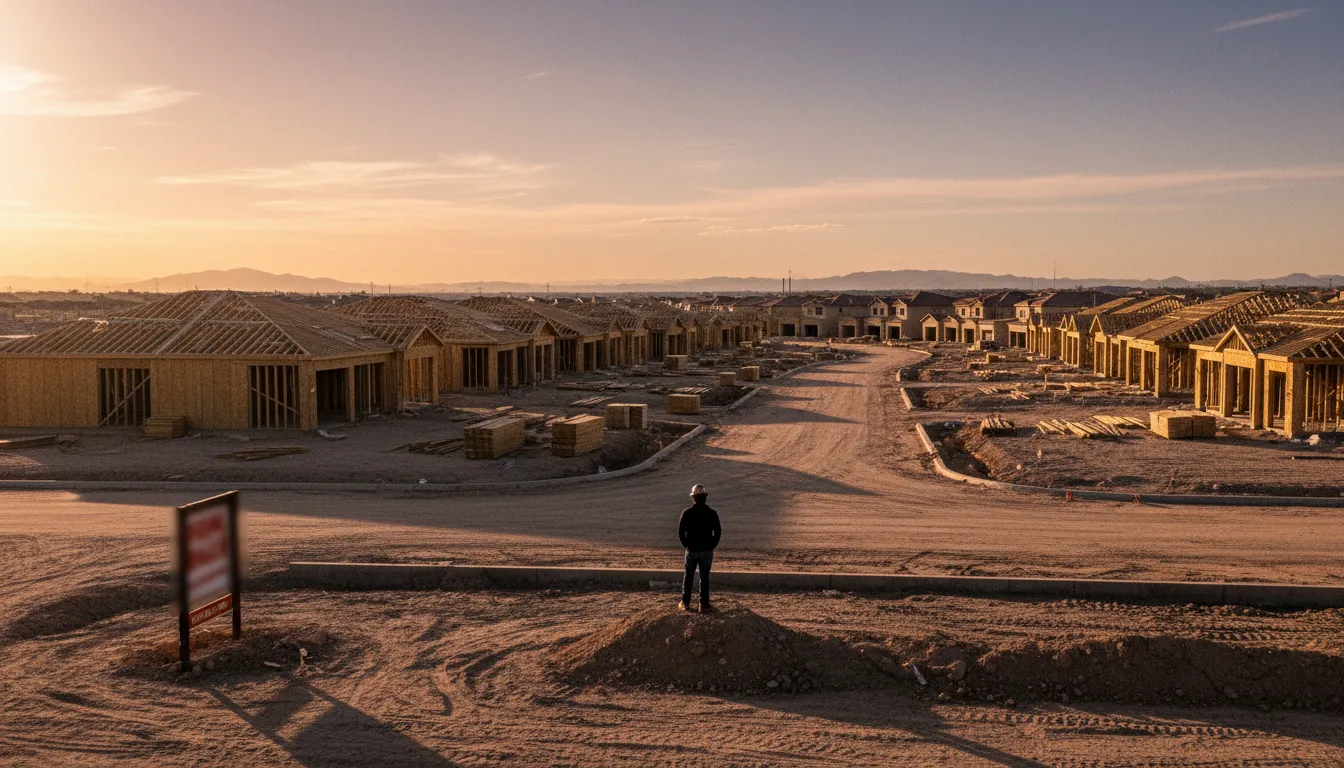
Supply is the root cause. Building permits for residential construction have fallen more than 20% since 2021. The EU's Joint Research Centre estimates that more than 2 million new homes per year will be needed through 2035 just to stabilize the situation. By late 2025, new housing completions were meeting barely half of total EU demand.
Policy Response and the Road Ahead
The European Commission has responded with its first-ever Affordable Housing Plan, mobilizing at least €11.5 billion in new budget commitments alongside €43 billion already pledged to social and sustainable housing. Whether these sums are sufficient to reverse a decade of underbuilding and price inflation remains an open question.
For investors, the fundamentals — rising rents, constrained supply, stabilizing financing — point to continued recovery. For Europe's renters and aspiring homeowners, the arithmetic remains punishing, and the gap between market optimism and housing reality may be the defining tension of the continent's property sector in the years ahead.