Kast Takes Office in Chile: Country's Biggest Shift to the Right Since 1990
José Antonio Kast was inaugurated as President of Chile on March 11, 2026, in Valparaíso, with Javier Milei and King Felipe VI among the guests, consolidating the country's most pronounced conservative shift since the return to democracy and reinforcing a regional trend that is reshaping the political map of Latin America.
A New Political Cycle in the Southern Cone
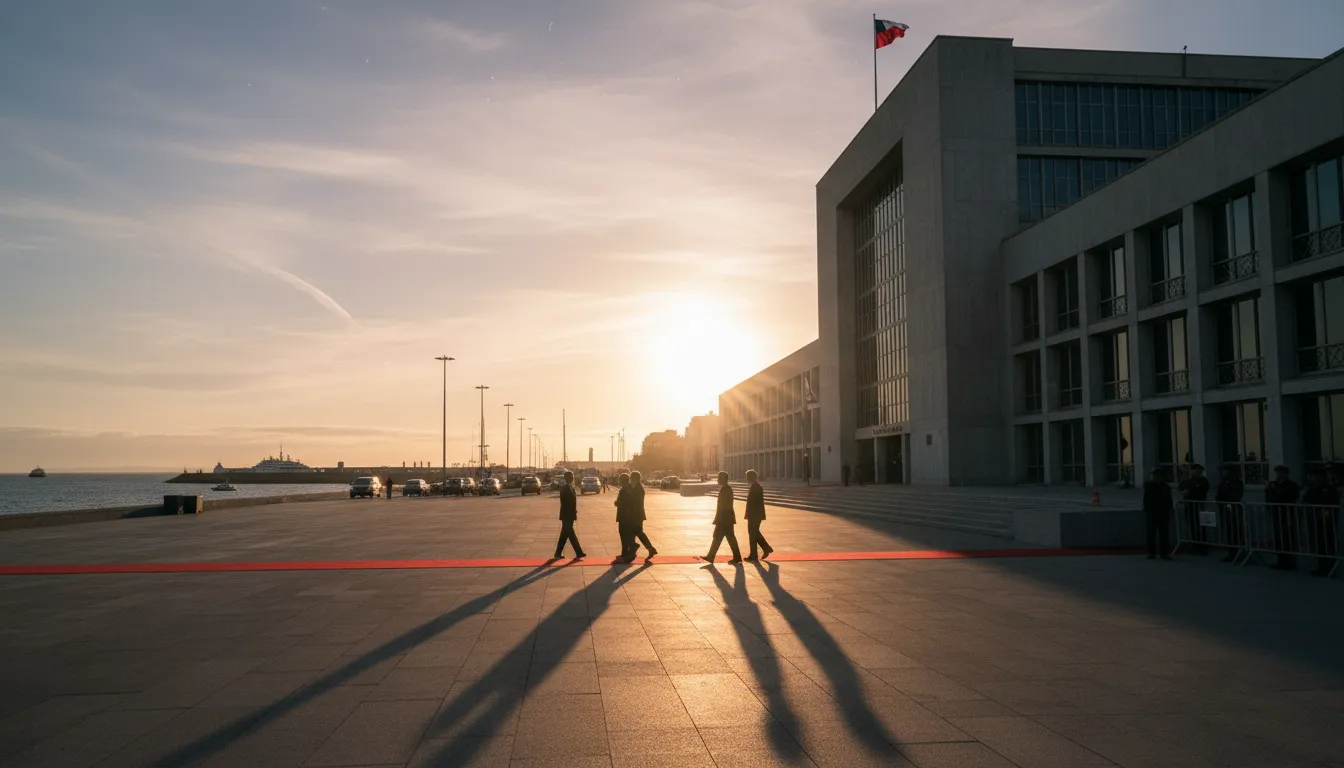
Conservative lawyer and politician José Antonio Kast was sworn in as the 38th president of Chile on Wednesday, March 11, 2026, in the Hall of Honor of the National Congress in Valparaíso, before more than 1,150 people, including legislators, heads of state, and international delegations. With this act, Chile closes four years of leftist government under Gabriel Boric and opens a new era that analysts describe as the country's most pronounced ideological shift since the restoration of democracy in 1990.
Kast, founder of the Republican Party—from which he disaffiliated before taking office—won more than 58% of the votes in the second round of December 2025 against the Communist Party candidate, Jeannette Jara, achieving the largest electoral margin since the return to the democratic system and winning every region of the country.
The Ceremony: Alliances and Symbolic Absences
The guest list clearly outlined the new geopolitical coordinates of Santiago. Among those present were King Felipe VI of Spain, Argentine President Javier Milei, and the leaders of Ecuador, Bolivia, Paraguay, Uruguay, Costa Rica, Honduras, Panama, and the Dominican Republic. The image of Milei alongside Kast on the stage visually condensed the alliance that both leaders have promised to build in the region.
The absences were equally telling. Brazilian President Luiz Inácio Lula da Silva canceled his attendance at the last moment, as did Mexican President Claudia Sheinbaum and Colombian President Gustavo Petro, configuring a visible fracture between the two blocs into which Latin America is divided today.
The "Emergency Government": Security, Economy, and Reconstruction
In his inaugural address, Kast announced a program articulated around three major crises that, he said, require an urgent response: citizen insecurity, economic deterioration, and the reconstruction of the Ñuble, Biobío, and La Araucanía regions, devastated by forest fires. The new president promised mass deportations of irregular migrants, the effective closure of the northern border, and the creation of an «anti-cartel» military coalition coordinated with Washington.
Hours after the ceremony, violence marked the day with an attack on a Carabineros sergeant in Puerto Varas. Kast responded immediately: «Those who attack Carabineros attack us all. We will pursue them, we will find them, we will judge them, and we will imprison them,» while his Minister of Security, Trinidad Steinert, traveled to the scene.
The Regional Map is Being Redrawn
With Kast in power, Chile becomes the sixth South American country governed by the right, along with Argentina, Bolivia, Peru, Paraguay, and Ecuador. The trend, although with nuances—Mexico, Brazil, and Colombia remain under left-wing governments—is perceived by political scientists as a cycle of cultural and political reaction to the increase in insecurity, inflation, and discontent with progressive elites.
Spain is observing the process with special attention. Chile is one of the main destinations for Spanish investment in Latin America, and both countries share deep historical, cultural, and economic ties. The presence of King Felipe VI at the inauguration underscores Madrid's interest in maintaining fluid relations with the new executive, regardless of political affiliation.
Challenges Ahead
Kast assumes office without a parliamentary majority and will have to negotiate with center-right parties to approve his legislative agenda. The international press, from Bloomberg to the BBC, emphasizes the paradox of a leader with transformative ambitions but with little institutional support in Congress. The big question left by the day of March 11 is whether electoral enthusiasm will translate into real governability or whether Chile will experience four years of institutional gridlock in the style of its neighbors.