Macron Announces New Nuclear Doctrine: What's in it for Poland?
France unveils a new nuclear doctrine with a European dimension. Poland and Germany are seeking concrete security guarantees as the credibility of the American nuclear umbrella under the Trump administration comes into question.
A Historic Speech from the Brest Naval Base
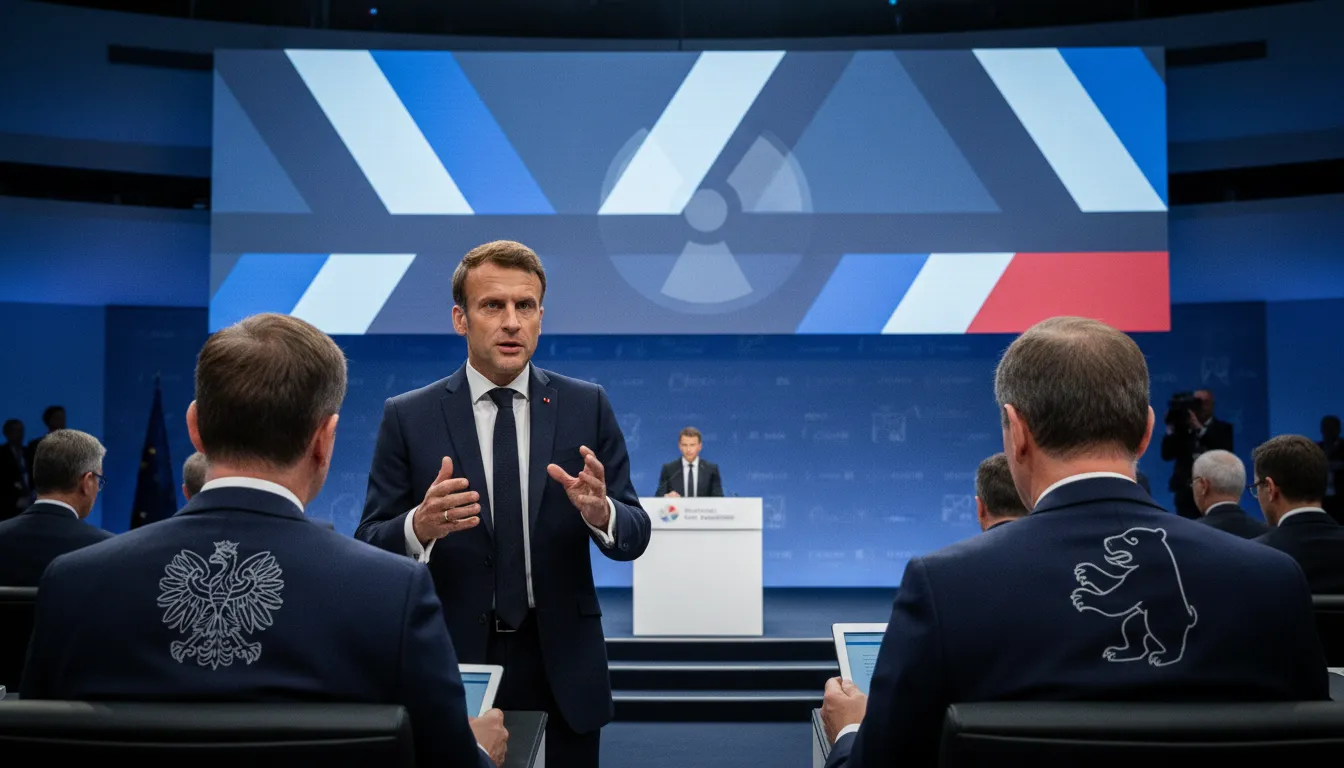
On Monday, March 2nd, Emmanuel Macron delivered a speech from the Île Longue submarine base near Brest – the strategic heart of France's nuclear deterrent. This is the operating base for four nuclear-powered submarines capable of carrying M51 ballistic missiles with nuclear warheads. France possesses an arsenal of approximately 290 warheads – the fourth largest in the world – and spends nearly 5.6 billion euros annually to maintain it.
This was Macron's second major nuclear address since his election in 2017. The previous one, delivered in 2020, proposed a "strategic dialogue" to Europeans on the role of French deterrence. Back then, few were willing to listen. Today, the situation is fundamentally different.
Why Now? Three Driving Forces
Three factors are behind the shift in attitude. Firstly, Russia's full-scale invasion of Ukraine, now in its fifth year, has made it clear that the military threat to Europe is real. Secondly, the Donald Trump administration has consistently undermined the credibility of American alliance commitments within NATO. Thirdly, European capitals have begun to formulate a question previously considered heretical: would Washington really risk a nuclear exchange with Moscow to defend Tallinn, Warsaw, or Berlin?
The chairman of the Danish Defence Committee, Rasmus Jarlov, did not mince words: "I doubt Trump would risk American cities to protect European ones." This doubt reflects the sentiment in many European capitals and provides the direct context for Macron's speech.
What Macron Announced – and What He Didn't
Paris announced before the speech that it would be an "important moment of the presidency" with "serious shifts and new proposals." However, a key element of the doctrine remains unchanged: exclusive control over the use of nuclear weapons rests and will continue to rest with the President of France. No ally will gain co-decision-making power.
What is new is the willingness to engage in "special forms of cooperation, joint exercises, and shared security interests with selected countries." Macron previously signaled in interviews with German media that guarantees would not be "free" – partners would have to co-finance or actively participate in the nuclear security framework.
Berlin Has Already Talked, Warsaw Awaits Specifics
Germany moved the fastest. Chancellor Friedrich Merz confirmed that he had held "preliminary talks" with Macron on European deterrence and publicly considered a scenario in which Bundeswehr aircraft could carry French nuclear weapons. This is a historic breakthrough for a country that has avoided any discussion of nuclear weapons for decades.
Poland is following the speech equally closely. Prime Minister Donald Tusk had previously stated that Poland should "reach for opportunities related to nuclear weapons" and announced talks with Paris. However, Warsaw expects specifics: what exercises, what contingents, what guarantees, and on what financial terms. As an anonymous Eastern European diplomat quoted by Kyiv Post put it: "First, we want to see what France has to offer – and whether it's credible."
Strategic Trap and Paris's Limitations
France faces a strategic dilemma. The louder Macron speaks about the European dimension of his arsenal, the stronger the expectations he generates – and proposals that are too weak will undermine Paris's credibility. At the same time, Paris has repeatedly emphasized that its nuclear forces "in no way compete with NATO."
Critics point out that 290 warheads are only a fraction of the arsenals of the US and Russia. The question is not only "whether France is ready to protect Europe," but "whether Europe is ready to believe in this protection and how much it will pay for it."
What's Next?
Bilateral talks between Paris and Berlin and Warsaw are planned in the coming weeks. Poland has already signed a treaty on mutual security guarantees with France, which Tusk described as a "game changer" in defense aspects. The speech from Île Longue opens a new chapter in European nuclear strategy – but its real content depends on negotiations that are only just beginning.