Macron Redefines France's Nuclear Role in Europe
President Emmanuel Macron is delivering a landmark speech from the Île Longue submarine base in Brest on Monday, March 2nd, to redefine the contribution of France's nuclear deterrent to the collective security of the European continent.
A Speech of Historic Significance
From the Île Longue base in Brest, home to the four nuclear-powered ballistic missile submarines of the Strategic Oceanic Force, Emmanuel Macron is delivering a major speech on French nuclear deterrence this Monday, March 2nd. The first of its kind since 2020, the Élysée Palace describes this moment as a "highlight of the five-year term," with "fairly significant developments and evolutions" announced in the national doctrine.
Trump, Putin, and European Doubt
The geopolitical context has radically changed since the last presidential address on nuclear matters. The war in Ukraine and Donald Trump's ambiguous statements about American commitment within NATO have sparked deep anxiety among allies. "If things got really serious, I doubt Trump would risk American cities to protect European cities," summarized Rasmus Jarlov, chairman of the Danish Parliament's defense committee, quoted by PBS NewsHour.
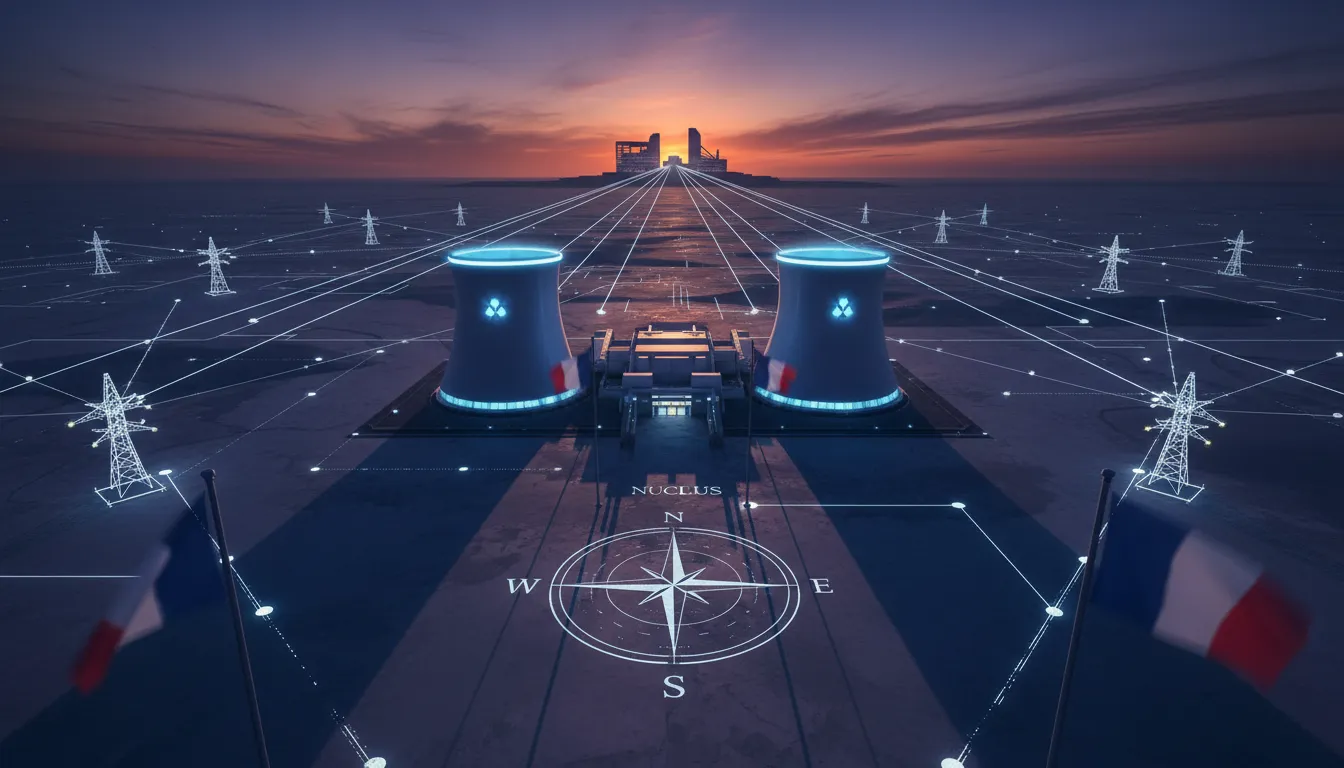
France is the only European Union member state with nuclear weapons. Its arsenal includes fewer than 300 warheads deployed on submarines and Rafale aircraft. A possible expansion beyond the current 290 warheads is being considered, as well as the restoration of long-range conventional missiles to support deterrence.
Berlin and Warsaw Await Concrete Gestures
Discussions have progressed the most with Germany. Chancellor Friedrich Merz mentioned "confidential discussions" with Macron on "European nuclear deterrence" on February 13th in Munich, even considering German combat aircraft carrying French nuclear weapons—an unprecedented hypothesis. Poland, Denmark, Sweden, and the Netherlands have also expressed interest.
Macron had indicated that he was considering "articulating" the national doctrine with "special cooperation, joint exercises, and common security interests with certain key countries." A major doctrinal advance is expected: for the first time, the security of the European Union could be integrated into France's "vital interests," potentially justifying the use of deterrence for non-nuclear partners.
Control Remains Exclusively French
Despite these overtures, Paris maintains an absolute line: the authority to fire remains exclusively in the hands of the French president. "The final decision always belongs to the French head of state," emphasizes nuclear deterrence specialist Héloïse Fayet, quoted by Euronews. No shared trigger mechanism will be submitted to foreign partners.
Domestically, the initiative is facing resistance. Philippe Olivier, advisor to Marine Le Pen, warned that ceding nuclear capability to the EU would expose Macron to impeachment proceedings for treason. The prospect of the 2027 presidential elections, where the Rassemblement National remains at the top of the polls, further complicates the sustainability of these commitments.
A Turning Point for the Fifth Republic
Héloïse Fayet recalls that this speech represents a unique opportunity to "clarify things and propose concrete ideas for an increased role of French deterrence in Europe." Joint military exercises simulating nuclear strikes, open to allied staffs, are the most likely path—a compromise to strengthen the credibility of the French umbrella without ceding sovereignty.
Whatever he announces from the quays of Brest this Monday, Emmanuel Macron is undertaking a profound redefinition of France's role in the European security architecture—a major strategic turning point in the history of the Fifth Republic.