Merz Calls for a "Day After" Plan for Iran
Chancellor Friedrich Merz is calling for a Europe-wide plan for the period following the Iran conflict, outlining four core objectives – from ending the nuclear program to Iranian self-determination. The Middle East crisis is also impacting Germany economically, with rising energy prices and disrupted supply chains burdening domestic industry.
Four Goals for Iran's Future
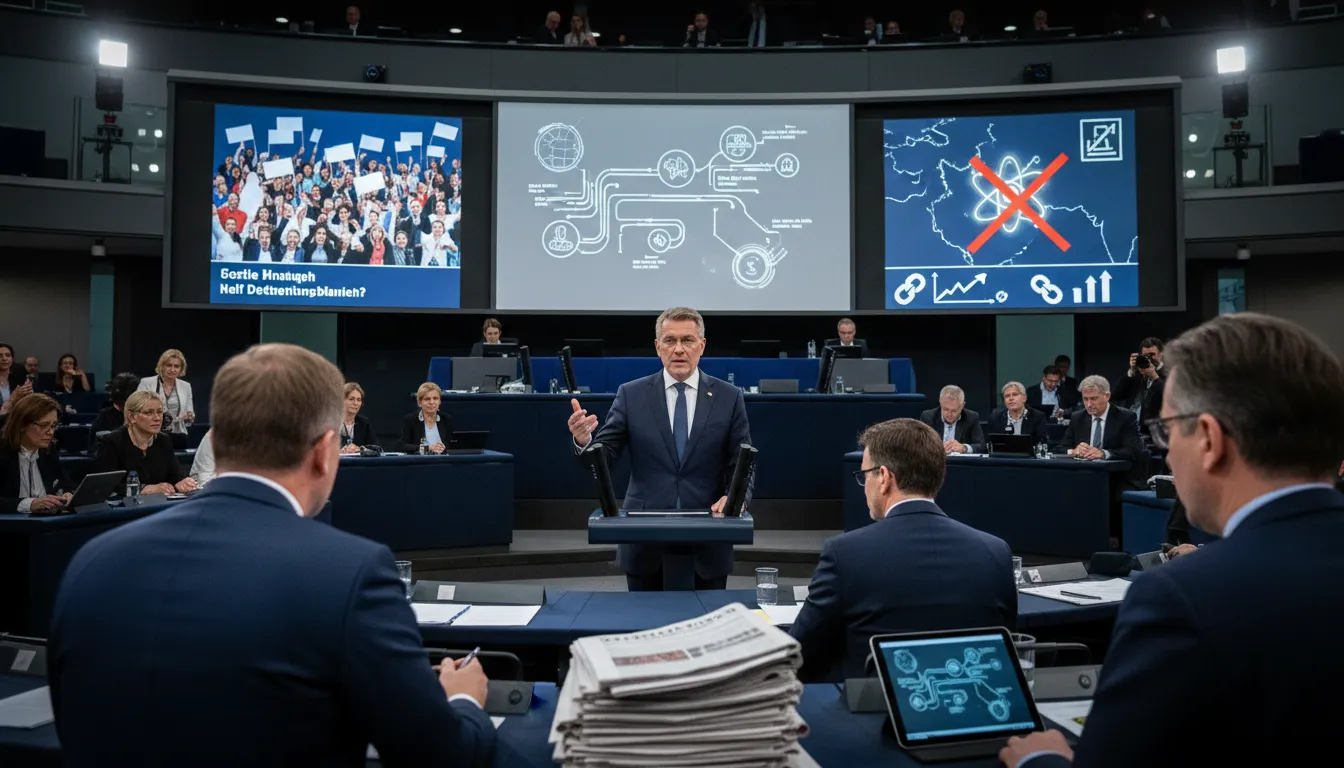
Following the coordinated US-Israeli military strikes on Iran and the subsequent harsh Iranian retaliatory strikes, Chancellor Friedrich Merz has called for a European agenda for the period after the conflict. In a government statement, Merz urged allies in the US, Israel, and Europe to jointly develop a "day after" plan.
He named four core objectives: the recognition of Israel's right to exist, the complete abandonment of the Iranian nuclear and missile program, an economic stabilization program for Iran – in which Europe should play a central role – and the freedom of the Iranian people to self-determination. Despite Oman's mediation efforts, Iran has neither agreed to a credible nuclear agreement nor reduced its missile program.
"This marks the crossing of a threshold into an uncertain future." — Chancellor Friedrich Merz
No Lectures, but a Warning Against Escalation
Although Merz expressed considerable doubts about the strategy, he avoided direct criticism of Washington and Tel Aviv. "Now is not the time for lectures," he said. At the same time, he warned against an uncontrollable escalation through the Iranian retaliatory strikes on Gulf states. Germany will not tolerate attacks on US or Israeli facilities within its own borders, he emphasized.
The Chancellor drew parallels to previous military interventions: The real risks are considerable in the medium term – Europe and Germany would also have to bear the consequences. He referred to Afghanistan, Iraq, and Libya as cautionary tales of failed external regime changes.
European Coordination as a Counterweight
Together with French President Emmanuel Macron and British Prime Minister Keir Starmer, Merz condemned the "disproportionate" Iranian missile attacks on Gulf states. The three heads of state and government declared that they would take measures to protect their interests and those of their allies in the region. Germany sees itself as a European mediator – between Washington's resolute military strategy and the demand for diplomatic solutions.
Economic Shockwaves in Germany
The crisis is already leaving clear traces in the German economy. The closure of the Strait of Hormuz by Iran affects around 30 percent of global oil shipments. Experts expect rising prices for gasoline, diesel, heating oil, and liquefied natural gas. The Handelsblatt warned of an "energy price shock" that could further burden Germany's already weak economic growth.
Supply chains between Asia and Europe are once again coming under pressure: Since the end of 2023, around 80 percent of container traffic has already been rerouted via the Cape of Good Hope – which noticeably increases transit times and costs. Any further escalation in the Persian Gulf would exacerbate this burden.
Germany's Difficult Balancing Act
The Iran crisis presents Berlin with a strategic dilemma. On the one hand, the federal government adheres to the transatlantic alliance and supports the goal of ending Iran's nuclear program. On the other hand, it urges caution against an uncontrolled regime change from the outside. Merz emphasized that the Iranian people should have the right to "decide their own fate" – a clear demarcation from Trump's open agenda of regime change.
Whether the "day after" plan finds political resonance remains uncertain. What is clear is that Germany and Europe face the task of securing their security interests and economic stability in a region that is once again on the brink of a major escalation.