Moon Still Shrinking: 1,000 New Tectonic Ridges Found
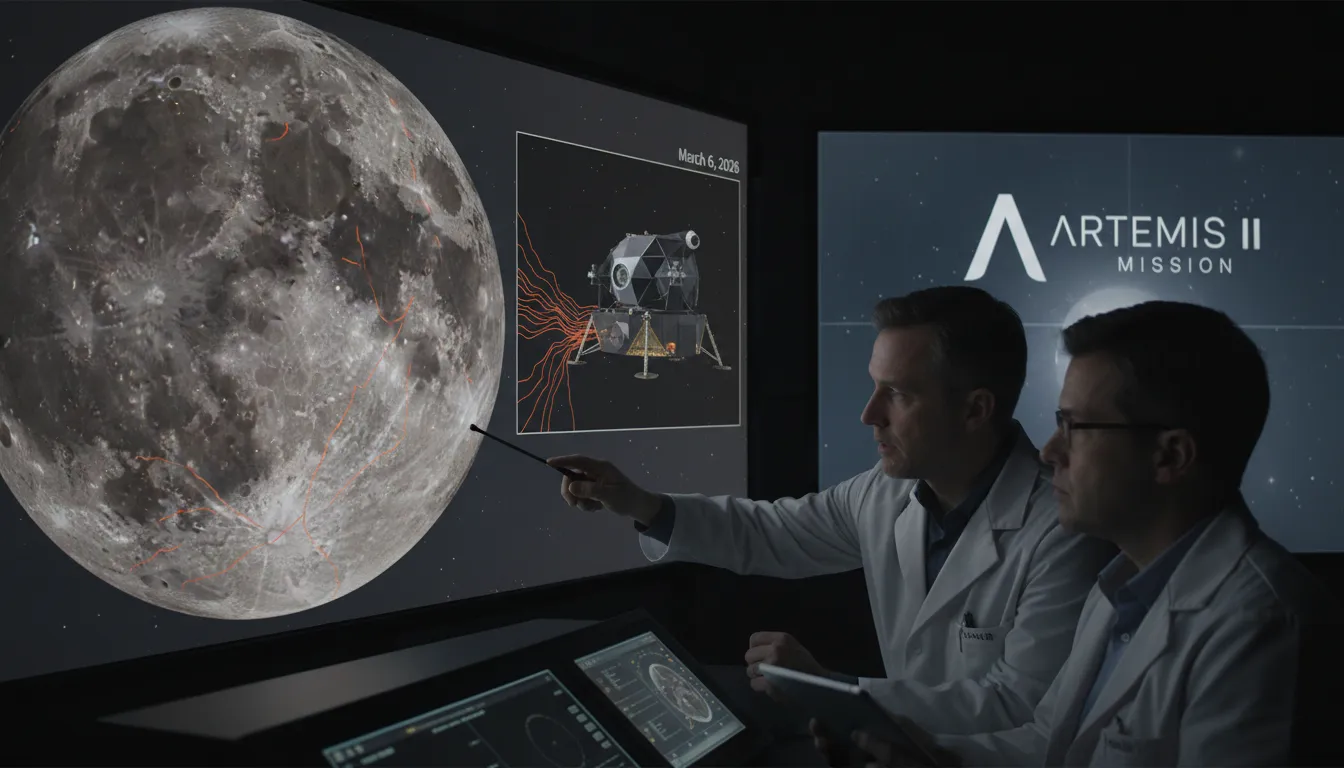
Smithsonian scientists have mapped more than 1,000 previously unknown tectonic ridges across the Moon's dark plains, confirming our nearest neighbour is still contracting and geodynamically active — a discovery with direct implications for the Artemis II mission targeting launch on March 6, 2026.
A Moon That Never Stopped Moving
The Moon has long been considered a geologically dead world — a frozen relic of the early solar system. New research from the Smithsonian Institution shatters that assumption. Scientists have produced the first global map of small tectonic ridges on the Moon's surface, uncovering more than a thousand features that were entirely unknown to science and confirming that Earth's closest neighbour is still slowly contracting today.
The study, led by planetary geologist Cole Nypaver and senior scientist Tom Watters at the National Air and Space Museum's Center for Earth and Planetary Studies, was published in The Planetary Science Journal on December 24, 2025. Their findings reframe how researchers understand the Moon's interior evolution and add a new layer of urgency to planning future crewed lunar missions.
More Than 1,000 Hidden Ridges
The team catalogued 1,114 previously unidentified segments of what geologists call small mare ridges (SMRs) — low, wrinkle-like folds of rock found exclusively in the Moon's vast dark basalt plains, known as the maria. Together with previously known features, the total now stands at 2,634 SMR segments mapped across the lunar surface.
These ridges are not ancient relics. Age estimates based on seismic-resetting methods place them between 50 and 310 million years old, with an average age of roughly 124 million years — a geological blink of an eye for a body that formed 4.5 billion years ago. For context, when the youngest of these ridges formed, dinosaurs had already been extinct for tens of millions of years.
The ridges form through the same compressional forces responsible for lobate scarps — cliff-like fault lines already documented in the lunar highlands. As the Moon's interior cools and contracts, its crust is squeezed, pushing rock upward along fault planes. Nypaver and Watters show that lobate scarps in the highlands often transition directly into SMRs as they cross into the maria, suggesting a continuous, planet-wide process of contraction that researchers now describe as completing "a global picture of a dynamic, contracting Moon."
Moonquake Risk for Future Missions
The practical stakes of this discovery are significant. With an average fault depth of around 101 metres and slip displacements of roughly 45 metres, these structures are capable of generating moonquakes. Previous seismic data from Apollo-era instruments already documented unexplained lunar tremors; the SMR map now provides a plausible source for events that have puzzled scientists for decades.
This directly affects site selection for crewed lunar bases. NASA's Artemis programme — which aims to return humans to the lunar surface — must account for seismic hazard in ways that were not previously considered necessary. Landing zones near active mare faults carry risks that earlier mission planners simply did not have the data to evaluate.
Artemis II: Humans Return to Lunar Orbit
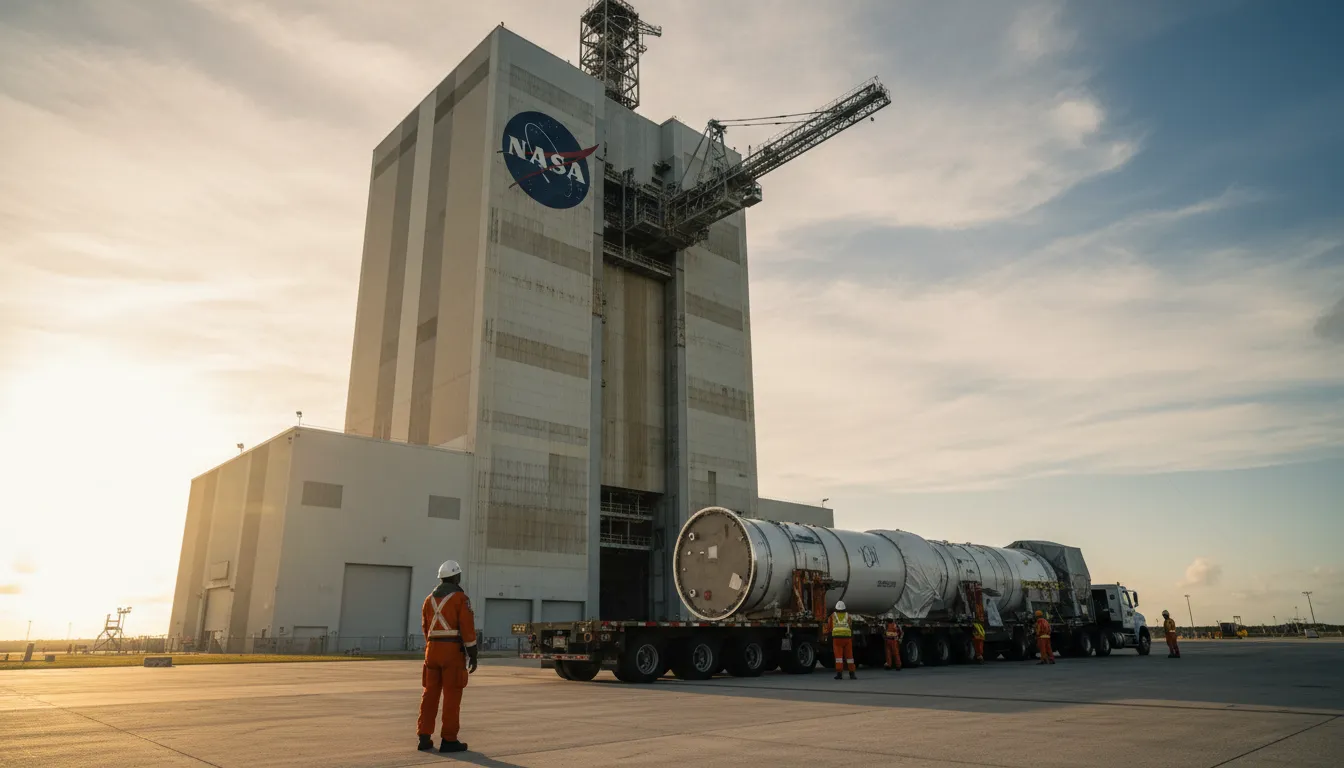
The Moon is back at the centre of human ambition. NASA is targeting March 6, 2026 for the launch of Artemis II, the first crewed mission to travel around the Moon since Apollo 17 in December 1972. Astronauts Reid Wiseman, Victor Glover, Christina Koch, and Canadian Space Agency astronaut Jeremy Hansen will spend ten days on a free-return trajectory around the Moon, passing within roughly 6,500 kilometres of the lunar far side.
The crew has entered pre-flight quarantine after a recent test fuelling of the Space Launch System resolved an earlier liquid hydrogen leak. If all goes to plan, Artemis II will be the foundation for Artemis III — the mission intended to land humans on the lunar south pole.
A World Still Alive
The convergence of these developments marks a turning point in how humanity relates to the Moon. Far from a static backdrop, Earth's satellite is an active geological body whose surface is still quietly shifting. As astronauts prepare to fly around it for the first time in more than 50 years, scientists are still discovering just how restless — and how surprising — it truly is.