WFP Warns Somalia Food Aid May Stop by April
The UN World Food Programme warns it may be forced to halt all food and nutrition assistance to Somalia by April 2026 without $95 million in urgent new funding, leaving 4.4 million people facing crisis-level hunger with no safety net.
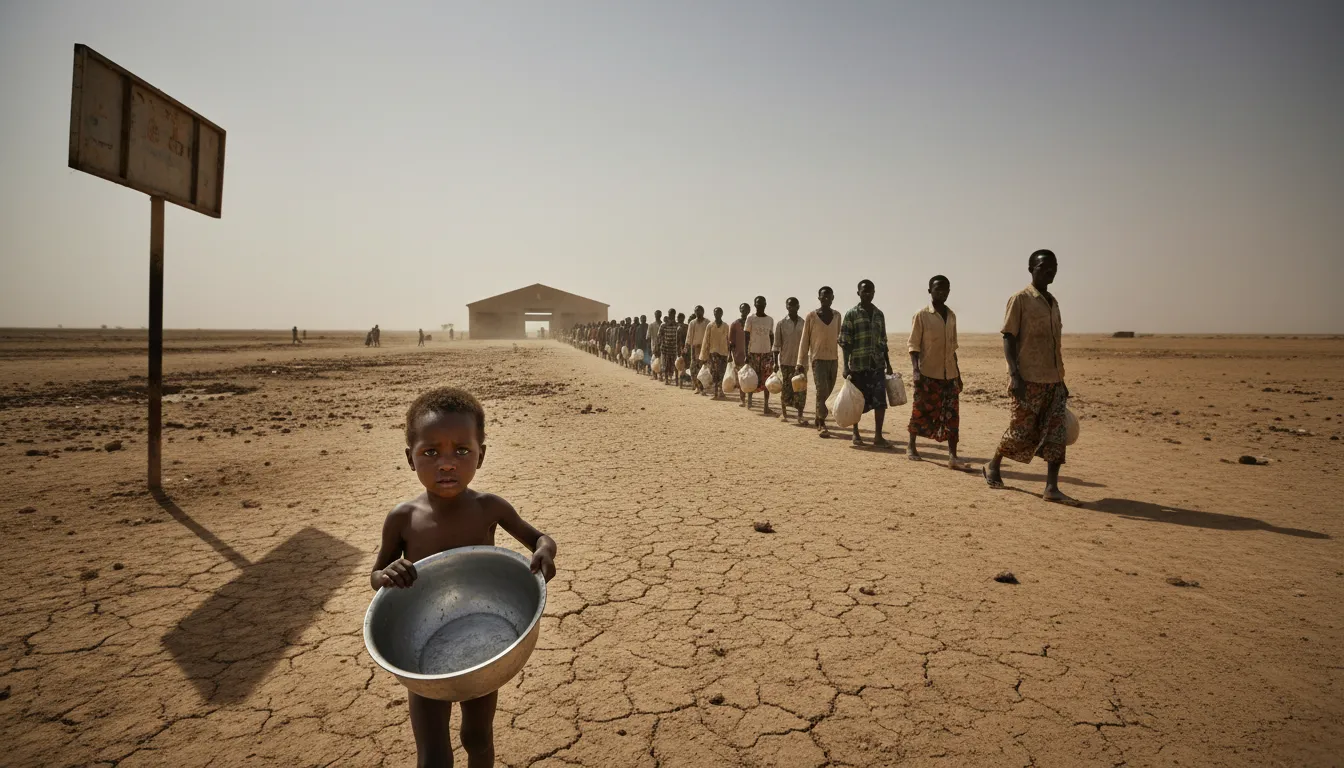
A System Near Breaking Point
The United Nations World Food Programme (WFP) has sounded an urgent alarm: without immediate new funding, its lifesaving food and nutrition assistance to Somalia could grind to a halt by April 2026. The agency is urgently seeking $95 million to sustain operations between March and August — money it does not currently have.
The consequences, officials warn, would be catastrophic. WFP has already been forced to dramatically scale back its reach over the past year, cutting the number of people receiving emergency food assistance from 2.2 million in early 2025 to just over 600,000 today — supporting only one in every seven people who need food aid to survive. Nutrition programmes for pregnant and breastfeeding women and young children have been slashed from nearly 400,000 beneficiaries in October 2025 to just 90,000 by December.
The Scale of Suffering
Somalia is gripped by one of the most complex humanitarian emergencies in the world. According to WFP, roughly 4.4 million people — a quarter of the population — face crisis-level food insecurity or worse, with nearly one million experiencing severe, acute hunger. The crisis spans 74 districts, has displaced more than 200,000 people, and has killed or weakened over two million livestock.
The immediate trigger is consecutive failed rainy seasons. Northern regions have endured a fourth consecutive failed rainy season, with rainfall running 60 percent below average. Somalia's cabinet declared a national drought emergency on February 6, 2026, directing all government agencies to prioritize relief and introducing tax exemptions on aid-related imports.
Conflict Compounds the Crisis
Climate failure alone does not explain the depth of Somalia's suffering. The ongoing insurgency waged by al-Shabaab, al-Qaeda's most powerful African affiliate, severely restricts humanitarian access across large parts of the country. Aid corridors along the Shabelle River and in Hiraan and Galgaduud face chronic disruption from IED attacks, checkpoints, and ambushes — driving up costs and delaying deliveries to the most vulnerable communities.
Human Rights Watch's 2026 World Report documents continued civilian casualties from both al-Shabaab attacks and military operations, compounding displacement and eroding livelihoods. Political instability further undermines the state's capacity to coordinate relief efforts.
A Global Funding Retreat
Underlying the crisis is a sharp reduction in international donor funding for humanitarian operations worldwide. WFP's situation in Somalia mirrors a broader retreat: the agency has warned that six of its critical global operations face significant pipeline breaks. In Somalia, that reduction has been stark — support that once reached millions now covers a fraction of those in need.
"If our already reduced assistance ends, the humanitarian, security, and economic consequences will be devastating, with the effects felt far beyond Somalia's borders." — Ross Smith, WFP Director of Emergency Preparedness and Response
UN agencies and humanitarian partners have launched a 2026 Humanitarian Needs and Response Plan seeking $852 million to provide essential services to 2.4 million of the most vulnerable Somalis — a figure that remains a fraction of what the full scale of the crisis demands.
A Famine Narrowly Avoided — and at Risk Again
The stakes are historically grounded. In 2022, Somalia teetered on the edge of famine as a severe drought struck. International donors mobilized, and WFP scaled up operations in time to prevent mass starvation. Today's crisis closely mirrors that moment — but this time, the funding response has not materialized at the same pace.
WFP and humanitarian partners are calling on donors to act before April, when food pipelines are expected to run dry. For the 4.4 million Somalis already living on the edge of survival, that deadline is not an administrative milestone — it is a matter of life and death.