India's $200 Billion AI Summit: Big Pledges, Big Chaos
India hosted its landmark AI Impact Summit in New Delhi, drawing delegations from over 100 countries and billions in investment pledges — but organizational chaos and geopolitical skepticism clouded the government's ambitions.
India's Bid for AI Superpower Status
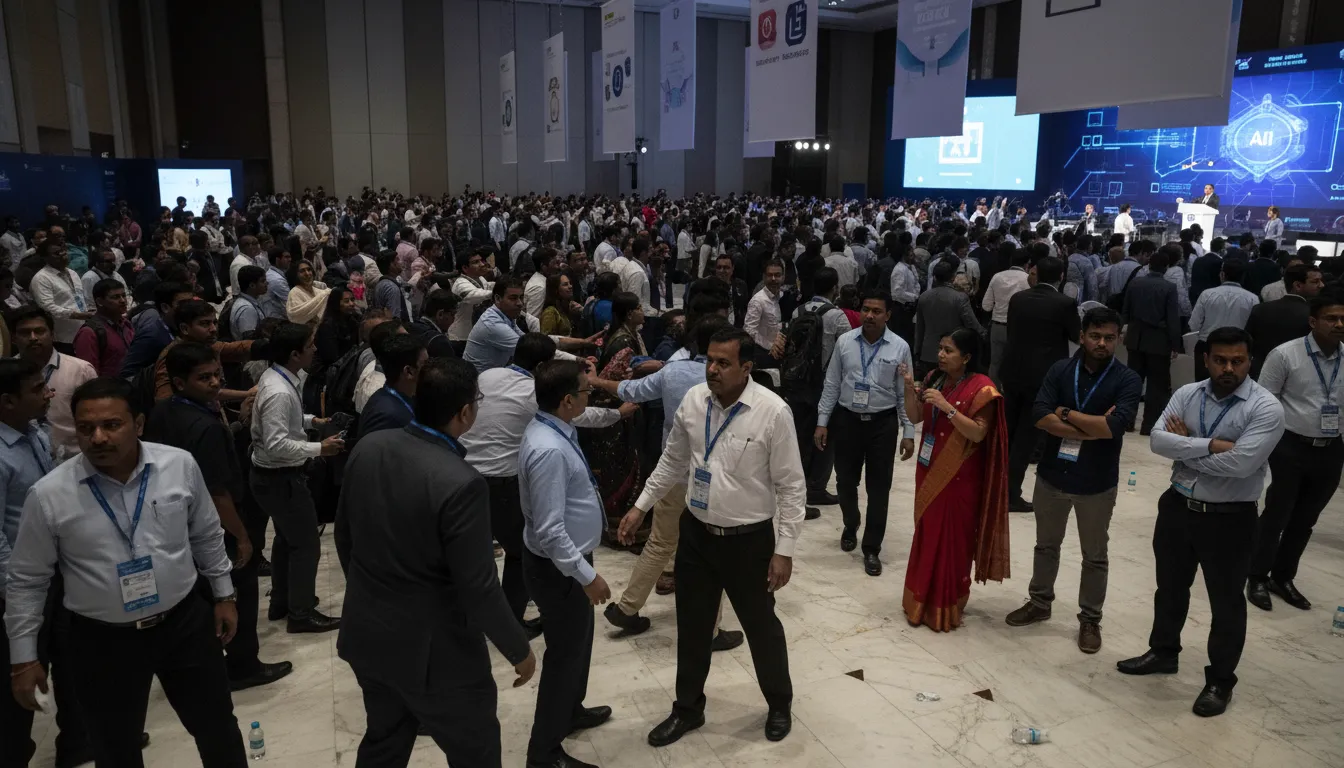
India hosted what officials billed as the world's largest-ever AI gathering — the India AI Impact Summit — at Bharat Mandapam in New Delhi from February 16 to 21, 2026. The six-day event drew delegations from over 100 countries, more than 20 heads of state, 60 ministers, and an estimated 300,000 participants, turning the Indian capital into a temporary hub for the global AI conversation.
The ambition was unmistakable. Technology Minister Ashwini Vaishnaw told attendees that India expects to attract more than $200 billion in AI and deep-tech investment within the next two years — a figure that would cement the country's position among the world's leading AI economies.
Big Tech Opens Its Wallets
The pledges arrived quickly. India's two largest conglomerates set an early tone: Reliance announced plans to invest $110 billion in data centers and related infrastructure, while Adani outlined a $100 billion AI data center buildout. International giants followed — Google committed $15 billion toward data centers in southeastern India, Amazon pledged $35 billion across its India operations over five years, and Microsoft said it was on pace to invest $50 billion in AI across the Global South by decade's end.
One of the summit's marquee moments came from OpenAI. The ChatGPT maker announced it would become the first customer of Tata Consultancy Services' HyperVault data center business, securing 100 megawatts of capacity with ambitions scaling to one gigawatt. The deal, backed by private equity firm TPG, underscores India's growing role as a destination for large-scale AI compute. Google, meanwhile, announced research and educational partnerships around its Gemini AI platform.
Chaos Behind the Curtain
Despite the headline numbers, the summit's execution drew sharp criticism. CNBC reporters on the ground described widespread confusion: security personnel gave conflicting instructions, media were blocked from covering Prime Minister Modi's inauguration despite prior arrangements, and delegates were left without food or water during security lockdowns. Delhi's notorious traffic — compounded by VIP road closures — caused side events to start late, and in at least one case a keynote speaker missed a session entirely. Exhibition halls were shuttered without warning, and the main auditorium was reportedly less than half full for major speeches.
Critics went further. Amnesty International warned that the summit's optimistic rhetoric "stood in stark contrast with the realities of harmful deployment of AI systems in India," where, the group argued, AI tools are powering authoritarian state practices. Others accused the ruling government of using the event as a public relations exercise.
The Geopolitical Subtext
Beneath the investment announcements lay a pointed strategic message. As the United States and China together control roughly 85% of global AI computing power, India used the summit to argue that the future of artificial intelligence need not be written solely in Washington or Beijing. "Long term, it's good for the world that AI is not just viewed as a race between the U.S. and China," one analyst told NBC News. "India is right now the player that most confidently says, 'We reject this dynamic.'"
The posturing had limits. A White House adviser told the summit that the US "totally rejects" binding global AI governance frameworks, while Chinese analysts characterized the event as "India's attempt at visibility, not a breakthrough." Whether $200 billion in pledges can translate into genuine AI infrastructure — and whether New Delhi can organize itself credibly enough to lead the global conversation it is seeking — remains the central unanswered question.