How the EU Civil Protection Mechanism Works
When disasters overwhelm a single country's capacity, the EU Civil Protection Mechanism coordinates cross-border emergency assistance among 37 participating states through a 24/7 operations centre in Brussels.
One Phone Call to Brussels
When a country faces a disaster too large to handle alone—an earthquake, a flood, a wildfire raging across military training grounds—it can make a single request to Brussels and trigger a continent-wide emergency response. This is the EU Civil Protection Mechanism (UCPM), a system that has been activated more than 830 times since its creation in 2001 and now ranks among the most tested mutual-aid frameworks on the planet.
Who Belongs—and Who Can Ask for Help
The mechanism includes all 27 EU member states plus ten additional participating countries: Iceland, Norway, Serbia, North Macedonia, Montenegro, Türkiye, Albania, Moldova, Ukraine, and Bosnia and Herzegovina. That makes 37 states bound by a standing agreement to share firefighters, search-and-rescue teams, medical units, pumps, generators, and other critical assets whenever one of them calls for help.
But the system is not limited to members. Any country in the world—and international organisations such as the United Nations—can request assistance through the mechanism when an emergency exceeds national capacity.
The ERCC: A 24/7 Nerve Centre
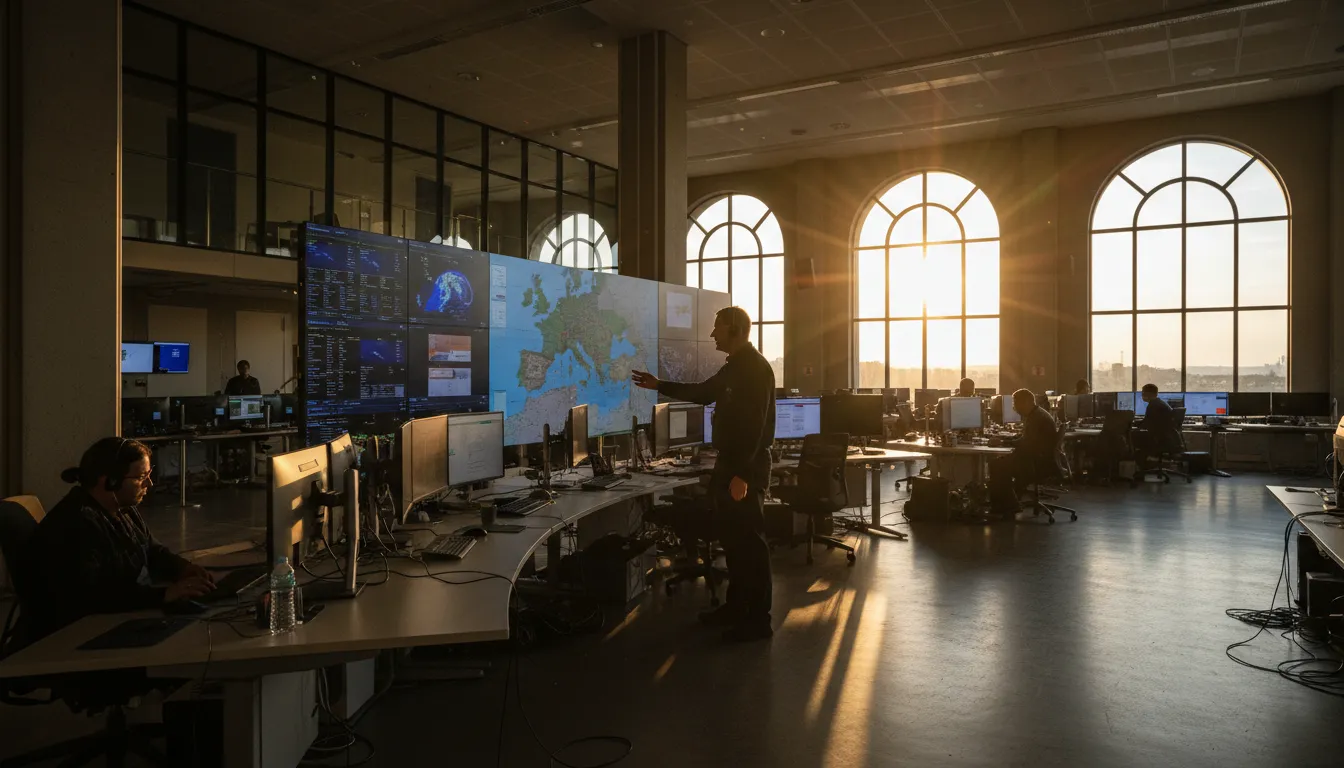
At the heart of the mechanism sits the Emergency Response Coordination Centre (ERCC) in Brussels, staffed around the clock. When an activation request arrives, ERCC duty officers assess the situation, relay the call to participating states, match available assets to needs, and coordinate logistics—from airlifting urban search-and-rescue teams to routing convoys of specialised firefighting vehicles across borders.
Communication runs through CECIS (Common Emergency Communication and Information System), a secure web platform that provides real-time alerts, situation reports, and resource tracking so every participating state can see what has been offered, accepted, and deployed.
The European Civil Protection Pool
Speed depends on preparation. Participating states pre-commit specific assets—emergency medical teams, high-capacity pumps, water-purification units, shelter modules—to the European Civil Protection Pool. These assets meet certified quality standards and can be deployed at short notice. When Italy activated the mechanism after severe flooding, for instance, France, Slovenia, Belgium, and Slovakia each dispatched high-capacity pumping modules within hours.
rescEU: The Safety Net of Last Resort
After a string of devastating wildfire seasons revealed gaps in collective capacity, the EU upgraded the system in 2019 by creating rescEU—an additional reserve of EU-owned assets that functions as surge capacity when member-state offers are insufficient. rescEU is 100% EU-financed and includes a fleet of firefighting aircraft and helicopters stationed across Croatia, France, Greece, Italy, Spain, and Sweden, along with medical evacuation planes, field hospitals, and specialist teams for chemical, biological, radiological, and nuclear incidents.
How Big Can It Get?
The mechanism's largest operation to date has been the response to Russia's invasion of Ukraine beginning in 2022. Through the UCPM, participating states delivered 84,000 tonnes of material assistance—generators, shelters, medicines, food, firefighting equipment—and evacuated 1,700 sick and injured patients to hospitals in 18 EU countries and Norway.
In 2024 alone, the mechanism was activated 58 times, responding to the war in Ukraine, floods in France, Czechia, Poland, and Spain, wildfires across Europe and Latin America, and Tropical Cyclone Chido in Mayotte. The following year saw 64 activations.
Why It Matters
Climate change, armed conflicts, and pandemics are making large-scale emergencies more frequent and more complex. No single European country maintains the resources to handle every possible scenario. The EU Civil Protection Mechanism transforms individual national capacities into a collective insurance policy: countries invest in their own preparedness but share the burden when disaster strikes. With rescEU adding centrally financed reserves, Europe now has both a mutual-aid network and a strategic safety net—available, in principle, to any nation on Earth willing to ask for help.