NVIDIA GTC 2026: Vera Rubin Arrives, Feynman in Sight
Jensen Huang opens NVIDIA's GTC 2026 conference in San Jose with the formal launch of the Vera Rubin AI platform and an early preview of the Feynman architecture, cementing NVIDIA's dominance in the age of agentic and physical AI.
The AI Industry's Biggest Stage
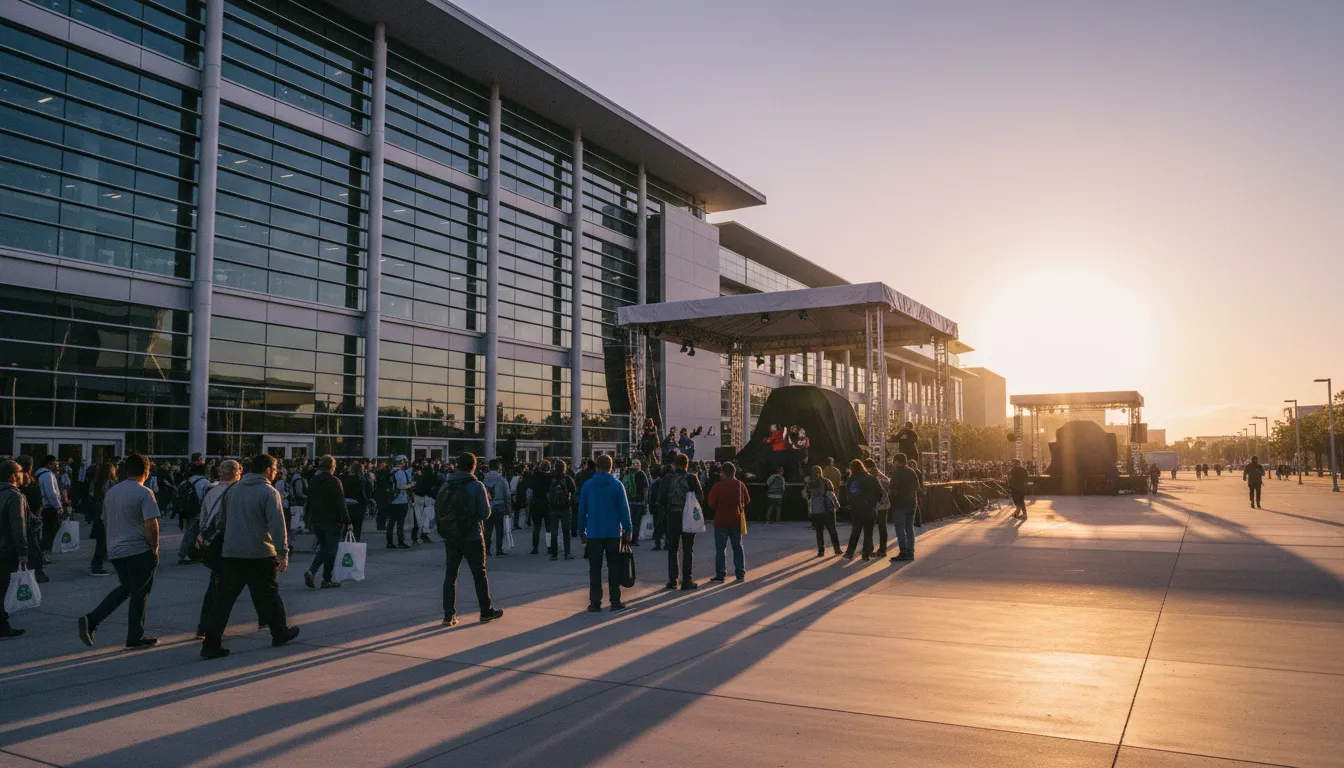
The doors opened Sunday in San Jose as NVIDIA's GPU Technology Conference 2026 kicked off what analysts routinely call the "Super Bowl of artificial intelligence." With 30,000 attendees converging on the SAP Center and tens of thousands more joining online, the stakes are unusually high — and unusually clear. CEO Jensen Huang takes the main stage on Monday, March 16, at 11 a.m. PT to formalize a new computing era built around the Vera Rubin platform and to offer the industry's first substantive look at its successor, the Feynman architecture.
Vera Rubin: From Production Line to Centre Stage
The headline announcement arrives with most of its technical details already in circulation — but that hardly diminishes its significance. The Vera Rubin platform, named after the pioneering astronomer, pairs NVIDIA's custom Arm-based Vera CPU with the new Rubin GPU and has been in serial production since January 2026, a milestone Huang confirmed at CES. GTC is where the platform gets its formal commercial launch.
The Rubin GPU is a formidable piece of silicon: 336 billion transistors — 1.6 times the count of Blackwell — fabricated on a 3nm-class TSMC process. Eight stacks of HBM4 memory deliver roughly 13 TB/s of bandwidth per GPU, nearly tripling the bandwidth of its predecessor. In the flagship NVL72 rack configuration — 72 Rubin GPUs paired with 36 Vera CPUs — the platform reaches 3.6 exaFLOPS of NVFP4 inference performance. NVIDIA claims that translates to 5x greater inference throughput and 10x lower cost per token compared to Blackwell, numbers that will shape data-centre investment decisions for years. Broad availability is expected in the second half of 2026, with hyperscalers AWS, Azure, and Google Cloud lined up for early deployment.
A First Glimpse of Feynman
Huang is also expected to pull back the curtain — cautiously — on the Feynman architecture, the generation slated for around 2028. Early technical signals point to a 1.6nm process with backside power delivery and a design philosophy described by analysts as "inference-first": built from the ground up for the long-context, multi-step reasoning demands of agentic AI workloads. If NVIDIA lands on the 1.6nm node as targeted, the jump would extend its manufacturing lead over rivals by an estimated two to three years, according to analysts at The Register and Deeper Insights.
Agentic AI and the Physical World
Beyond silicon, GTC 2026 is organized around two converging themes: agentic AI and physical AI. Agentic systems — models that don't merely answer questions but autonomously plan, act, and remember — require a fundamentally different compute profile: massive key-value cache storage, low-latency inference, and persistent context. NVIDIA is positioning its new Inference Context Memory Storage platform and BlueField-4 DPU as the infrastructure layer for this shift.
Physical AI, meanwhile, is NVIDIA's bid to become the operating system of global industry. Through Omniverse and the Isaac robotics platform, the company is enabling manufacturers and logistics operators to simulate entire factories as digital twins before a single robot turns a screw. Partners including ABB Robotics — whose RobotStudio now closes the simulation-to-reality gap with 99% accuracy using Omniverse — and Foxconn are already running pilots.
A Litmus Test for the AI Economy
GTC 2026 arrives at an inflection point. The Blackwell cycle drove record revenue for NVIDIA, but investors are watching whether the Vera Rubin ramp can sustain that trajectory amid rising competition from custom silicon at the hyperscalers. Huang's keynote will be scrutinized not just for chip specifications but for signals about demand, software moats, and how deeply NVIDIA intends to embed itself in robotics and industrial automation. The answer, judging by the conference programme, is: very deeply indeed.