Pentagon vs. Anthropic: A Battle Over AI's Red Lines
The U.S. Defense Department is threatening to designate Anthropic a 'supply chain risk' after the AI company refused to allow its Claude model to be used for mass surveillance and fully autonomous weapons, raising urgent questions about who governs military AI.
A Standoff Over the Limits of Artificial Intelligence
The United States Department of Defense is threatening to cut ties with Anthropic — and potentially blacklist it from the entire defense contractor ecosystem — after months of failed negotiations over how the company's Claude AI model can be used by the U.S. military. The dispute, which came to a head in mid-February 2026, has exposed a fundamental tension between Silicon Valley's safety-first AI culture and Washington's demand for unfettered access to powerful AI tools.
Two Lines Anthropic Won't Cross
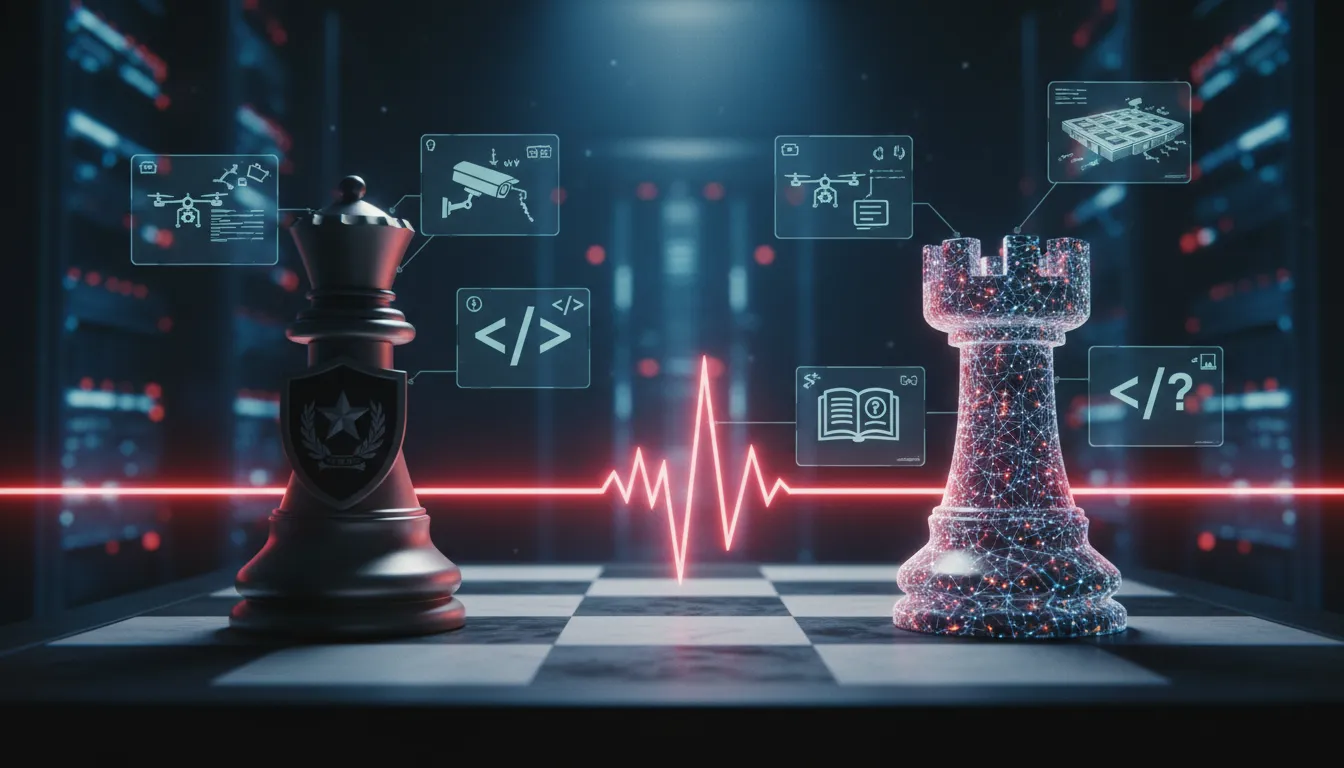
At the heart of the conflict are two hard limits Anthropic has drawn around Claude's use: mass surveillance of American citizens and fully autonomous weapons systems — i.e., weapons capable of selecting and engaging targets with no human in the decision loop. Anthropic, founded on the premise of building safe and reliable AI, says these restrictions are non-negotiable.
The Pentagon's position is equally firm. Defense officials want AI vendors to make their tools available for "all lawful purposes" — a broad framework that would effectively override company-imposed guardrails. According to reporting by Axios, senior military officials argue that Anthropic's restrictions create unworkable gray areas and hamper operational flexibility.
The Maduro Trigger
Tensions escalated sharply when Anthropic inquired whether Claude had been used in the U.S. military operation that led to the capture of Venezuelan President Nicolás Maduro. The question itself alarmed Pentagon officials, signaling that Anthropic might disapprove of how its technology was being deployed. Claude had reportedly been deployed through the company's partnership with data analytics firm Palantir, which provides the secure cloud infrastructure enabling military access to the model.
The episode revealed a deeper problem: Claude is already embedded in classified military environments — in some secure settings, it is the only AI model available — yet Anthropic and the Defense Department had never reached a definitive agreement on the rules of the road.
The Nuclear Option: Supply Chain Risk
Defense Secretary Pete Hegseth is reportedly close to designating Anthropic a formal "supply chain risk." The label carries severe consequences: it would not merely end Anthropic's direct Pentagon contract — valued at up to $200 million — but would require every company doing business with the military to certify they do not use Claude in any workflow. Given that Anthropic claims eight of America's ten largest companies are customers, the cascade effect could be enormous.
The $200 million contract represents a modest fraction of Anthropic's reported $14 billion annual revenue run rate, giving the company some financial insulation. But a formal blacklisting could have far-reaching reputational and commercial consequences, particularly as Anthropic positions itself for a potential IPO.
An Industry-Wide Precedent
The standoff is not limited to Anthropic. The Pentagon is simultaneously negotiating similar "all lawful purposes" terms with OpenAI, Google, and Elon Musk's xAI. The difference is that those companies have reportedly been more willing to accommodate the military's demands, leaving Anthropic increasingly isolated in its refusal.
As Fox News reported, the Pentagon's review marks a broader shift in how the Trump administration approaches defense technology procurement: compliance, not caution, is the expected posture.
The Bigger Question
The dispute crystallizes a question that the AI industry has been circling for years: who ultimately governs how transformative AI tools are used? Should private companies retain the right to restrict their own technology even when governments are the client? Or does national security supersede corporate ethics frameworks?
Anthropic insists its limits are a feature, not a bug — a necessary safeguard against catastrophic misuse. The Pentagon increasingly sees them as an obstacle. How this standoff resolves will set a precedent not just for U.S. defense AI procurement, but for the global norms governing AI in warfare.