Poland: A Million Weapons and Record Permits in Russia's Shadow
Poland has surpassed one million registered civilian firearms for the first time — a record 50,709 permits were issued in 2025, and escalating hybrid attacks by Russia and the debate about nuclear weapons give this trend a new dimension.
A Historic Million
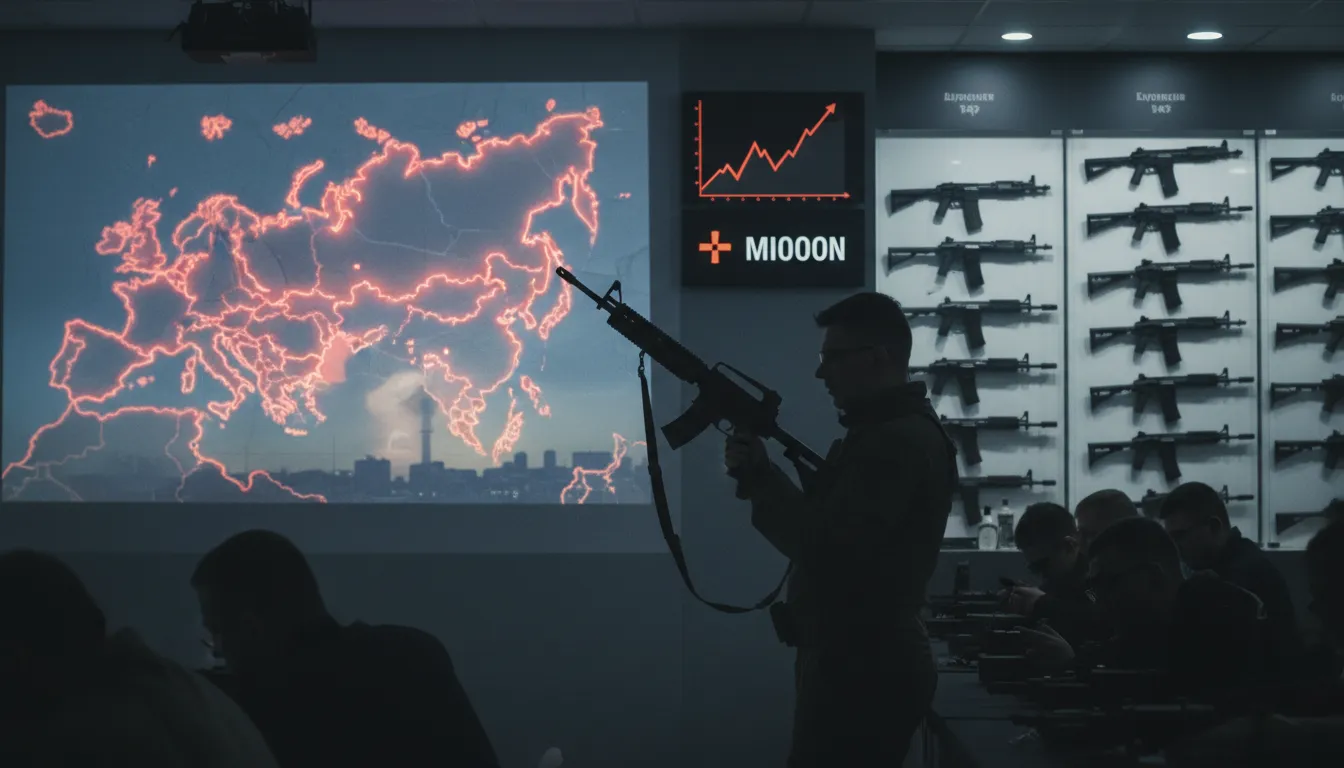
Poland has reached a historic threshold: for the first time in history, the number of legally registered civilian firearms has exceeded one million. According to data from the National Police Headquarters, as of December 31, 2025, Poles possessed 1,037,778 registered firearms. There are a total of 411,769 active firearms permits — more than twice as many as in 2015, when they amounted to just under 193,000.
In 2025 alone, a record 50,709 new permits were issued — 10.6 percent more than the year before. For comparison: in 2022, immediately after the Russian invasion of Ukraine, the number of new permits jumped by nearly 88 percent to 37,402. Since then, each subsequent year has broken the previous record.
Who Buys Weapons and Why?
Among the permits issued in 2025, collector's permits dominate — 21,071 pieces, followed by sports permits (17,601). However, interest in weapons for personal protection is clearly growing: in 2021, only 81 such permits were issued, in 2025 — already 7,254. Experts, including former police officer Dariusz Loranty, emphasize that some Poles buy weapons not so much out of fear of war, but out of fear of growing organized crime.
Despite the spectacular growth, Poland remains in last place in the European Union in terms of the density of civilian gun ownership — only 2.5 pieces per 100 inhabitants. Finland records a rate of 32.4, Austria — 30.0. A million weapons is a symbolic breakthrough, but it does not fundamentally change Poland's position against the background of Europe.
Russia Tests Polish Infrastructure
The private arming of Poles fits into a broader context of threat from the East. On December 29, 2025, there was a serious cyberattack on a Polish combined heat and power plant. Researchers at ESET attribute the attack to the Sandworm group — operating directly on behalf of the Russian military intelligence GRU. The malicious wiper-class software used was intended to permanently destroy data and paralyze energy infrastructure before the winter peak demand.
The Polish government has extended the second BRAVO alert level and its equivalent in cyberspace — BRAVO-CRP — until February 28, 2026. The budget for cybersecurity is to increase to one billion euros in 2026, almost twice as much as the year before. ESET analysts warn that Russia will expand hybrid operations targeting Poland, Germany and France.
Debate on Nuclear Shield
In the face of these threats, calls for nuclear deterrence are becoming increasingly loud. President Karol Nawrocki has repeatedly advocated for Poland to join the NATO Nuclear Sharing program and develop its own nuclear potential. Experts are divided: some point out that participation in Nuclear Sharing would strengthen the credibility of deterrence, others warn that unilateral actions in this direction could lead to diplomatic isolation. The United States has so far ruled out the deployment of nuclear weapons in countries that joined NATO after 1997.
A record number of gun permits, record spending on cybersecurity, and a discussion about nuclear deterrence — all these phenomena add up to one picture: Polish society and the Polish state are intensively preparing for scenarios that seemed distant just a few years ago.