Slovakia has declared a state of oil emergency for Slovnaft
The Slovak government has declared a state of oil emergency and released up to 250,000 tonnes of oil from state reserves for the Slovnaft refinery following the interruption of supplies via the Družba pipeline since the end of January. Slovnaft has halted all oil exports — the domestic market has full priority.
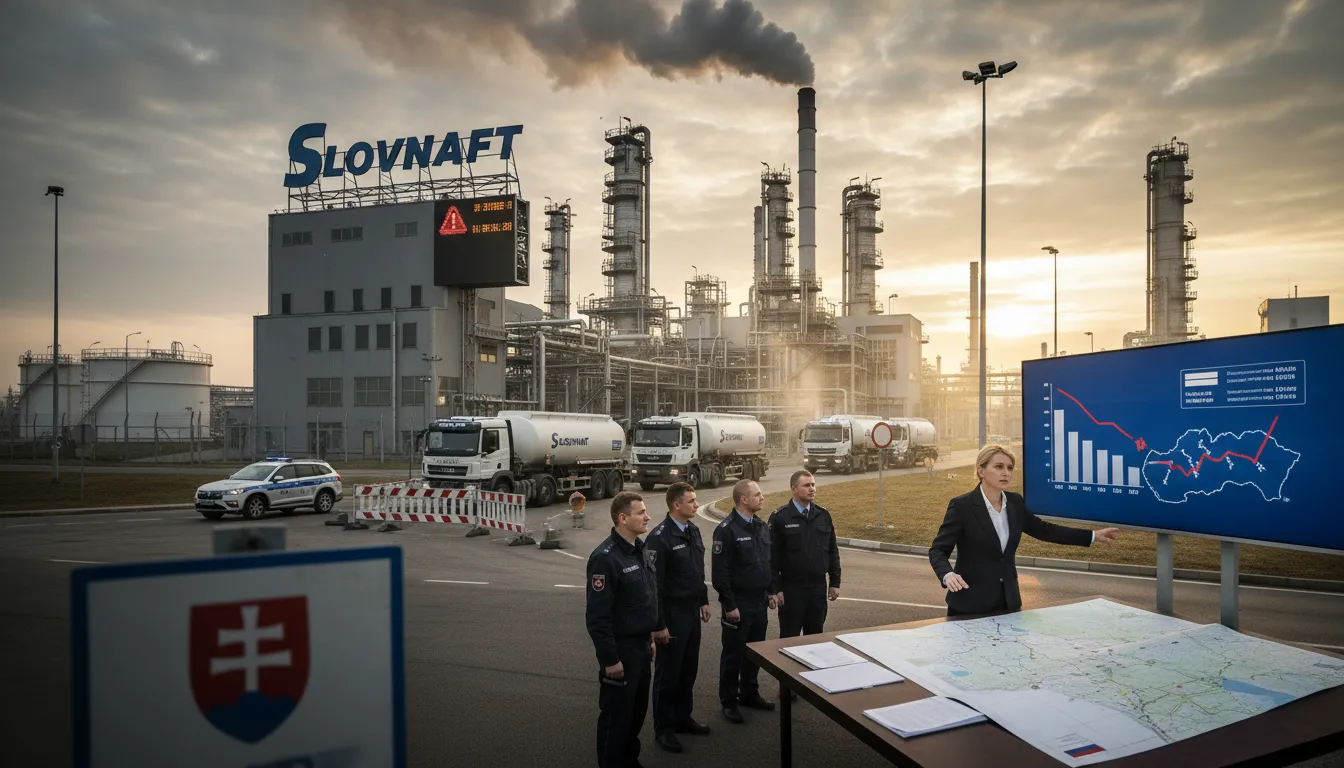
The government released reserves, Slovnaft stopped exports
On Wednesday, 19 February 2026, the Slovak government declared a state of oil emergency and approved the release of up to 250,000 tonnes of oil from state reserves for the Slovnaft refinery. The decision comes after Russian oil supplies via the Druzhba pipeline have been stalled since the end of January and the refinery is facing a serious shortage of raw materials.
What happened to the Druzhba pipeline?
The problems began on 27 January 2026, when a Russian drone attack damaged a distribution station in Brody in western Ukraine — a key hub of the southern branch of the Druzhba pipeline. It is along this route that Russian oil flows to Slovakia and Hungary. From that moment on, the flow of oil practically stopped.
Kyiv rejected accusations of passivity and emphasised that Russian drones were responsible for the damage to the infrastructure. Nevertheless, diplomatic tensions between Bratislava and Kyiv are growing — Prime Minister Robert Fico publicly accused Zelensky of blocking the resumption of supplies.
Reserves as a loan, not a gift
The state does not provide Slovnaft with reserves free of charge — it is a loan. The refinery must provide a financial or bank guarantee equal to the book value of the reserves, and the contract is valid until 30 September 2026 at the latest. The released quantity represents approximately one month of operation in limited mode with full supply to the domestic market.
As a member of the International Energy Agency (IEA), Slovakia is required to maintain emergency oil reserves for at least 90 days of consumption. Slovnaft is now drawing on these strategic reserves.
Slovnaft has stopped exports, giving priority to the domestic market
In parallel with the declaration of a state of emergency, Slovnaft announced an immediate halt to oil exports, both to Ukraine and to other countries. All of the refinery's production is now directed exclusively to the Slovak market. Hungary and its MOL refinery have taken the same step.
Both countries have indicated that they will resume exports only after supplies through Druzhba are restarted. Slovakia was an important supplier of oil to Ukraine, so the suspension of exports will also have an impact on the Ukrainian side.
Alternative: the Adria oil pipeline
The short-term solution is the Adria oil pipeline (JANAF), which connects the Croatian port of Omišalj with refineries in Central Europe. Slovakia and Hungary have asked Croatia for urgent permission to transport oil via this route. According to experts, Adria can cover up to 80 per cent of refinery needs in the event of a Druzhba outage.
However, a full transition to the alternative route will take 20 to 30 days due to technical and logistical preparations. An additional complication is the EU sanctions prohibiting the import of Russian oil by tankers: the Croatians insist that the European Commission explicitly authorise the possible transport of Russian crude oil via Adria.
What does this mean for Slovaks?
For ordinary Slovaks, there is no threat of fuel shortages at petrol stations for the time being — state reserves and measures taken by Slovnaft should stabilise the situation. However, the crisis reveals the Slovak energy sector's continuing dependence on Russian oil and raises urgent questions about the long-term diversification of supplies.