Probiotic Bacteria Engineered to Hunt and Kill Tumors
Scientists are programming gut-friendly bacteria to infiltrate tumors and produce cancer-fighting drugs on-site, showing dramatic results in mice and opening a new frontier in targeted oncology.
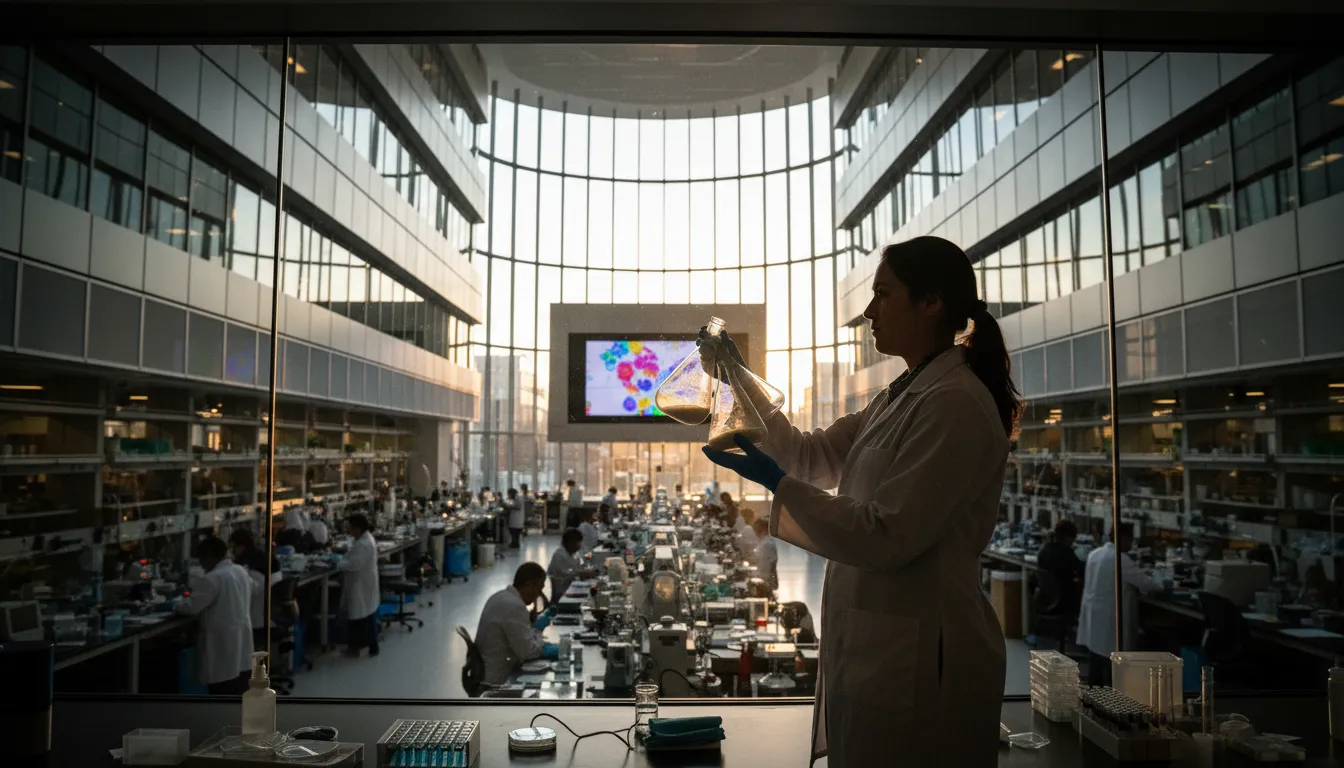
Microscopic Drug Factories Inside Tumors
A wave of research is transforming harmless gut bacteria into precision cancer weapons. In studies published over the past year, teams from China, Canada, and the United States have independently engineered probiotic strains that seek out tumors, colonize them, and unleash anti-cancer agents directly at the disease site — potentially sparing patients the devastating side effects of conventional chemotherapy.
The latest breakthrough, published March 17 in PLOS Biology, comes from Shandong University in China. Tianyu Jiang and colleagues reprogrammed Escherichia coli Nissle 1917 (EcN) — a probiotic strain naturally found in the human gut — to synthesize Romidepsin (FK228), an FDA-approved anticancer compound. In mouse experiments, the modified bacteria successfully accumulated inside tumors and released the drug precisely where it was needed.
"The probiotic strain shows great promise for cancer treatment, paving the way for future advancements in this field," the researchers wrote.
Why Bacteria Are Ideal Tumor Infiltrators
Solid tumors create an environment that most drugs struggle to penetrate: their cores are oxygen-starved, acidic, and shielded from the immune system. But these hostile conditions are exactly where certain bacteria thrive. Probiotic strains naturally migrate toward and colonize tumor tissue through leaky blood vessels, exploiting the low-oxygen, immune-suppressed microenvironment that normally protects cancer from the body's defenses.
A separate team at the University of Waterloo in Canada took a different approach entirely. Published in ACS Synthetic Biology in late 2025, their work used Clostridium sporogenes, a soil bacterium that flourishes without oxygen. The researchers inserted an oxygen-tolerance gene controlled by quorum sensing — a bacterial communication system that activates only after enough bacteria have accumulated inside a tumor. As biomedical engineer Brian Ingalls explained, they "built something like an electrical circuit, but instead of wires, used pieces of DNA."
Columbia's Cancer Vaccines Made From Bacteria
Perhaps the most ambitious program is at Columbia University, where NCI-funded researchers Nicholas Arpaia and Tal Danino published twin studies in Nature and Science Immunology in October 2024. Their approach goes beyond drug delivery: they engineered EcN bacteria to carry 19 tumor-specific neoantigens — abnormal proteins unique to a patient's cancer — essentially creating a personalized microbial vaccine.
In mice with colorectal tumors, a single injection of these engineered bacteria greatly shrank or completely eliminated tumors and extended survival. The bacteria also proved effective against melanoma and metastatic disease. A parallel study showed bacteria delivering interferon gamma directly to tumors could overcome resistance to checkpoint inhibitor drugs — a major obstacle in current immunotherapy.
From Mice to Humans: The Road Ahead
None of these approaches have been tested in humans yet, and significant hurdles remain. Scientists must demonstrate long-term safety, develop methods to remove engineered bacteria after treatment, and — for personalized vaccine approaches — solve the challenge of identifying each patient's unique tumor antigens quickly enough for clinical use.
Still, clinical translation is advancing. A 2025 phase I trial used folate-targeted nanoparticles to co-deliver Lactobacillus casei with anti-PD-1 nanobodies in stage III colorectal cancer patients, with early results showing the approach was well tolerated and free of serious toxicities.
If these results hold in larger human trials, engineered bacteria could represent a paradigm shift in oncology — turning the body's own microbial allies into targeted cancer killers that work from the inside out, without the collateral damage of radiation and chemotherapy.