Smart Homes 2026: The End of Minimalism in European Living
In 2026, European homeowners are turning away from cold minimalism towards warmer interiors with natural materials. Smart technologies are becoming invisible — built directly into furniture and paneling — while significantly increasing property values.
The End of the White and Gray Era
European homes are undergoing a significant transformation in 2026. The cold, sterile minimalism that dominated interiors for the past decade is giving way to warmer, more sensual spaces. Designers across Europe are seeing strong demand for interiors where textures, natural materials, and bold colors take precedence over streamlined shapes.
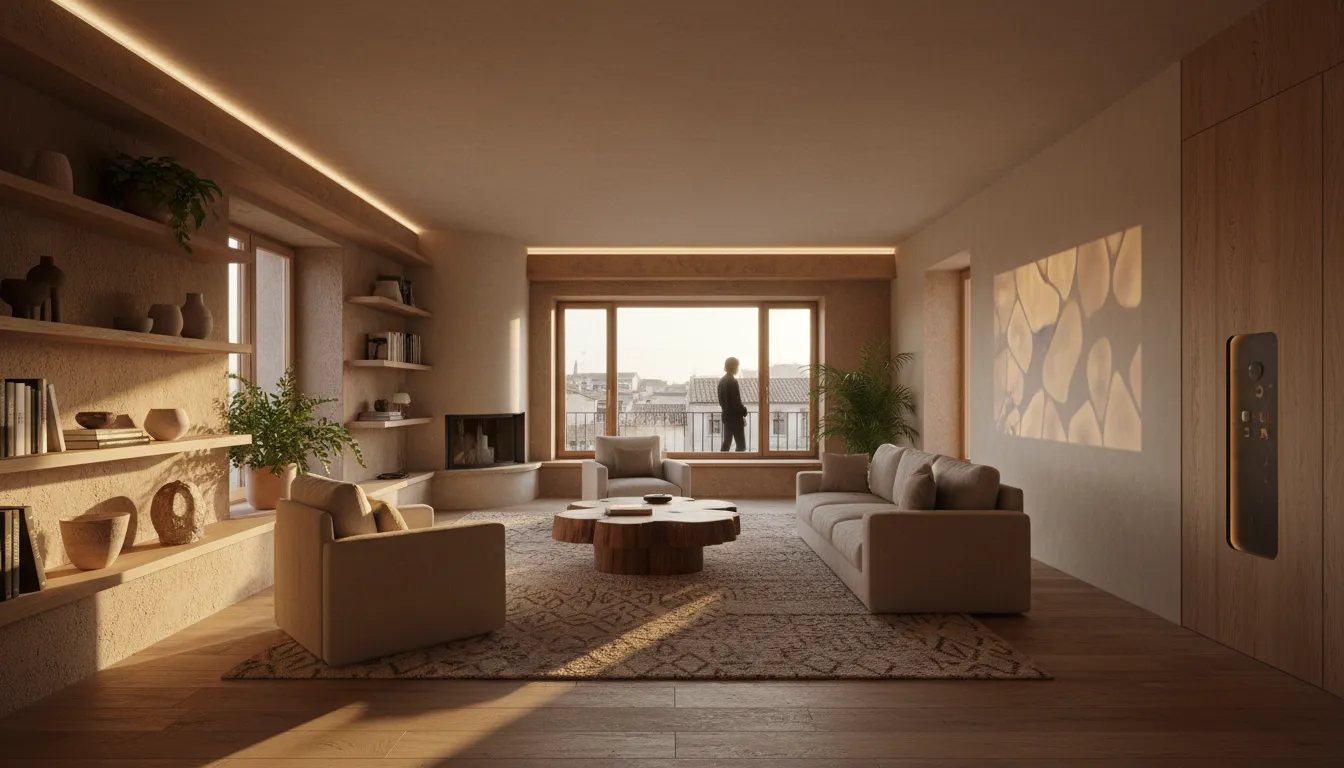
"Minimalism hasn't disappeared completely, but it has softened significantly," the Homes & Gardens portal describes the trend. Instead of empty white walls, lime plasters in earthy tones, wooden paneling, and fabric accessories are appearing, bringing a sense of coziness and authenticity.
Terracotta, Olive, Clay — A New Color Palette
The dominant color palette is becoming earthy tones: terracotta, olive green, clay, sand, and dark mustard. According to color experts, these shades evoke a sense of groundedness and tranquility — an increasingly desirable effect in an age of information overload.
According to an analysis by Agape Construction, interest in classic white and gray schemes among clients is declining significantly, while combinations of warm neutral colors with natural material accessories are seeing record interest. In particular, the combination of terracotta and earthy green has become a symbol of 2026.
Wood, Stone, Rattan — A Return to Natural Materials
The central element of contemporary interiors is natural materials: solid wood, stone surfaces, rattan, linen, and wool. In addition to their aesthetic effect, these materials also have practical benefits — they improve indoor air quality, are more durable than synthetic alternatives, and correspond to the growing interest in sustainable living.
According to designers, texture has become the "new luxury" — rooms are layered with a combination of velvet, wood paneling, and stone slabs, with each surface inviting touch. This approach, inspired by the Japanese aesthetic of wabi-sabi, appreciates natural imperfections and craftsmanship.
Smart Technologies — Invisible, but Ubiquitous
2026 also marks a breakthrough in smart home technologies: devices are ceasing to be visible. Hidden charging stations in tables, smart lighting built into wall paneling, sensors integrated into floors — technology is increasingly "dissolving" into the interior.
According to DC Structures, modern coffee tables contain wireless chargers and hidden storage spaces for devices, speakers are lost in the walls, and microphones for home assistants are placed so that they are not visible, but capture voice from anywhere in the room.
The smart furniture market reached a value of USD 5.65 billion in 2026 and is expected to grow to nearly USD 9.63 billion by 2031, according to Mordor Intelligence. The European smart home market as a whole is estimated at USD 24.44 billion in 2026.
Smart Technologies Increase Property Values
The economic dimension is also important for Slovak property owners: according to experts, homes equipped with advanced home automation are selling for 5 to 10 percent above market price. In addition, the European Energy Performance of Buildings Directive has introduced "smart readiness" indicators for renovations, which financial institutions take into account for green mortgages.
For the Slovak market, this means a clear signal: investing in smart technologies integrated into the interior is not only a matter of comfort, but also a rational appreciation of the property for the future.