SpaceX-xAI Mega-Merger and Gemini 3.1 Mark AI's New Era
SpaceX's record $250 billion acquisition of xAI and Google's launch of the ultra-efficient Gemini 3.1 Flash-Lite model cap a historic Q1 2026 that saw $300 billion in venture funding, 80% of it flowing into artificial intelligence.
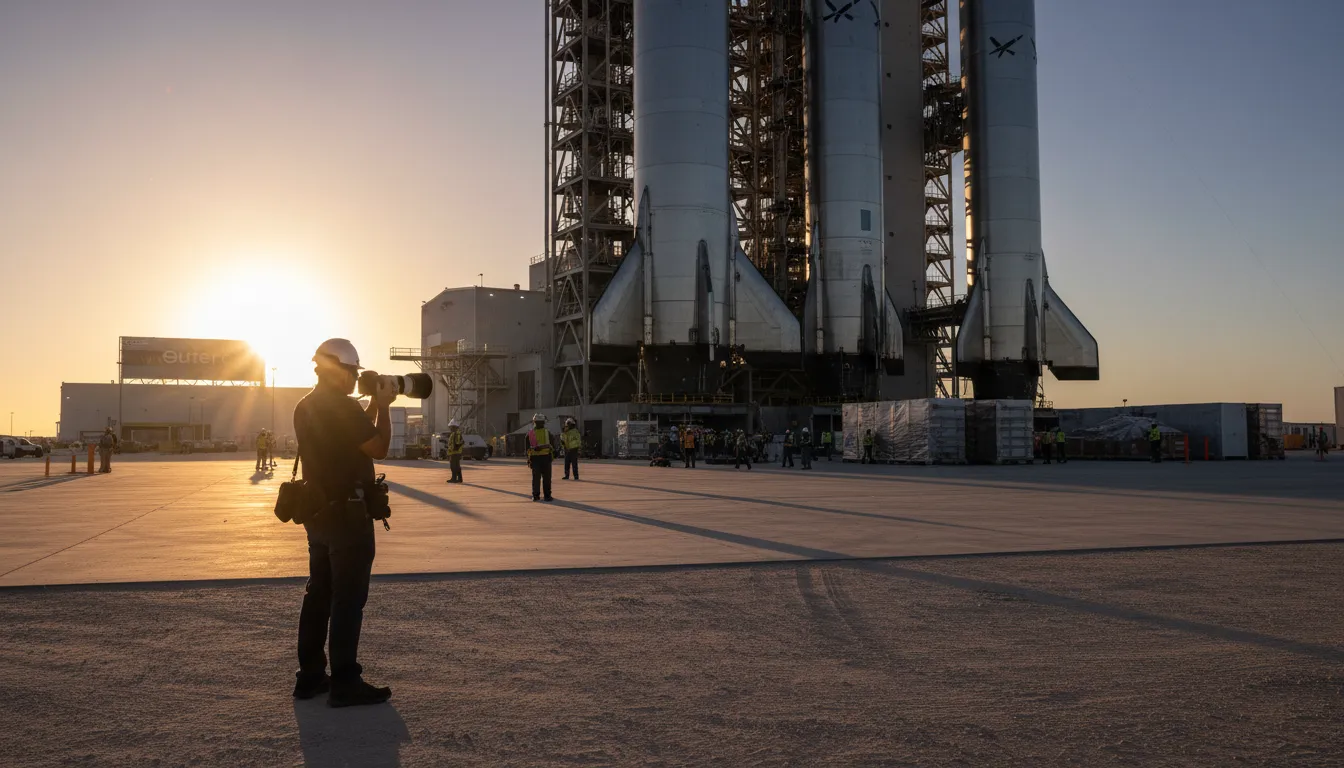
The Trillion-Dollar Bet on Space-Powered AI
Elon Musk has never been one for half measures. On February 2, 2026, his rocket company SpaceX officially acquired xAI, his artificial intelligence startup, in a deal valuing the combined entity at $1.25 trillion — making it the largest merger in corporate history. The transaction, structured as a share exchange at a ratio of 0.1433 SpaceX shares per xAI share, values xAI alone at roughly $250 billion.
Musk described the new colossus as "the most ambitious, vertically-integrated innovation engine on (and off) Earth," combining AI, rockets, and space-based internet under one roof. The strategic centerpiece: orbital data centers that would leverage SpaceX's Starlink constellation to run AI workloads in space, bypassing Earth's growing energy and cooling constraints.
The merger also sets the stage for what could be the most anticipated IPO of the decade. SpaceX is reportedly planning to go public later this year, seeking a valuation as high as $1.5 trillion and aiming to raise up to $50 billion.
Google Fires Back With Gemini 3.1 Flash-Lite
While Musk was consolidating empires, Google quietly launched a weapon of a different kind. On March 3, the company unveiled Gemini 3.1 Flash-Lite — its fastest and most affordable AI model to date, designed for developers and enterprises that need raw speed over deep reasoning.
The numbers are striking. Flash-Lite delivers a 2.5× faster time-to-first-token and 45% higher output speed compared to its predecessor, Gemini 2.5 Flash. It handles inputs up to 1 million tokens and generates responses of up to 64,000 tokens — all at a price of just $0.25 per million input tokens, a fraction of the $2 charged for Gemini 3.1 Pro.
In Google's internal benchmarks, Flash-Lite topped six of eleven tests, outperforming OpenAI's GPT-4o mini and Anthropic's Claude 4.5 Haiku. The trade-off is predictable: advanced reasoning remains weaker, with a 16% score on the HLA benchmark versus Pro's 44.4%. But for high-volume tasks like translation, content moderation, and UI generation, the model hits a sweet spot between cost and capability.
A Quarter Unlike Any Other
These moves did not happen in a vacuum. According to Crunchbase data, Q1 2026 shattered every venture capital record in existence. Investors deployed $300 billion across roughly 6,000 startups — a 150% surge both quarter-over-quarter and year-over-year.
Artificial intelligence captured a staggering 80% of that total, or $242 billion, up from 55% in Q1 2025. Four mega-rounds alone accounted for $188 billion:
- OpenAI — $122 billion (investors include Amazon, Nvidia, SoftBank)
- Anthropic — $30 billion
- xAI — $20 billion (pre-merger)
- Waymo — $16 billion
U.S.-based companies captured 83% of global venture capital, up from 71% a year earlier, reinforcing America's dominance in the AI arms race. China trailed at $16.1 billion, with the U.K. at $7.4 billion.
What It All Means
The convergence is unmistakable. Capital is flowing into AI at a pace that dwarfs the dot-com era — Q1 2026's haul alone exceeded every full-year venture total before 2018. Musk's SpaceX-xAI merger represents a bet that the next frontier of AI infrastructure lies in orbit, while Google's Flash-Lite signals that the industry's competitive axis is shifting from raw intelligence toward efficiency and accessibility.
Whether these colossal bets pay off remains an open question. But one thing is clear: the AI industry in 2026 is operating at a scale that would have seemed fantastical just two years ago.