Czech Republic Imposes Price Cap on Fuel
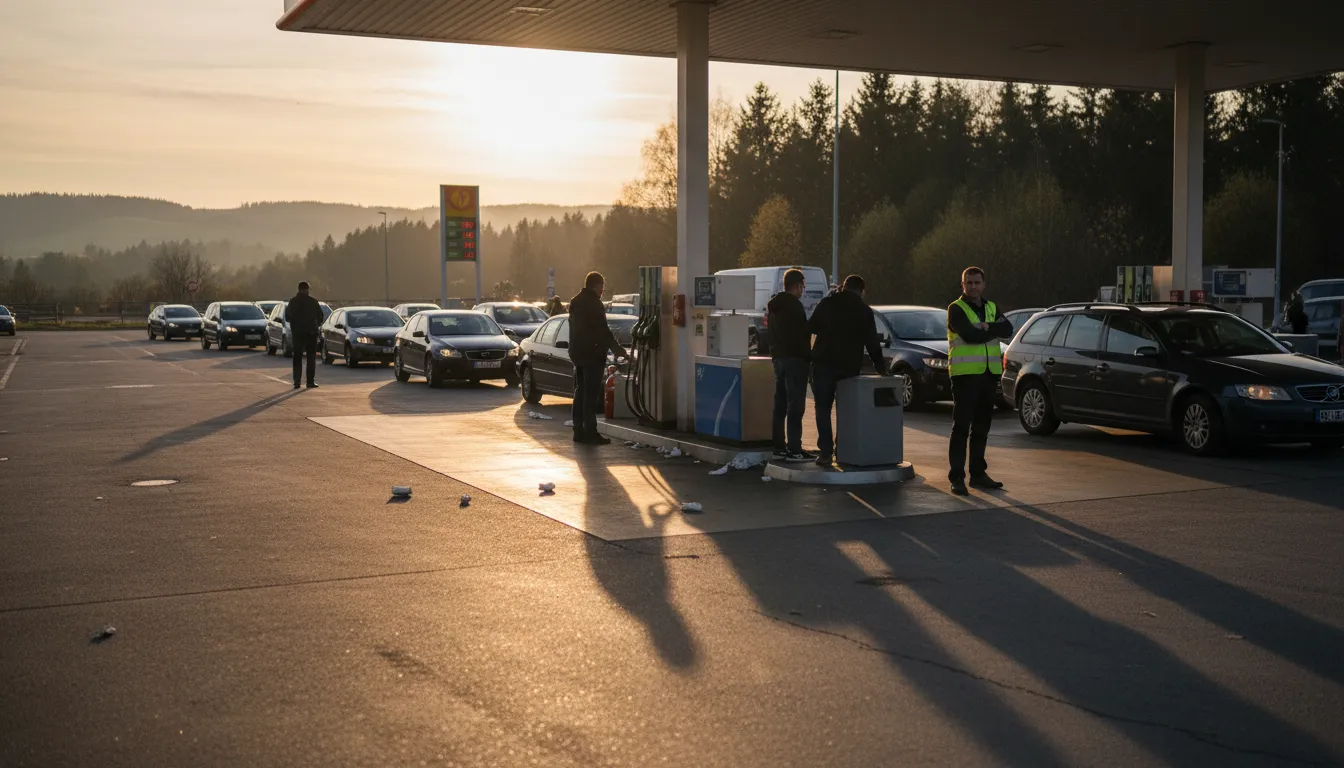
The Czech government is regulating petrol and diesel prices at filling stations from April 8th. The maximum price for petrol is set at CZK 43.15 per liter, and for diesel at CZK 49.59. The measure has been met with criticism from both petrol station operators and consumers, who have lost discount coupons.
Government Sets Maximum Fuel Prices for the First Time in History
An unprecedented measure came into effect in the Czech Republic on Wednesday, April 8, 2026 — the Ministry of Finance has, for the first time, set a price cap for petrol and diesel at all filling stations across the country. The maximum price for petrol is CZK 43.15 per liter including VAT, while for diesel it is CZK 49.59 per liter.
Prime Minister Andrej Babiš's cabinet approved the package of measures on April 2nd in response to the sharp rise in fuel prices, which is linked to the escalation of the conflict in the Middle East. Since the start of military strikes on Iran, the price of petrol has risen by approximately CZK 8 and diesel by as much as CZK 15 per liter.
How the Regulation Works
The Ministry of Finance will publish the maximum prices valid for the following day at 2 PM every working day. Friday's announcement will then be valid until Monday inclusive. The calculation is based on the average wholesale indices of ČEPRO, ORLEN and MOL, the daily quotation of the Platts exchange organization, and includes excise duty.
The package includes two other key measures:
- Capping of margins — the maximum permissible margin for filling stations is limited to CZK 2.50 per liter for both petrol and diesel.
- Reduction of excise duty on diesel — the tax is reduced by CZK 1.939 per liter, to the minimum permitted by European Union regulations. Including the impact of VAT, this represents a relief of CZK 2.35 per liter, which will cost the state approximately one billion crowns.
The measure is currently scheduled to last until April 30, 2026. The government has also commissioned the preparation of legislation that would allow margins to be regulated by government decree in future crisis situations.
Criticism from Petrol Station Operators and Consumers
The introduction of the price cap has provoked mixed reactions. The MOL filling station network immediately canceled discount coupons worth CZK 0.50 per liter, which it offered through the MOL Move application. Drivers who previously filled up for less than the set cap have paradoxically lost out.
"I used to get cheaper petrol at my nearest pump than your cap, but now I've lost even that small discount," complained one driver.
The opposition points to another risk. ODS representative Martin Kupka warned that the set maximum prices in some cases exceed current market prices, which may motivate petrol station operators to raise prices towards the cap instead of maintaining competitive prices. Oil companies also claim that they will be forced to sell diesel below cost, because the cap is, according to them, incorrectly calculated.
Context: War and Expensive Oil
Prime Minister Babiš admitted that the government initially monitored developments in the market and hoped for a voluntary agreement with distributors. "We monitored margins and at the beginning of the conflict they were normal, but gradually they became excessive," said the Prime Minister. Deputy Prime Minister Alena Schillerová emphasized the critical impact of diesel prices on overall inflation and costs in transport and agriculture.
The Czech Republic is thus joining countries that have resorted to direct regulation of the fuel market as a result of the Middle East crisis. Whether the measure will actually help drivers remains to be seen in the coming weeks — especially if the conflict deepens further and oil prices remain at elevated levels.