US Housing 2026: Midwest Rises as West Coast Falls
America's spring 2026 housing market is defined by sharp regional divergence: Midwest prices climb 3.5% while West Coast and Sunbelt markets soften under a glut of post-pandemic construction, as mortgage rates touch a three-year low of 5.98%.
A Nation Divided by ZIP Code
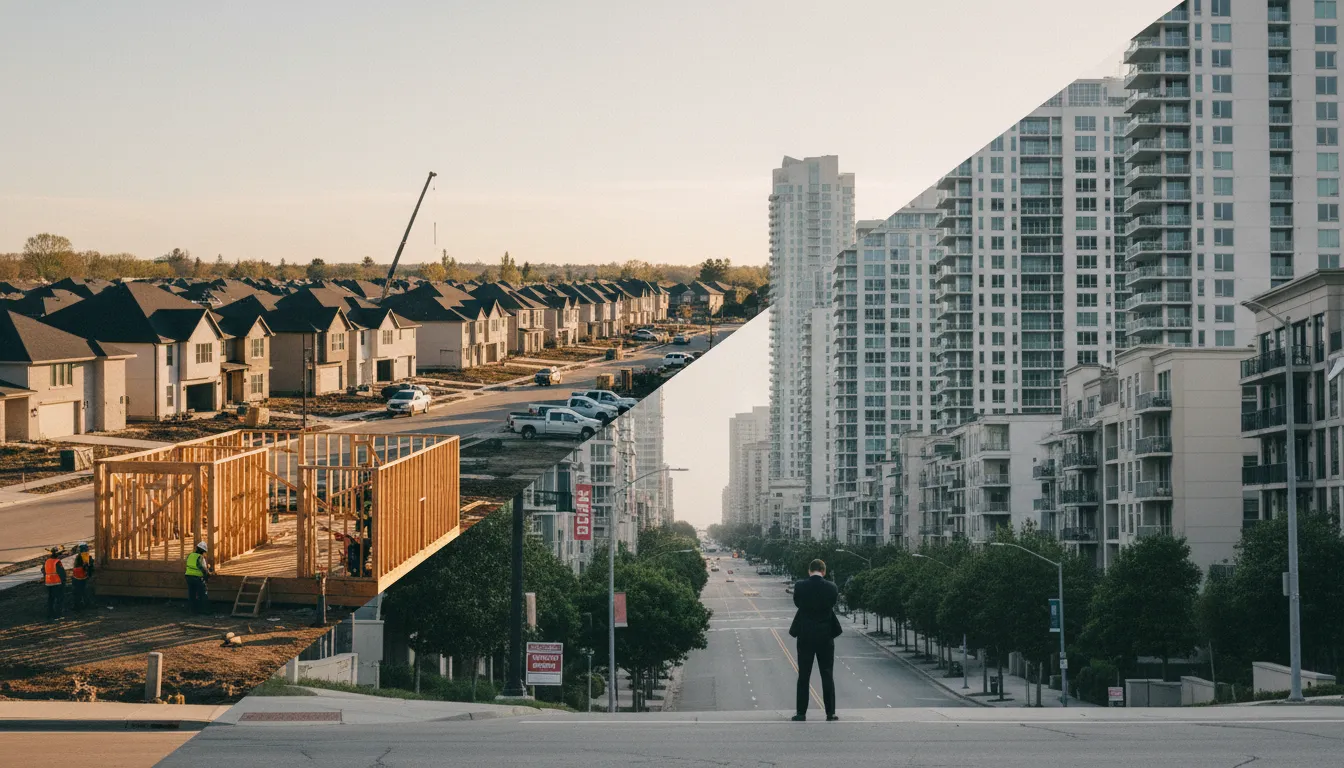
The American housing market entered spring 2026 not as a single story but as dozens of competing ones. Nationally, prices are barely moving — J.P. Morgan Global Research forecasts 0% price growth for the full year — yet beneath that flat headline lies a dramatic split between regions gaining ground and those losing it. The determining factor, analysts say, is a simple matter of supply: how many homes were built during the pandemic construction boom, and where.
Midwest: The Quiet Winner
While coastal markets grab headlines, the heartland is quietly outperforming. Illinois, Wisconsin, and Nebraska are each posting annual home-price gains between 4.7% and 4.9%, driving a Midwest regional average of roughly 3.56% — the strongest of any major region in the country. The reason is structural: unlike the South and West, the Midwest never saw a surge of speculative new construction during 2021–2023. Inventory remains well below pre-pandemic norms, sustaining upward price pressure even as affordability tightens nationally.
The Northeast is telling a similar story. Constrained supply in legacy urban markets — Boston, New York, Philadelphia — continues to underpin prices in a region that simply cannot build fast enough to meet demand.
West Coast and Sunbelt: Oversupply Takes Its Toll
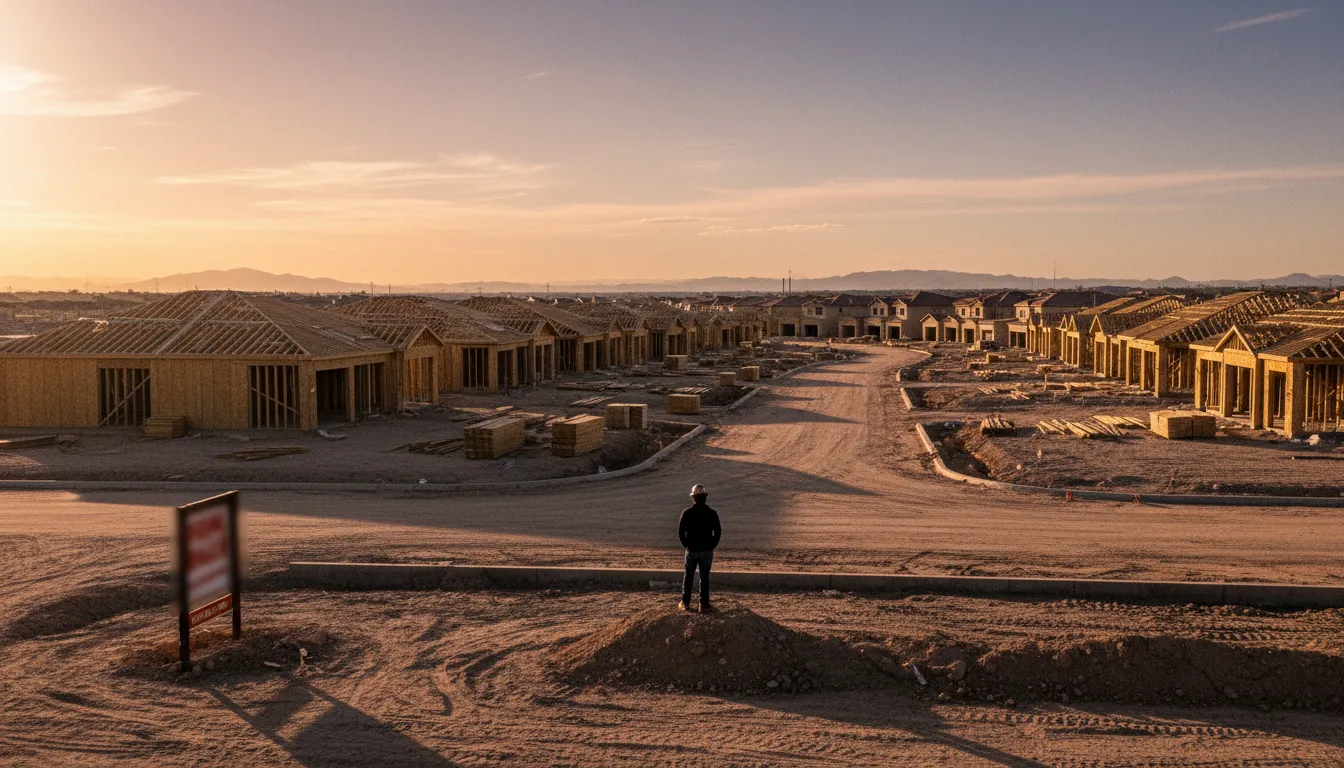
The picture is sharply different across the South and West. According to J.P. Morgan's regional breakdown, Florida home prices are down 5.1% year-over-year and Texas prices have declined 2.4%. Colorado, Hawaii, and Utah are also in negative territory. In the West broadly, housing inventory now sits as much as 50% above pre-pandemic levels, a direct consequence of aggressive homebuilding that continued well past the point of demand.
Builders are responding by offering mortgage-rate buydowns and price concessions to clear inventory, but analysts warn the correction may take several more quarters to fully absorb.
Mortgage Rates Hit a Three-Year Low
One piece of genuinely good news arrived on March 9, 2026: the average 30-year fixed mortgage rate fell to 5.98%, dipping below 6% for the first time since late 2022 and marking a 3.5-year low, according to market data. The effect on affordability has been measurable: a median-income U.S. household can now afford a home priced at $331,483 — a $30,000 improvement year-over-year and the highest purchasing power since March 2022, per NAHB research.
Despite this progress, affordability remains strained. A median-income buyer would still devote roughly 32% of income to a typical mortgage payment — above the traditional 28% threshold considered sustainable.
The Iran Wildcard
The nascent recovery faces a serious external threat. Following U.S. military strikes on Iran in early March, the 10-year Treasury yield jumped sharply in a single session, pushing mortgage rates back above 6% almost immediately, according to National Mortgage Professional. Higher oil prices feed inflation expectations, which in turn keep long-term bond yields — and therefore mortgage rates — elevated.
Analysts at Oxford Economics offer a scenario-dependent outlook: a short, contained conflict could delay the spring buying season temporarily, with markets stabilizing by summer. A prolonged war, however, would sustain energy-driven inflation and keep borrowing costs higher for longer, potentially derailing the affordability gains of recent months.
Outlook: Fragile Equilibrium
The broad consensus among forecasters — Redfin, Zillow, NAR, and J.P. Morgan — is that 2026 will see national prices move somewhere between flat and up 2%, with regional outcomes varying wildly. The Midwest and Northeast should continue to outperform; the Sunbelt and West face a longer road to rebalancing. For buyers, sub-6% mortgage rates represent a genuine window of opportunity — if geopolitical turbulence allows it to remain open.