What Is Ancient DNA and How Scientists Use It
Ancient DNA extracted from bones, teeth, and even permafrost sediments is rewriting human prehistory, revealing lost species, and opening unexpected doors in medicine and conservation.
Genetic Time Travel
Buried in a 50,000-year-old tooth or locked inside the petrous bone of a medieval skeleton lies something extraordinary: fragments of the original genetic blueprint of an organism long dead. Ancient DNA (aDNA) is genetic material recovered from historical or prehistoric specimens — and its study has become one of the most transformative sciences of the 21st century. In 2022, Swedish geneticist Svante Pääbo won the Nobel Prize in Physiology or Medicine for pioneering the field, which the Nobel Committee called the foundation of an entirely new scientific discipline: paleogenomics.
How Scientists Extract It
DNA does not survive death gracefully. Within hours of an organism dying, enzymes begin dismantling its genetic material. Over centuries, water, heat, oxygen, and microbial activity fragment and chemically alter what remains. By the time archaeologists unearth a specimen, the original genome may survive only in billions of tiny, damaged shards.
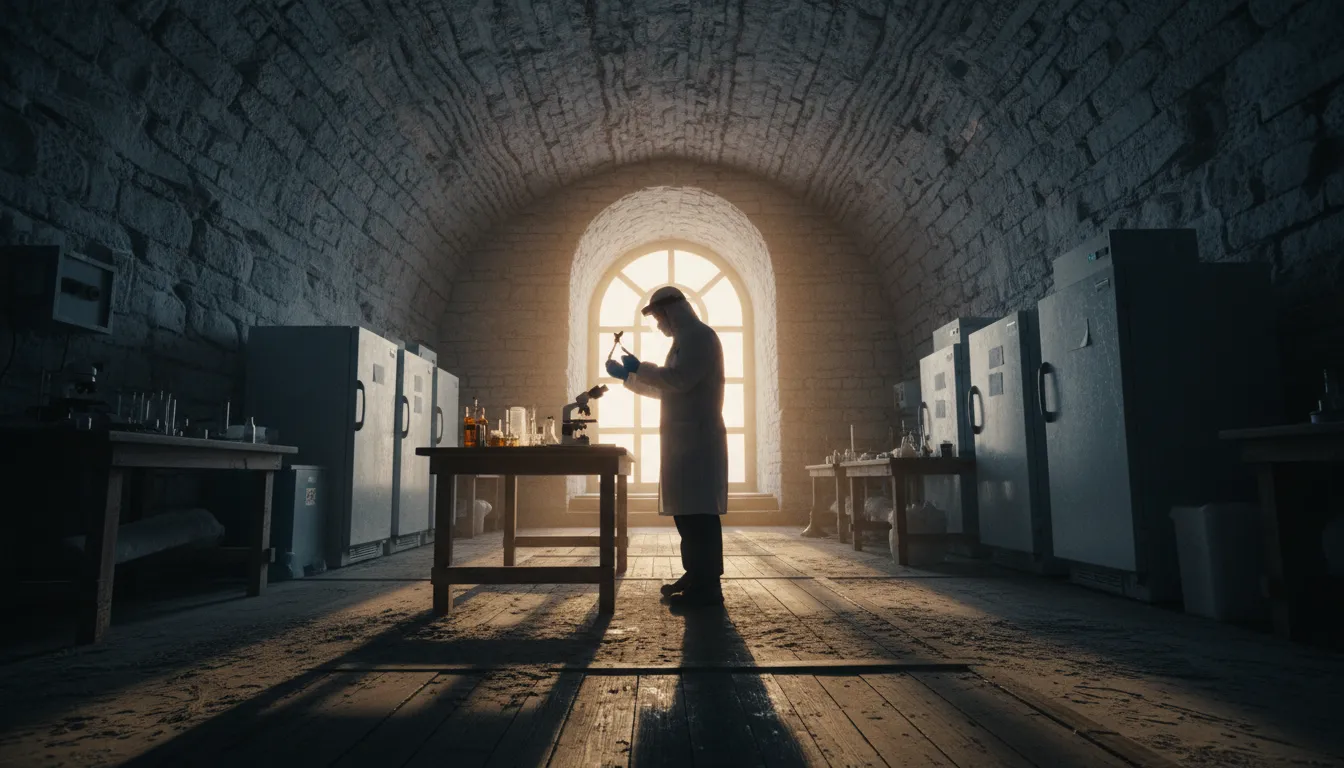
To recover it, scientists work in dedicated clean-room laboratories — isolated facilities where no other DNA is handled and researchers wear full protective suits to prevent contamination. They drill into the densest part of bone, typically the petrous bone behind the ear (which protects DNA better than almost any other tissue), extracting a fine powder. That powder is dissolved in chemicals that release DNA while leaving bone mineral behind. The genetic fragments then bind to silica beads for purification before being fed into next-generation sequencing machines that can read billions of short fragments simultaneously.
Cold climates are a major ally. Permafrost has preserved genomes from woolly mammoths and cave bears for hundreds of thousands of years. In 2022, scientists recovered a 2-million-year-old genome from Greenland sediment — the oldest genetic material ever sequenced.
Rewriting Human History
Pääbo's lab delivered the first complete Neanderthal genome in 2010, revealing that modern humans outside Africa carry roughly 1–4% Neanderthal DNA — proof of interbreeding after Homo sapiens migrated out of Africa around 70,000 years ago. The same research uncovered an entirely new human relative, the Denisovans, known only from a finger bone found in a Siberian cave.
These discoveries have real biological consequences for people alive today. A Denisovan gene variant called EPAS1 — still carried by many Tibetans — helps their bodies function efficiently at high altitude. Neanderthal gene variants influence immune responses, susceptibility to certain viruses, and even pain sensitivity, according to research published in leading journals. Ancient DNA has also traced the spread of farming from Anatolia into Europe, the rise and collapse of Bronze Age empires, and the origins of devastating pandemics like the Black Death.
Medical Frontiers: Drugs From Extinct Organisms
Perhaps the most surprising frontier is medicine. As antibiotic resistance grows into a global crisis, researchers are mining ancient genomes for de-extinct antimicrobials — bioactive compounds from organisms that evolved defenses millions of years ago. A 2025 study published in ACS Omega outlined how molecular paleontology could yield entirely new classes of antibiotics by reconstructing peptides from extinct species whose chemistry has never been tested against modern pathogens.
Ancient viral sequences buried in bacterial genomes are also being studied at Penn State, with findings suggesting dormant viral DNA may unlock new antiviral and antibiotic strategies. ScienceDaily reported in 2025 that this ancient bacterial defense mechanism — where old viral DNA activates against new threats — could inspire a new generation of treatments.
Conservation and De-Extinction
Ancient DNA is also central to conservation biology. Scientists have sequenced genomes of extinct species — from the dire wolf to the thylacine — providing blueprints that CRISPR-based gene-editing tools could theoretically use to resurrect key traits or even entire species. More immediately, aDNA helps identify how much genetic diversity has been lost in endangered populations, informing breeding programs aimed at keeping species viable.
MIT Technology Review named ancient DNA one of its 10 Breakthrough Technologies of 2026, noting that growing genomic databases of extinct creatures are yielding clues to new medical treatments and potential solutions to climate change — from drought-resistant crop genes to cold-adapted biological processes.
The Limits of the Archive
Ancient DNA research has hard physical boundaries. DNA degrades exponentially with heat; in tropical climates, most specimens older than a few thousand years yield nothing recoverable. The theoretical survival limit under ideal cold conditions is estimated at around 1 million years. Beyond that threshold, the chemistry simply falls apart beyond reconstruction. For older life, scientists increasingly turn to ancient proteins, which survive longer than DNA and can still reveal evolutionary relationships.
Even so, the archive that does exist — spanning hundreds of thousands of years and dozens of species — continues to expand with every new excavation and every improvement in sequencing technology. What was once a niche curiosity in the margins of genetics has become an indispensable lens on life itself.