2026 Municipal Elections: Decisive Second Round on Sunday
The second round of the municipal elections on March 22, 2026, will take place in over 1,500 French municipalities, with tight races in Paris, Marseille, and Lyon, against a backdrop of tactical alliances against the National Rally and political realignment a year before the presidential election.
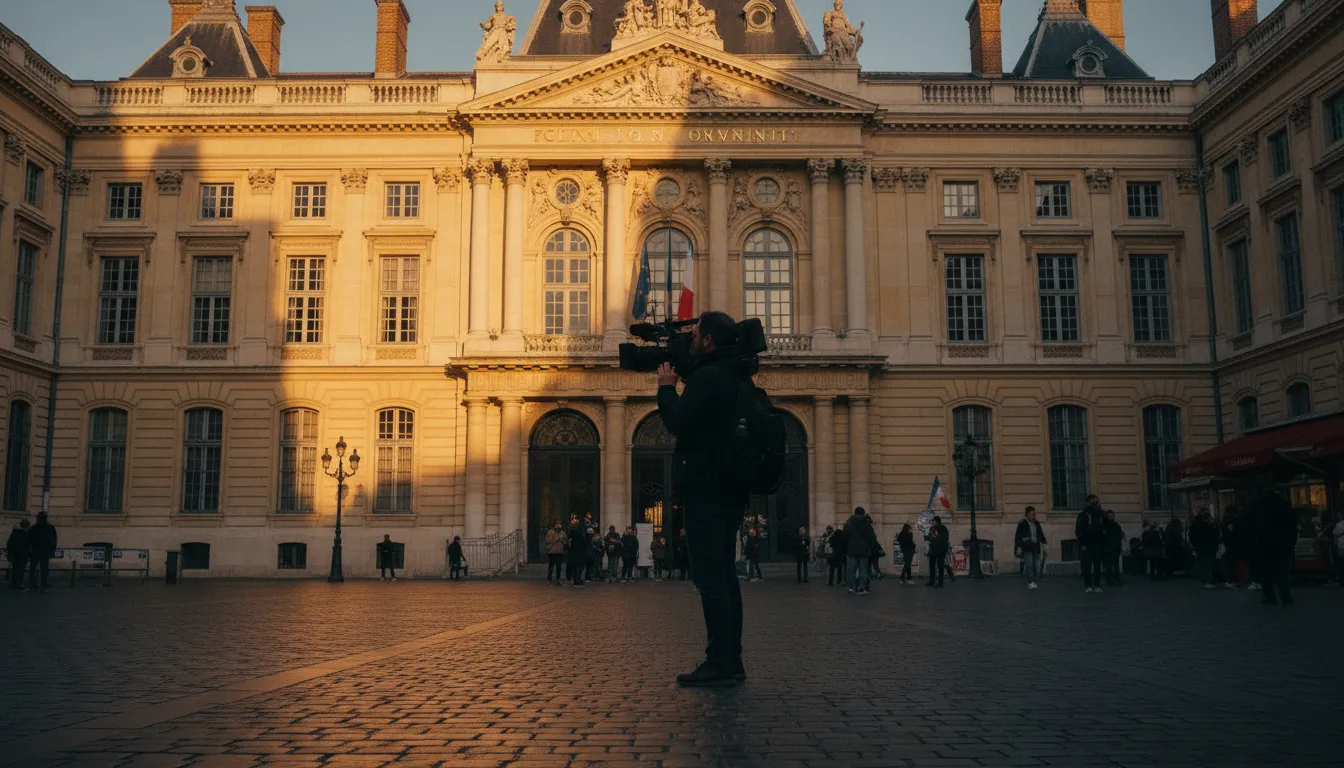
High Stakes Vote in 1,521 Municipalities
On Sunday, March 22nd, over 1,500 French municipalities head back to the polls for the second round of the municipal elections, following a first round marked by a 56% turnout—a sharp decline compared to 2014 (63.55%) and considered a record for abstention outside of a pandemic context. The results of March 15th confirmed the fragmentation of the French political landscape, with significant breakthroughs for the National Rally and La France Insoumise, forcing traditional parties into intense negotiations before the deadline for submitting lists, set for Tuesday, March 17th at 6:00 PM.
Paris, Marseille, Lyon: The Key Battles
In France's three largest cities, the power dynamics are particularly tense. In Paris, Emmanuel Grégoire (Socialist-Ecologist-PCF) leads with 37.98% of the vote, far ahead of Rachida Dati (LR-MoDem, 25.46%). The merger between Dati's list and that of Pierre-Yves Bournazel (Horizons-Renaissance) aims to consolidate the right and center against the united left.
In Marseille, the race is tight between incumbent Mayor Benoît Payan (36.70%) and RN candidate Franck Allisio (35.02%). The withdrawal of LFI candidate Sébastien Delogu, in a move to block the far right, could prove decisive for the second round.
In Lyon, incumbent Green Mayor Grégory Doucet (37.36%) faces Jean-Michel Aulas (36.78%), supported by the right and Macron supporters, in a neck-and-neck race where every vote will count.
The RN: Consolidation and Metropolitan Limits
The National Rally consolidated its strongholds in the first round: Louis Aliot re-elected in Perpignan (51.4%), Steeve Briois in Hénin-Beaumont (78.25%). The party exceeds 10% in 514 municipalities with more than 3,500 inhabitants, compared to 444 in 2014. However, according to LCP, its average score is falling in major metropolitan areas, and hopes of conquest have vanished in Lens, Calais, and Narbonne.
The strategy of the republican front—mergers and withdrawals to block the far right—has been deployed in many cities. In Toulouse, the Socialist and LFI lists have merged, while in Avignon, socialists and the radical left have joined forces with a combined 40% of the vote.
A Full-Scale Test Before 2027
These municipal elections go far beyond local issues. A year before the 2027 presidential election, each camp seeks to draw a favorable narrative from them. Within the left, the PS-LFI alliances negotiated city by city foreshadow the debates on unity or division for the race to the Élysée Palace. As Public Sénat points out, the results will also influence the Senate elections of September 2026, where half of the Senate will be renewed—with the RN having announced its intention to triple its representation.
The results on Sunday evening will thus draw much more than a new municipal map: they will reveal the real state of political power relations in a France undergoing profound realignment.


