Gibraltar: Spain and UK Finalize Post-Brexit Agreement
The draft treaty on Gibraltar, spanning over a thousand pages, envisions eliminating the border fence, integrating the Rock into the Schengen area, and creating a customs union with the EU, transforming the lives of 15,000 cross-border workers.
A Historic Thousand-Page Treaty
After four years of negotiations, the United Kingdom and the European Union published the draft treaty on Gibraltar on February 26, 2026, a document of 1,018 pages that includes 336 articles and 43 annexes. The agreement represents the most significant step in Spanish-British relations since Brexit and promises to radically transform daily life on Europe's most unique border.
The text, available in Spanish since March 13, addresses the free movement of people and goods between Gibraltar and the EU, eliminating the physical barriers that have conditioned coexistence between the Rock and the Campo de Gibraltar for decades.
Goodbye to the Fence: Schengen Without Being Schengen
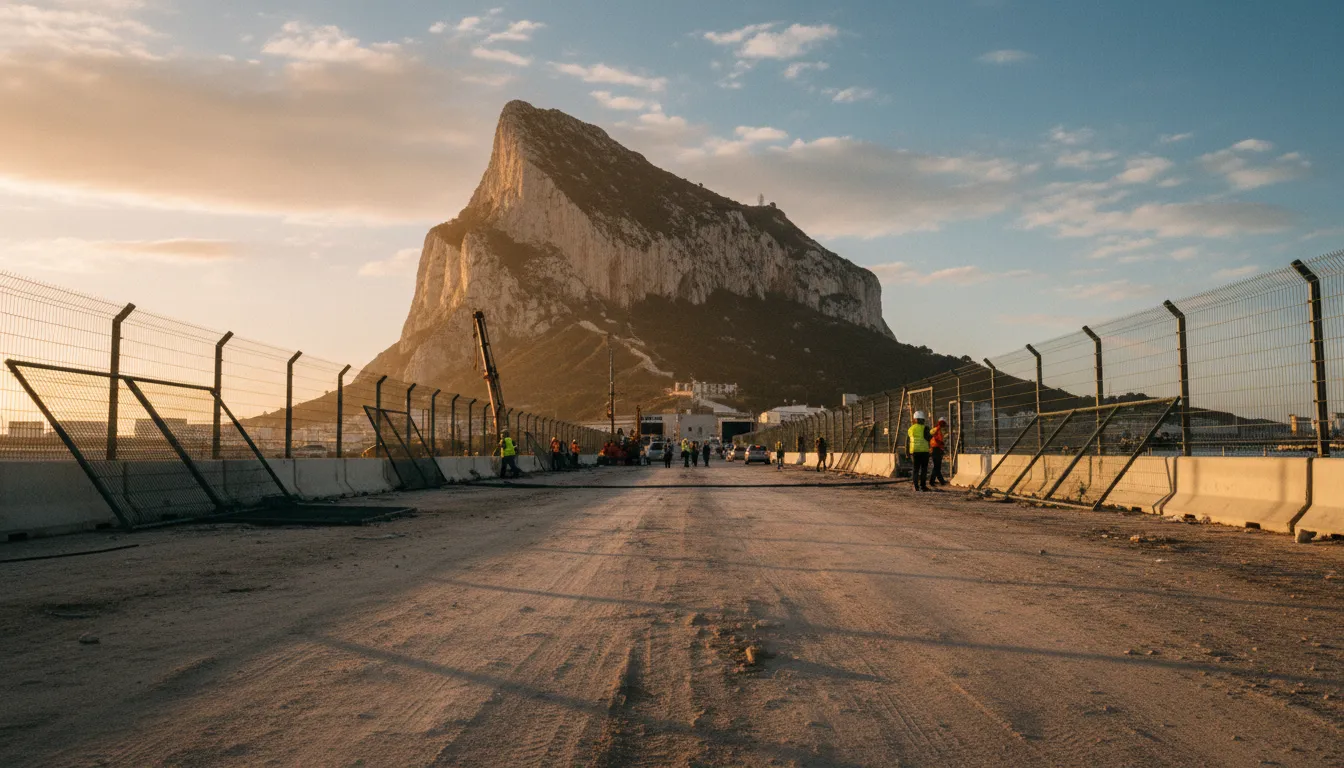
The most symbolic measure of the agreement is the dismantling of the 1.1-kilometer border fence, the last physical barrier of its kind in Europe. Instead, immigration controls will be moved to the airport and, if necessary, the port of Gibraltar, under Spanish responsibility.
Although Gibraltar will not formally join the Schengen area, its borders will operate according to the rules of that area. EU citizens and Gibraltarian residents will be able to circulate without routine inspections, in a model similar to that applied by France at London's St Pancras station. Spain and the United Kingdom retain, however, the right to re-establish temporary controls in the face of serious threats to security or public health.
Customs Union and Fiscal Convergence
The treaty establishes a customs union between the EU and Gibraltar that will eliminate routine inspections of goods at the land border. In return, the territory must comply for the first time with EU regulations on customs, taxation, competition, and the environment.
Fiscal convergence will be progressive: a tax rate of 15% in the first year, 16% in the second, and 17% in the third, while excise taxes on alcohol and tobacco will gradually align with Spanish and European levels. In addition, the agreement requires fair taxation standards in accordance with OECD criteria.
Impact on 15,000 Workers and the Region
For the more than 15,000 cross-border workers who cross daily between Spain and Gibraltar, the agreement means the end of the long queues that have marked their days for years. The treaty guarantees equal treatment in remuneration, working conditions, and social security coordination.
For La Línea de la Concepción and the entire Campo de Gibraltar, the border opening represents a historic economic transformation. The treaty establishes a framework of "economic association" and provides for a cohesion fund, financed by both parties and charged to European funds allocated to Spain, destined for employment and training in the area. However, the mayor of La Línea has pointed out that his community was not invited to the negotiations, despite being the most directly affected.
Sovereignty Intact, Future to be Ratified
Article 2 of the treaty explicitly protects the positions of both countries: the agreement operates "without prejudice" to the respective sovereignty claims, remaining on a strictly operational and economic level. Spain also obtains veto power over Gibraltarian residence permits and a four-year evaluation mechanism that allows it to request the termination of the agreement in case of serious breaches.
Provisional application is scheduled for April 10, 2026, the date on which the EU will deploy its new Entry/Exit System (EES). If ratification is not completed by then—which requires the approval of the European Parliament, the British Parliament, and the Gibraltar legislature—the Rock would be subject to full border controls.